Cart
0
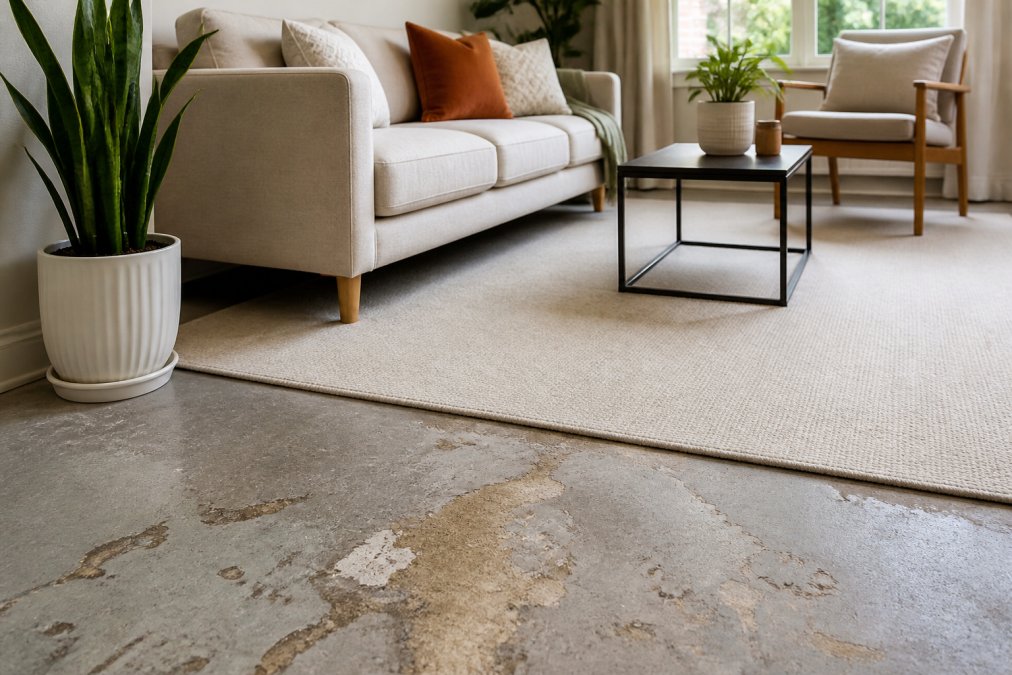
Table of Contents
- Why Covering Ugly Apartment Floors Matters
- Prepare Your Subfloor and Protect Against Moisture
- Peel and Stick Floor Tiles for Renters: The Quick Fix
- Best Area Rugs for Covering Ugly Floors
- Temporary Vinyl Flooring for Apartments
- Carpet Tiles and Squares for Flexible Coverage
- Other Rental-Friendly Floor Covering Options
- Common Mistakes to Avoid When Covering Apartment Floors
Last Updated: August 7, 2026
Why Covering Ugly Apartment Floors Matters
Worn, stained, or outdated flooring drags down an entire apartment's aesthetic. At AllWayzHome, we understand that renters can't rip out existing floors or risk security deposit damage. The good news: practical, damage-free solutions transform your space without landlord approval or permanent installation.
This guide covers seven renter-friendly approaches to covering ugly apartment floors, each suited to different spaces and budgets. We'll walk through installation, removal, and critical details like subfloor protection and adhesive residue management that separate successful projects from costly mistakes.
Prepare Your Subfloor and Protect Against Moisture
Before layering anything over your apartment's existing floor, assess what's underneath and prepare the surface properly. A damaged or moisture-prone subfloor compromises any covering you add, and trapped moisture creates conditions for mold and mildew.
Inspect the current floor for soft spots, visible damage, or water stains. Press firmly on different areas; spongy floors indicate moisture. Open windows and run a dehumidifier for 24-48 hours before installation to reduce ambient humidity.
Use a moisture barrier or underlayment beneath your chosen covering. These thin, vapor-permeable layers protect against moisture wicking from below and are especially important in bathrooms, kitchens, or apartments with known humidity issues. Underlayment also provides minor acoustic and thermal insulation.
Clean the existing floor thoroughly before installation. Vacuum thoroughly, then wipe with a damp cloth and allow complete drying. For sticky residue, use a plastic scraper, never metal, which can damage the underlying floor.
Pro Tip
Check your lease before starting. Some landlords prohibit certain floor coverings or require specific underlayment types. A quick conversation prevents disputes and protects your security deposit.
Peel and Stick Floor Tiles for Renters: The Quick Fix
Peel and stick vinyl floor tiles represent the fastest, most accessible way to cover ugly apartment floors. These self-adhesive tiles come in dozens of styles, wood-look, stone, geometric patterns, and install in hours without tools, mess, or landlord involvement.
Each tile has pre-applied adhesive backing protected by a peel-away layer. You simply position the tile and press firmly to activate the bond. For renters, this is the closest thing to a risk-free floor transformation.
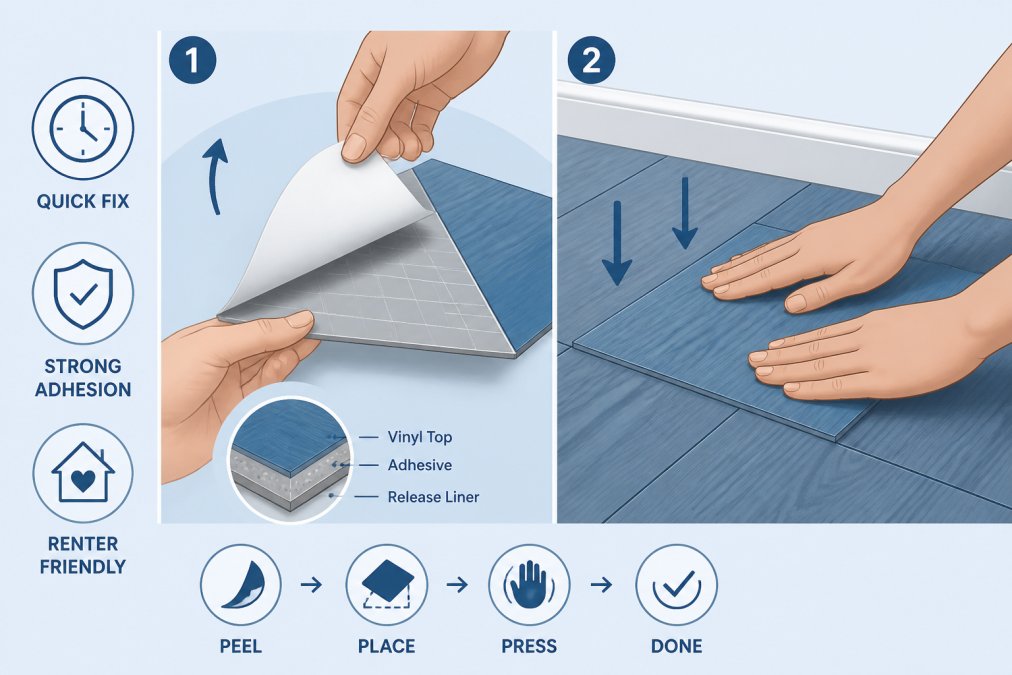
Installation Steps
Installation takes 4-8 hours for a typical 200-square-foot room.
-
Measure and plan your layout. Calculate total square footage and add 10% for cuts and mistakes. Sketch the room layout and plan where full tiles will fall to avoid narrow slivers at edges. Start from the room's center and work outward for balanced appearance.
-
Prepare the subfloor completely. Clean with a vacuum and damp cloth, allowing full drying time. If old adhesive residue exists, use a plastic scraper to remove it. For maximum adhesion on uneven surfaces, apply a self-leveling primer designed for vinyl tiles.
-
Acclimate the tiles. Leave boxes in the room for 24-48 hours before installation. Temperature and humidity changes affect adhesive performance.
-
Start installation from the center. Find the room's center point and snap chalk lines to create a grid. Place your first tile at the intersection, pressing firmly for 30-60 seconds.
-
Work outward in a grid pattern. Install tiles row by row, pressing each firmly and checking for gaps. Use a hand roller or heel to apply even pressure across the entire tile surface.
-
Cut edge tiles as needed. Measure the gap, mark the tile on the back, and cut with a utility knife using multiple light passes. For complex shapes, create a cardboard template first.
-
Allow curing time before walking on the floor. Most vinyl tiles require 24 hours of cure time before heavy foot traffic; wait 48 hours before moving furniture.
Removal and Residue Management
Removal is straightforward, no grinding or chemical solvents needed. However, improper removal can leave adhesive residue that damages your security deposit claim.
Lift one corner of a tile with a plastic scraper and pull back slowly at a 45-degree angle. If a tile resists, warm it with a heat gun for 30-60 seconds to soften the adhesive.
For remaining adhesive residue, rubbing with a dry cloth often works. For stubborn spots, use rubbing alcohol on a cloth, it breaks down vinyl adhesive without damaging most flooring types. Apply sparingly and wipe immediately. Test on an inconspicuous area first.
For heavy buildup, use a plastic scraper gently in multiple directions rather than forcing downward, which risks gouging the underlying floor.
Watch Out
Never use acetone, paint thinner, or commercial adhesive removers on apartment floors without landlord approval. These can discolor or damage the original flooring and void your security deposit claim. Stick to rubbing alcohol and gentle scraping.
Best Area Rugs for Covering Ugly Floors
Area rugs offer flexibility that hard floor coverings can't match. They're temporary, moveable, and add warmth and acoustic dampening. A well-chosen rug completely transforms a room's appearance while hiding significant floor damage.
The key is understanding size and placement. An undersized rug that floats in the middle of a room looks like an afterthought. A strategically sized and positioned rug makes the space feel intentional while covering the most visible floor area.
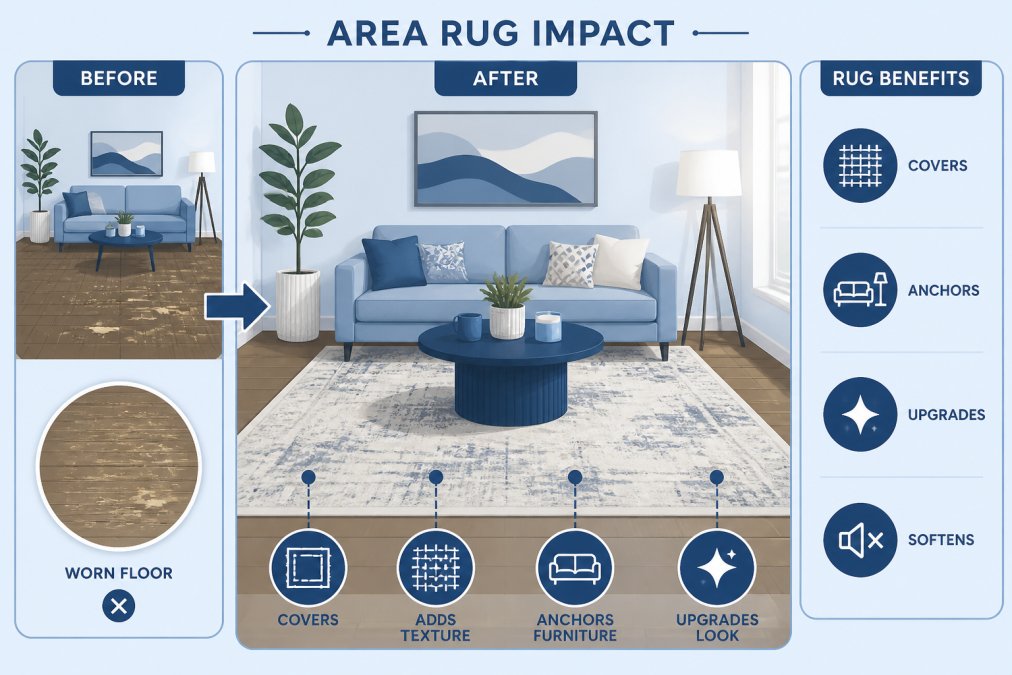
Size and Placement Tips
Rug size determines floor coverage. Interior designers recommend:
-
Living rooms: Choose a rug large enough that at least the front legs of all major furniture pieces sit on it. For a typical living room, 8x10 feet minimum prevents a disjointed feel.
-
Bedrooms: A rug should extend at least 2-3 feet on either side of the bed and reach toward the foot, creating a soft landing zone.
-
Entryways and hallways: Use a runner rug (2.5-3 feet wide) to define the pathway and add visual interest.
-
Under dining tables: The rug should extend at least 24 inches beyond the table on all sides so chair legs stay on the rug when pulled out.
Position the rug to anchor your furniture arrangement rather than sitting underneath it. In a living room, the rug extends into the seating area with front furniture legs on it. In a bedroom, center the rug at the foot of the bed, extending equally on both sides.
Choosing Durable, High-Traffic Rugs
Rental apartments demand rugs that withstand heavy use. Look for:
Fiber content: Synthetic fibers like polypropylene and polyester are more durable and stain-resistant than natural fibers. They handle spills better and resist fading.
Weave density: A tightly woven rug resists crushing and shows less wear from foot traffic. Run your hand across the surface; it should feel dense and substantial. Tightly woven rugs also hide dirt better.
Pile height: Low to medium pile (under 0.5 inches) works best for apartments. High-pile rugs trap dirt, show footprints, and create tripping hazards.
Color and pattern: Solid dark colors or subtle patterns hide dirt and stains better than light solids. Patterns distract from floor imperfections underneath.
Backing material: Non-slip backing prevents sliding and shows less wear. Rubber or felt backing works well; avoid thin plastic backings that deteriorate quickly.
Temporary Vinyl Flooring for Apartments
Temporary vinyl flooring offers a middle ground between peel-and-stick tiles and area rugs. Vinyl planks or mats create a cohesive, finished look while remaining completely removable. They're thicker and more substantial than tiles, providing better acoustic and thermal performance.
Temporary vinyl comes in two formats: loose-lay vinyl planks that interlock without adhesive, and adhesive-backed vinyl mats. Loose-lay planks are the most renter-friendly option, they stay in place through friction and weight, requiring no adhesive and creating zero residue concerns.
Vinyl Planks vs. Vinyl Mats
Loose-lay vinyl planks are rigid planks (typically 6-9 inches wide, 36-48 inches long) that click together like laminate flooring. They sit on underlayment and hold position through weight and friction alone. Installation takes 2-4 hours for a 200-square-foot room and offers the most durable option for high-traffic areas with realistic wood or stone appearance.
The downside: loose-lay planks require a completely level subfloor. Uneven floors cause gaps and movement, creating noise and visible separation.
Vinyl mats are larger format sheets (typically 3-6 feet wide, up to 20 feet long) that lay flat over the subfloor. They're easier to install than planks with fewer pieces and connections. However, they show seams more obviously, and seams are potential trip hazards. Vinyl mats work best in smaller spaces or as temporary solutions.
Loose-lay planks avoid adhesive residue issues entirely, making them the better choice for security deposit preservation.
Acoustic and Thermal Benefits
Temporary vinyl flooring provides acoustic and thermal insulation that hard floors lack. Vinyl planks with attached cork or foam underlayment dampen impact noise by 10-15 decibels compared to bare hard floors. This reduces noise transmission to neighbors below and makes your space feel quieter. Thermal insulation helps maintain room temperature, reducing heating and cooling costs slightly.
For apartments with thin floors or noisy neighbors, this acoustic benefit alone justifies the investment.
Carpet Tiles and Squares for Flexible Coverage
Carpet tiles are modular carpet squares (typically 12x12 or 18x18 inches) that interlock or stick to the floor. They offer flexibility that wall-to-wall carpet can't match, you can remove individual tiles, replace stained ones, or reconfigure the pattern entirely.
For renters, carpet tiles cover ugly floors while remaining completely removable. Unlike wall-to-wall carpet, which requires professional removal and often leaves residue, carpet tiles pull up cleanly. Adhesive-backed tiles may leave light residue, but it's far less problematic than full-room carpet removal.
Carpet tiles work well in bedrooms and home offices where you want softness and warmth underfoot. They're less practical in kitchens or bathrooms where spills and moisture make them impractical. Choose stain-resistant, commercial-grade tiles rated for residential use.
Installation is straightforward: prepare the subfloor, lay underlayment if desired, and place tiles in a grid pattern. The entire process takes 4-6 hours for a typical bedroom.
Other Rental-Friendly Floor Covering Options
Temporary Vinyl Floor Mats
Thick vinyl floor mats (3-8mm) are designed for temporary use without adhesive. They work best as targeted solutions: under a desk to protect from chair wheels, in front of a sink to reduce splash damage, or as a runner in a hallway. They're not ideal for covering entire rooms because seams become visible and trip hazards.
Floor Stickers and Decorative Overlays
Decorative floor stickers and peel-and-stick decals offer creative alternatives for smaller areas. Geometric patterns, wood-grain designs, or custom prints can transform a small floor section into a design feature.
They're not durable for high-traffic areas and work best in low-traffic zones like a bathroom floor, bedroom corner, or entryway accent.
Common Mistakes to Avoid When Covering Apartment Floors
Skipping subfloor preparation. Dust, debris, and old adhesive prevent proper bonding. Thirty minutes of thorough cleaning prevents lifting tiles, buckling vinyl, or rug slipping.
Ignoring moisture issues. Covering the floor without addressing moisture creates conditions for mold growth, a health hazard and security deposit nightmare. Assess moisture before installation and use appropriate underlayment.
Choosing the wrong rug size. An undersized rug doesn't cover enough floor and looks intentionally placed. Err on the side of larger.
Using adhesive-backed products in high-moisture areas. Bathrooms and kitchens are problematic for adhesive-backed tiles because moisture breaks down adhesive bonds. Loose-lay planks or area rugs work better.
Failing to document the original floor condition. Photograph the original floor from multiple angles before installing any covering. Photos protect you if your landlord claims damage occurred under your coverings.
Removing coverings too quickly. Adhesive needs proper cure time before removal. Wait the full recommended 24-48 hours before removal, then remove slowly and gently.
Not acclimating materials to room conditions. Temperature and humidity changes affect how adhesives perform. Leave materials in the room for 24-48 hours before installation.
Covering ugly apartment floors doesn't require permanent solutions or landlord approval. The seven approaches covered here let you reclaim your space while protecting your security deposit. The key is choosing the right solution for your specific floor condition, room use, and timeline.
At AllWayzHome, we believe your apartment should reflect your personal style, not your landlord's flooring choices. When you combine practical floor coverings with thoughtfully curated home décor, like our elegant candle and fragrance sets or lush indoor greenery, you transform a rental into a sanctuary. Explore our collection of personalized home essentials designed to add warmth and character to every corner of your living space. Explore More
Frequently Asked Questions
Can I put peel-and-stick tiles over existing rental floors without damaging them?
Yes, peel-and-stick tiles are designed to be damage-free when removed properly. They adhere to clean, dry surfaces without requiring nails or adhesive that bonds permanently. To avoid residue, ensure your floor is dust-free before application, use quality tiles with removable adhesive, and remove them slowly at a low angle. Most renters successfully remove peel-and-stick tiles without leaving marks, protecting your security deposit.
What is the cheapest way to cover ugly apartment floors?
Area rugs and temporary vinyl floor mats offer the most budget-conscious options. Large area rugs can hide significant floor damage and add aesthetic appeal, while vinyl mats provide quick, affordable coverage for problem areas. Peel-and-stick tiles cost slightly more upfront but offer durability and a finished look. Your best choice depends on the extent of damage, room size, and how long you plan to stay. AllWayzHome's curated collections can help you find affordable, coordinated floor coverings that match your décor.
How do I remove peel-and-stick tiles and adhesive residue from rental floors?
Remove peel-and-stick tiles slowly and at a shallow angle to prevent tearing and residue left behind. Use a plastic scraper or old credit card to gently lift edges. For stubborn adhesive residue, apply rubbing alcohol or a commercial adhesive remover to a cloth and rub gently. Test any solvent on a hidden area first. Heat from a hair dryer can soften adhesive, making removal easier. Always work slowly to avoid damaging the underlying floor, ensuring you can return your apartment to its original condition.
Are temporary vinyl flooring solutions durable enough for high-traffic apartment areas?
Yes, quality temporary vinyl flooring is designed for high-traffic areas and can withstand daily wear when installed correctly. Vinyl planks and mats feature water-resistant surfaces and durable wear layers that resist scuffs and stains. Proper subfloor preparation with moisture barriers extends durability and prevents warping. While not as permanent as traditional flooring, well-maintained temporary vinyl solutions typically last 2-5 years in rental apartments, making them ideal for renters who want both protection and longevity without permanent installation.
This article was written using GrandRanker