Cart
0
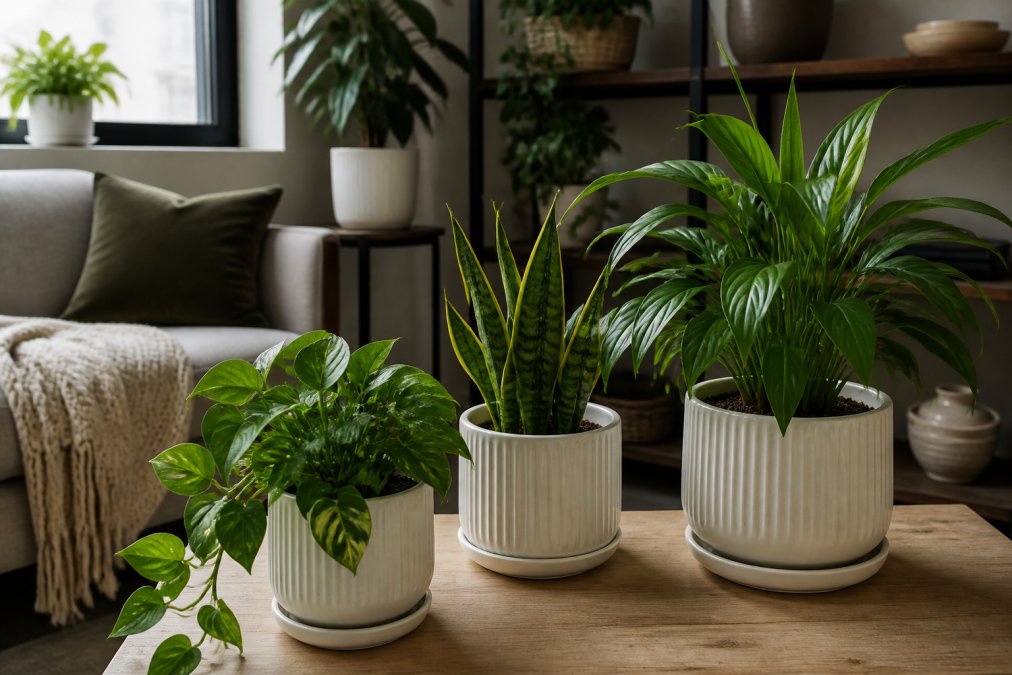
Table of Contents
- Understanding Low-Light Conditions in Your Apartment
- Top Low Light Indoor Plants That Thrive in Apartments
- Best Plants for North-Facing Windows and Dim Spaces
- Low Light Indoor Plants: Easy Care Essentials
- Pet-Friendly Low Light Plants for Apartments
- How to Care for Low Light Indoor Plants
- Common Low-Light Plant Mistakes to Avoid
- Styling Your Apartment with Best Indoor Greenery
Best Indoor Greenery for Low Light Apartments
Last Updated: August 1, 2026
Understanding Low-Light Conditions in Your Apartment
Low light refers to spaces receiving between 50-150 foot-candles of illumination, roughly equivalent to reading a book comfortably without straining your eyes. In apartments, this includes north-facing rooms, spaces several feet from windows, hallways with overhead lighting only, and interior corners. Low light doesn't mean darkness, plants still photosynthesize, just more slowly, which actually benefits apartment dwellers by producing compact growth and reducing watering needs.
What Counts as Low Light
Most apartments have at least one genuinely low-light zone: a bathroom without windows, a bedroom corner away from the single window, or an interior hallway. Identifying these spaces and matching them with shade-tolerant plants is essential for successful indoor gardening.
Indirect light reaches a space after bouncing off surfaces like walls and ceilings. Ambient light is general room illumination from all sources combined. Low-light apartments often rely heavily on ambient light rather than directional illumination from windows. A light meter app on your smartphone can measure foot-candles in different spots, removing guesswork from plant selection.
Top Low Light Indoor Plants That Thrive in Apartments
1. Snake Plant (Sansevieria trifasciata)
The snake plant is nearly indestructible, thriving in low light while requiring minimal water and attention. Its upright, sword-like leaves add architectural interest, and it actively purifies indoor air by removing toxins like formaldehyde and benzene. The most common mistake is overwatering, these succulents store water in their leaves and prefer to dry out completely between waterings. In low-light apartments, watering once every three to four weeks is often sufficient.
Pro Tip
Snake plants communicate their water needs through leaf texture: slightly soft, bendable leaves indicate thirst, while firm leaves mean they're adequately hydrated.
2. ZZ Plant (Zamioculcas zamiifolia)
The ZZ plant genuinely thrives where other plants merely survive. With glossy, dark green leaflets and a rhizomatous root system that stores moisture underground, it can go weeks without water. Growth is slow in low light, ideal for apartment living, and the plant's natural glossiness catches available light, making it appear more vibrant than its environment suggests.
The primary care consideration is avoiding overwatering. Water only when the top two inches of soil are completely dry, typically once every two to three weeks. Individual leaflets can be propagated into new plants, making the ZZ plant excellent for sharing.
3. Pothos (Epipremnum aureum)
Pothos adapts to nearly any apartment condition, from low light to bright indirect sun. Its heart-shaped leaves come in solid green or variegated varieties. In low light, growth slows and variegated varieties lose some white patterning, but the plant survives reliably. The trailing growth habit makes it perfect for hanging planters or shelves, creating visual interest while optimizing limited floor space.
Pothos communicates its water needs clearly, leaves droop when thirsty, then recover within hours of watering. Cuttings placed in water develop roots within one to two weeks.

Watch Out
Pothos is mildly toxic if ingested by pets or children. Households with curious cats or toddlers should place it out of reach or choose an alternative.
4. Cast Iron Plant (Aspidistra elatior)
The cast iron plant earned its name through legendary resilience, thriving in partial to full shade where most houseplants would decline. Its long, dark green leaves create a full, bushy appearance without pruning. Growth is glacially slow in low light, keeping the plant compact and manageable for years without needing a larger pot.
The plant prefers cooler temperatures and consistent (not wet) soil moisture. Watering every two to three weeks is typically sufficient. It's non-toxic to pets and children, making it ideal for households with animals.
5. Peace Lily (Spathiphyllum)
The peace lily offers elegant white flowers that bloom reliably even in dim conditions, adding visual interest beyond foliage. Its dark green leaves create a sophisticated appearance. The plant communicates its water needs dramatically, leaves droop significantly when thirsty, then perk up within hours of watering. It improves indoor air quality by removing common toxins like formaldehyde and ammonia.
Key Takeaway
Peace lilies produce new flowers continuously when given consistent care, so the white blooms you see in stores aren't temporary, they're the plant's normal blooming pattern.
6. Heartleaf Philodendron (Philodendron hederaceum)
The heartleaf philodendron is a classic vining plant with glossy, heart-shaped leaves that adapts readily to low-light conditions. Its rapid growth rate makes it satisfying to watch, even though growth slows in dim light. The trailing vine habit makes it perfect for hanging baskets or as a climbing plant trained up a moss pole.
Propagation is effortless, stem cuttings placed in water develop roots within one to two weeks, making it ideal for sharing or creating multiple plants.
Best Plants for North-Facing Windows and Dim Spaces
North-facing windows present a specific challenge because they receive no direct sun and the least intense indirect light of any window orientation. However, north-facing light is consistent and gentle, making it ideal for plants that would sunburn in southern or western exposure. All plants mentioned above thrive in north-facing locations where other plants would decline.
North-facing windows in apartments often receive their brightest light in early morning and late afternoon, with midday light being quite dim. This pattern suits many tropical houseplants that naturally grow beneath tree canopies. Plants positioned on shelves or stands near a north-facing window receive more light than those placed across the room.
Low Light Indoor Plants: Easy Care Essentials
Watering Schedules for Low-Light Spaces
With less light, plants photosynthesize more slowly and transpire less actively. Soil dries more slowly, and plants require water less frequently than in bright conditions. Check soil moisture before watering rather than following a calendar schedule. Stick your finger into the soil two inches deep, if it feels moist, wait another week. Most low-light plants thrive when watered only when the top inch or two of soil feels dry.
Overwatering is the primary killer of low-light plants. Reduced evaporation means water sits in soil longer, and roots in cool, dim conditions are more susceptible to rot. Using pots with drainage holes is non-negotiable.

| Plant | Light Condition | Watering Frequency | Soil Preference |
|---|---|---|---|
| Snake Plant | Low | Every 3-4 weeks | Dry between waterings |
| ZZ Plant | Low | Every 2-3 weeks | Dry between waterings |
| Pothos | Low-Medium | Every 7-10 days | Moist, not wet |
| Cast Iron Plant | Low | Every 2-3 weeks | Slightly moist |
| Peace Lily | Low-Medium | Every 7-10 days | Consistently moist |
| Heartleaf Philodendron | Low-Medium | Every 7-10 days | Moist, not wet |
Soil Moisture and Drainage Requirements
Low-light plants require well-draining soil because evaporation happens slowly. Standard potting soil often retains too much moisture in dim conditions. Amend potting soil with perlite or orchid bark to improve drainage, a ratio of three parts potting soil to one part perlite works well.
Terracotta pots dry faster than plastic because they're porous, which can be helpful in low-light apartments where soil tends to stay wet. Plastic pots retain moisture longer, suiting some low-light plants better but increasing overwatering risk. Drainage holes are absolutely essential, without them, roots sit in soggy soil indefinitely and develop root rot.
Humidity and Airflow in Dim Apartments
Low-light apartments often have lower humidity than brightly lit spaces. Many tropical houseplants appreciate humidity even in low light. The balance is maintaining adequate airflow while preserving humidity. Cracking a window occasionally or using a small fan on low speed improves air circulation. Grouping plants together creates a microclimate with higher humidity through transpiration.
Pet-Friendly Low Light Plants for Apartments
Snake plants, ZZ plants, and cast iron plants are all non-toxic to pets, making them excellent choices for households with animals. Pothos and heartleaf philodendrons are mildly toxic and should be positioned out of reach of pets that chew on plants. Peace lilies are also somewhat toxic, though rarely cause serious harm.
For apartments with destructive pets, place plants on high shelves or hanging planters where animals can't reach them. Alternatively, choose the most resilient, non-toxic species and accept that occasional nibbling is part of pet ownership.
How to Care for Low Light Indoor Plants
Light Meter Apps and Measuring Foot-Candles
Smartphone light meter apps provide surprisingly accurate measurements of foot-candles in your apartment. Apps like Light Meter or Lux Light Meter use your phone's camera sensor to measure illumination. Measuring several spots takes ten minutes and provides concrete data for plant selection.
Typical measurements: a north-facing window receives 100-200 foot-candles on the sill and 50-100 a few feet away. An interior hallway with overhead lighting might measure 25-75 foot-candles. These measurements help you match plants to actual conditions rather than guessing.
Troubleshooting Leaf Drop and Yellowing
Leaf drop in low-light apartments usually indicates overwatering or a sudden environmental change. Plants moved from a bright nursery to a dim apartment often drop leaves as they acclimate, this is normal and temporary. New growth appears within weeks as the plant adjusts.
Yellowing leaves suggest either overwatering (most common) or nutrient deficiency (rare in apartments). If yellowing appears gradually from lower leaves upward, it's likely overwatering. Pest issues are less common in low-light apartments because many pests prefer bright, warm conditions.
Watch Out
If leaves turn yellow and feel soft, and soil smells musty or sour, root rot is occurring. Caught early, you can repot the plant in fresh, dry soil and reduce watering frequency to save it.
Vertical Space Optimization for Small Apartments
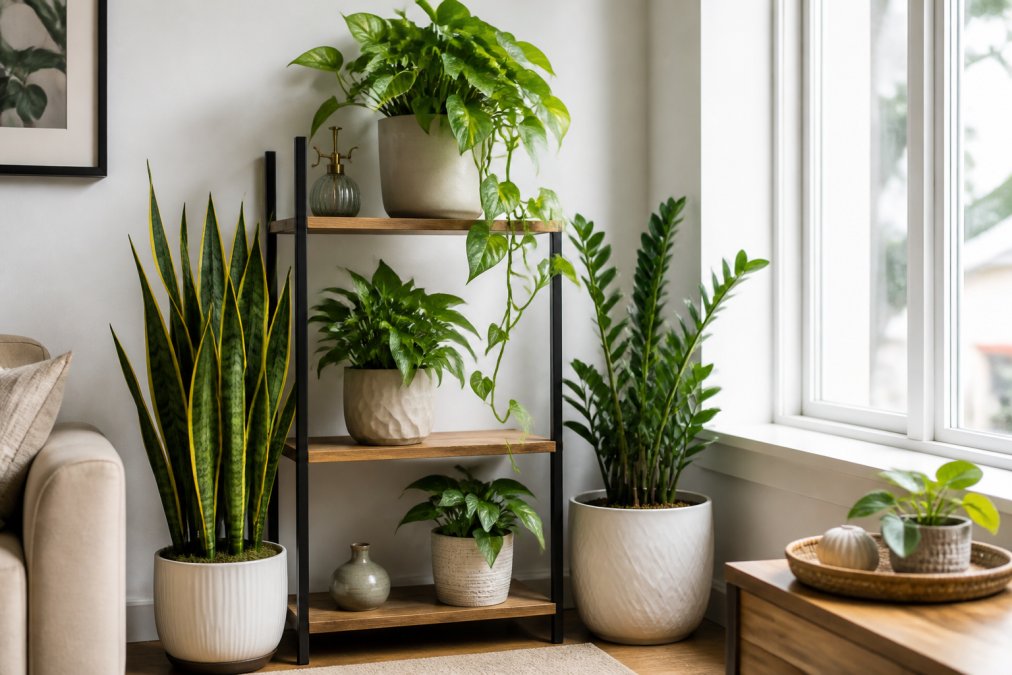
Apartment dwellers rarely have unlimited floor space. Vertical space optimization using walls, shelves, and hanging planters multiplies growing capacity without consuming floor area. Trailing plants like pothos and heartleaf philodendron are ideal for hanging planters that cascade downward.
Wall-mounted shelves accommodate multiple small plants or larger specimens. Grouping plants at different heights creates visual depth and improves light exposure. Corner spaces are often underutilized, a tall plant stand in a corner with multiple shelves can hold six to eight small plants, transforming dead space into a focal point.
Common Low-Light Plant Mistakes to Avoid
The first mistake is choosing plants unsuited to your actual light conditions. Matching plants to your specific light environment prevents disappointment.
The second mistake is overwatering, which kills more apartment plants than any other factor. Checking soil moisture before watering is the antidote.
The third mistake is expecting rapid growth in low-light conditions. These plants grow slowly, that's the trade-off for surviving dim apartments. Accepting slower growth prevents frustration.
The fourth mistake is neglecting humidity and airflow. While low-light plants tolerate dry air better than high-light plants, they still appreciate some humidity. Grouping plants together improves conditions.
The fifth mistake is using pots without drainage holes. Decorative pots without drainage should only be used as cachepots with a draining nursery pot inside.
Styling Your Apartment with Best Indoor Greenery
Consider your apartment's overall aesthetic when selecting plants. Snake plants and ZZ plants with their architectural forms suit modern, minimalist spaces. Trailing pothos and heartleaf philodendrons work well in bohemian or eclectic apartments. Cast iron plants fit traditional or vintage-inspired spaces.
Planters are as important as plants. Mismatched pots look intentionally curated; identical pots look sterile. Mix pot materials, ceramic, terracotta, and concrete, and vary colors while maintaining a cohesive palette.

Grouping plants creates visual impact and improves humidity. Three to five plants of varying heights clustered in a corner or on a shelf feel intentional and create a focal point. Hanging plants at various heights draw the eye upward, making apartments feel larger. Trailing plants in hanging planters create green "curtains" that soften architectural lines.
Transforming a dim apartment into a green sanctuary is possible when you choose plants specifically suited to low-light conditions. The best indoor greenery for low light apartments genuinely thrives in reduced illumination. Start with one low-light tolerant plant in your dimmest corner, and watch it flourish while you build confidence for expanding your collection. The result is a home that feels alive, welcoming, and unmistakably yours.
Frequently Asked Questions
What indoor plants do well in low light and don't need much care?
Snake plants, ZZ plants, and cast iron plants are the most forgiving low light indoor plants for apartments. These shade-tolerant varieties tolerate irregular watering, poor drainage mistakes, and neglect better than others. They're ideal for busy renters or beginners. Pothos and heartleaf philodendrons are equally low-maintenance and offer trailing growth for vertical space optimization. All these options require watering only every 2-3 weeks and thrive in indirect light or dim spaces.
How often should you water low light indoor plants?
Low-light plants generally need less frequent watering because they photosynthesize more slowly. Water every 2-3 weeks or when soil is completely dry 1-2 inches down. Check soil moisture before watering, overwatering causes root rot, the leading killer of indoor greenery. Peace lilies and pothos will droop when thirsty, signaling a need for water. In apartments with low humidity, check soil more frequently. Self-watering planters like AllWayzHome's 4-inch self-watering planter ($28.80) can help maintain consistent soil moisture without guesswork.
Are there pet-friendly low light plants for apartments?
Yes. Spider plants, snake plants, and cast iron plants are all non-toxic to cats and dogs. Prayer plants and some dracaena varieties are also pet-safe, though many dracaena types are toxic to pets, so verify before purchasing. Pothos and philodendrons are mildly toxic if ingested by pets or children, so place them out of reach. Peace lilies are also toxic to pets. Always check toxicity before bringing any houseplant into a pet-friendly apartment, and consult the ASPCA's plant database for confirmation.
What's the best way to measure light in my apartment for low light plants?
Use a light meter app on your smartphone to measure foot-candles (the standard unit for indoor light intensity). Low-light plants typically thrive in 50-150 foot-candles. Apps like Light Meter or Lux Light Meter provide free estimates, though they're less precise than dedicated meters. Alternatively, assess ambient light visually: if you can read without squinting, the space has enough indirect light for most low-light tolerant plants. North-facing windows typically provide 50-100 foot-candles, ideal for shade-tolerant foliage like ZZ plants and cast iron plants.
This article was written using GrandRanker