Cart
0
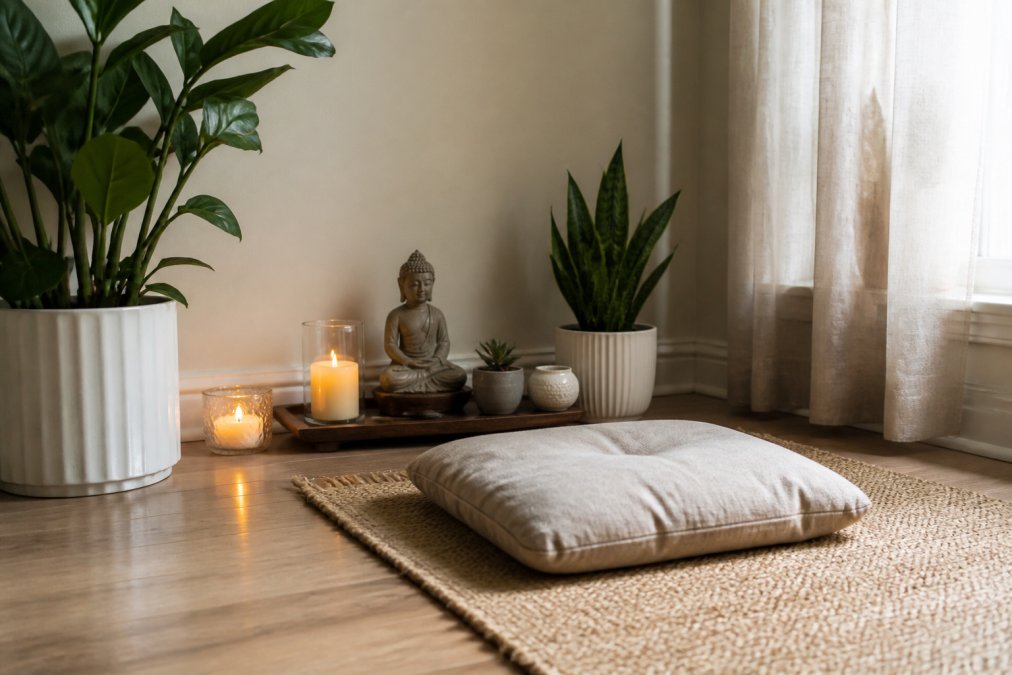
Table of Contents
- Choose the Right Location for Your Meditation Corner
- Meditation Room Essentials to Include
- Best Meditation Cushion for Home Setup
- Design Your Space for Tranquility
- How to Start a Daily Meditation Practice
- Budget-Friendly Hacks and Solutions
- Conclusion
Last Updated: August 15, 2026
Choose the Right Location for Your Meditation Corner
Your meditation corner's location determines how consistently you'll use it and how deeply you can settle into practice. Natural light and minimal distractions are the two factors that separate spaces where practice deepens from those where focus struggles.
Assess natural light and windows
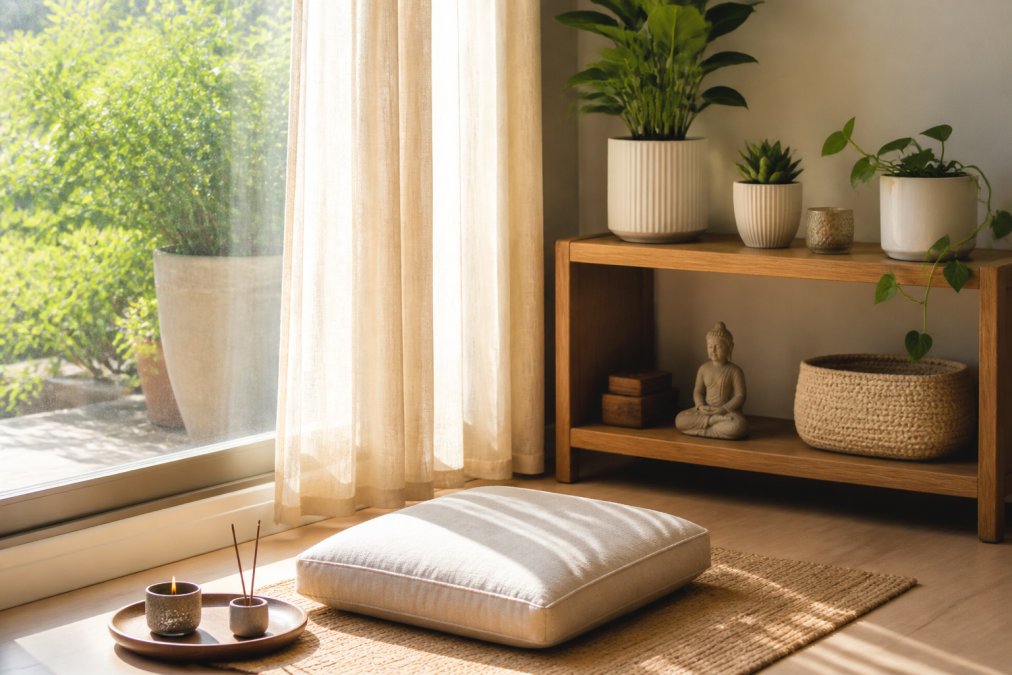
Natural light transforms a meditation space. Soft, diffused light from a north-facing window or filtered through sheer curtains creates the ideal atmosphere. Natural light also regulates your circadian rhythm, making morning sessions more energizing and evening sessions more calming. Position your corner near the brightest available window, avoiding basements or interior rooms with no windows. Even 20-30 minutes of indirect natural light during practice shifts your nervous system.
Minimize noise and distractions
Sound management is where most home meditation corners fail. Choose a location away from main living areas, hallways, and exterior walls facing streets. Interior corners, closets, or alcoves naturally dampen sound better than open spaces. If your home lacks a naturally quiet spot, schedule practice during quieter hours, use a white noise machine or nature sounds app, or add soft furnishings like curtains and rugs that absorb sound. The best meditation corner is one where you feel protected from interruption.
Meditation Room Essentials to Include
Fill your space intentionally. Every item should support your comfort, enhance the sensory experience, or deepen your practice. These elements create what practitioners call a "sensory anchor," visual cues and textures that signal to your brain this is a space for inward focus.
Cushions and seating for comfort
Your seating choice determines whether you can maintain good posture for extended sessions. A meditation cushion (zafu) elevates your hips above your knees, naturally aligning your spine and reducing strain on your lower back. Without elevation, your knees bear too much weight and your spine rounds forward, pulling your attention outward within minutes.
If sitting on the floor doesn't appeal to you, a firm chair with minimal cushioning works equally well. Pair your seat with a zabuton (a flat mat that cushions your knees and ankles). This protects your joints and signals that this space is dedicated to practice.
Candles, scent, and aromatherapy
Scent works on your nervous system directly. Choose fragrances intentionally, lavender, sandalwood, and cedarwood have documented calming properties. A single lit candle or subtle essential oil diffuser is more effective than multiple competing scents.
AllWayzHome's Home Blessings Intention Candle for New Home & New Beginnings pairs beautifully with meditation practice, creating an intentional atmosphere and visual focal point. Alternatively, their Floral Breeze Crystal Candle combines botanical fragrance with embedded gemstones, adding sensory and aesthetic depth.


Scent anchors memory. Over weeks of practice, your brain associates that fragrance with the calm state you cultivate, making the candle a powerful trigger for settling into practice.
Plants and natural elements
Living plants improve air quality, add visual softness, and create a connection to nature. Choose low-maintenance plants that thrive in your lighting conditions, snake plants, pothos, and peace lilies are forgiving and don't demand attention.
AllWayzHome's Arch Wave Propagation Station offers a beautiful way to grow new plants from cuttings. The minimalist design complements any meditation space while giving you an active role in nurturing growth.

Best Meditation Cushion for Home Setup
The best meditation cushion depends on your body and preferred sitting position. Height matters most, a zafu should elevate your hips 4-6 inches above your knees. If it's too low, you'll strain your lower back; if too high, you'll feel unstable.
Firmness is your second consideration. A soft cushion compresses under your weight, losing elevation as practice deepens. A firm cushion maintains its shape throughout your session. Buckwheat hull and kapok fill are traditional choices because they provide consistent support.
For most practitioners, a round zafu in a neutral color works best. It's less visually demanding and encourages a stable, centered posture. If you sit in a chair, place a small meditation cushion behind your lower back to maintain your spine's natural curve.
Design Your Space for Tranquility
The visual environment shapes your mental state before you sit down.
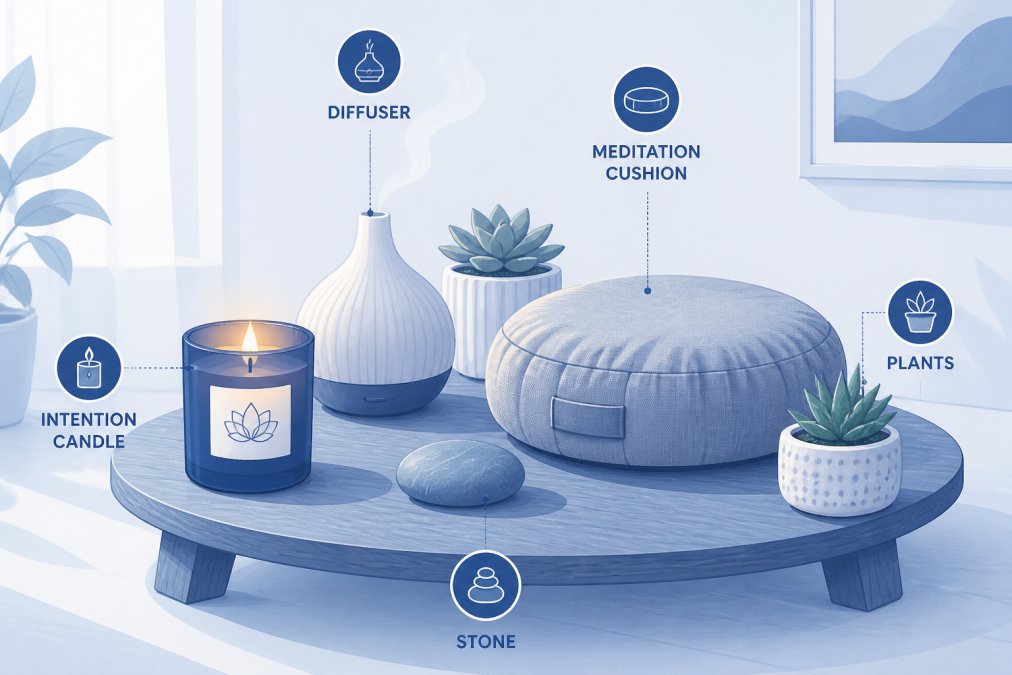
Color palette and visual cues
Warm neutrals, cream, soft grey, warm taupe, create a sense of safety and calm. Cool tones like pale blue and soft green are equally calming. Limit your palette to 2-3 colors maximum. If your corner is in a larger room, define your space with a subtle boundary, a small area rug, room divider, or change in lighting.
Visual cues matter more than decoration. A single meaningful item, a small statue, smooth stone, or plant, can serve as a focal point. Avoid clutter disguised as intentional décor.
Lighting to set the mood
Natural light during the day is ideal, but evening practice requires calm lighting. Harsh overhead lights work against relaxation. Use warm, diffused lighting instead, a small table lamp with a soft shade, string lights, or candles. Dimmable lights give you flexibility, brighter during morning practice, dimmer in the evening. Warm white (2700K) feels more calming than cool white (4000K+).
How to Start a Daily Meditation Practice
A beautiful space means nothing without consistent use. Start small, a 5-minute daily practice beats a 30-minute practice once a week. Choose a specific time and anchor your practice to that routine. Your brain learns to prepare for meditation when it recognizes the time and location.
Use your space intentionally. Light the candle, sit on your cushion, and begin. For beginners, simple breath awareness works perfectly, notice the sensation of breathing for 5 minutes. Your mind will wander; noticing the wandering and returning to breath is the practice.
Track your practice visually with a simple calendar. After 30 days of consistent practice, the habit becomes self-sustaining.
Budget-Friendly Hacks and Solutions
A meaningful meditation corner doesn't require significant spending. If you don't have a dedicated cushion, fold a firm pillow in half and place it on a folded blanket. For scent on a budget, use essential oils in a small bowl of water rather than buying a diffuser.
Create a room divider using a tension rod and fabric you already own. Propagate plant cuttings from plants you have or ask friends for divisions. Use natural light as much as possible rather than relying on artificial lighting.
The most important investment is your meditation cushion. A quality zafu costs $40-80 and lasts years. Everything else can be gathered gradually or created with what you have.
Creating a meditation corner at home is an act of self-care that pays dividends in calm, clarity, and resilience. AllWayzHome understands that transforming your home into a sanctuary requires thoughtful choices. Their curated collection of meditation essentials, from intention candles to plants and natural décor, helps you build a space that supports your practice while adding warmth and beauty to your home. Start with your location, add the essentials that matter most to you, and commit to showing up regularly. Your meditation corner will become one of the most valuable spaces in your life.
Frequently Asked Questions
What are the essential items for a meditation corner at home?
A meditation corner needs a cushion or mat for comfortable seating, soft lighting like candles or dimmers, plants for natural elements, and a scent source such as incense or essential oils. These meditation room essentials create a sensory experience that supports mindfulness. You can start with just a cushion and candle, then add elements gradually as your practice deepens.
How do I choose the best meditation cushion for home use?
Look for a cushion (zafu) that provides ergonomic support and keeps your spine aligned during long sessions. Height matters: 4-6 inches is standard for most practitioners. Firmness should support your knees and ankles without sinking. Natural materials like cotton or buckwheat hulls work well. Test the cushion's comfort for at least 15 minutes before buying to ensure it suits your body.
Can I set up a meditation corner in a small apartment or rented space?
Yes. A meditation corner can fit in a bedroom corner, closet, or alcove. Use room dividers or curtains for privacy without permanent changes. Choose portable items like cushions and plants in lightweight pots. For renters, avoid anything that requires drilling or painting. A 2-by-3-foot space is enough to create a dedicated sanctuary for your daily practice.
How do I manage noise in my meditation space?
Layer soft textures like blankets and rugs to absorb sound. Place your corner away from doors and windows where outside noise enters. Use white noise, nature soundscapes, or soft background music to mask distracting sounds. Thick curtains help dampen external noise. If noise persists, headphones with a meditation app can support your focus during practice.
This article was written using GrandRanker