Cart
0
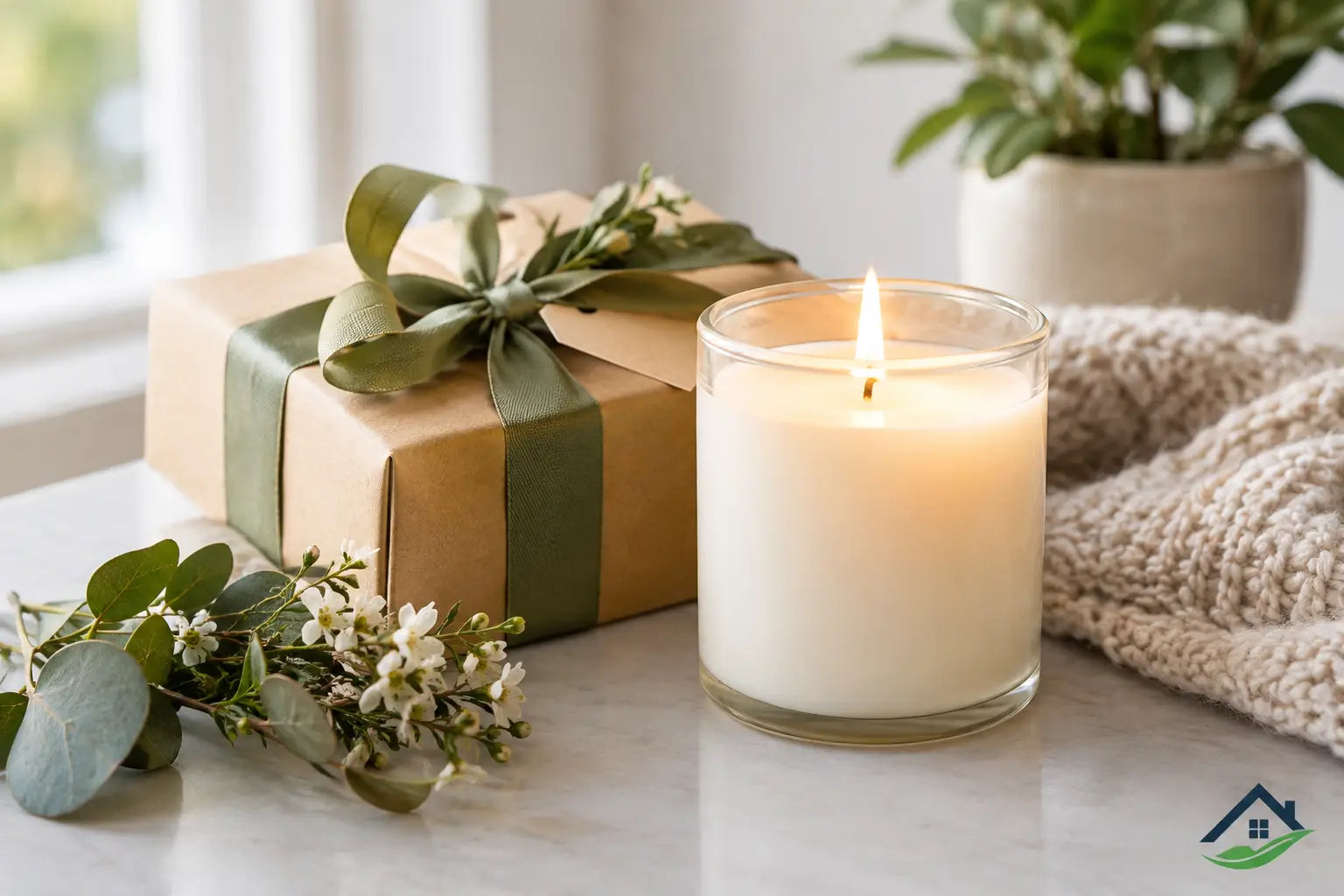
The first thing guests notice may not be the entry table or the throw pillows. It is often the feeling in the air. If you have wondered what scents make a home inviting, the answer is less about choosing the strongest fragrance and more about creating a gentle sense of comfort before anyone has settled in. The right candle, diffuser, or room mist can make a familiar space feel cared for, personal, and ready to be enjoyed.
An inviting home fragrance should feel like part of the atmosphere, not an announcement. Think of it as the finishing touch beside fresh linens, a thoughtfully styled tray, or a personalized detail that makes a house feel distinctly yours.
What scents make a home inviting?
The most welcoming scents tend to fall into a few emotional categories: warm and familiar, fresh and clean, softly floral, or lightly woodsy. The best choice depends on your space, the season, and the mood you want people to carry with them.
Vanilla, amber, sandalwood, citrus, lavender, eucalyptus, clean cotton, and gentle spices are perennial favorites because they feel recognizable without being overly specific. A bright citrus scent can make a kitchen feel freshly reset, while vanilla and warm woods make a living room feel more relaxed after dark.
There is no single scent that works for every home. A crisp, spa-inspired fragrance may feel perfect in a bright modern bathroom but a little too cool for a cozy fall gathering. Likewise, a cinnamon-heavy candle can feel festive in December yet overpowering on an ordinary spring afternoon. Fragrance works best when it supports the moment.
Start with a warm welcome at the entryway
Your entryway does not need a large diffuser or a complicated scent display. It simply needs a clean, light fragrance that creates an easy first impression. Citrus, bergamot, white tea, and soft linen scents work beautifully here because they feel fresh without competing with perfume, flowers, or dinner aromas.
For a more layered welcome, look for blends that pair bright top notes with a subtle base of cedar, musk, or amber. The citrus keeps the space open and polished, while the warmer notes make it feel less like a lobby and more like home.
If you are preparing for a housewarming, a candle and fragrance set placed near the entry can become both decor and ritual. Light it shortly before guests arrive, then let it continue quietly in the background. The goal is for people to think, “This feels lovely,” rather than immediately ask what scent is burning.
Choose comfort scents for living spaces
The living room is where softness matters most. It is the room for conversations that run long, movie nights, coffee with friends, and quiet evenings when you finally put your feet up. Fragrances with vanilla, tonka bean, cashmere, sandalwood, amber, or a soft hint of spice create that settled-in feeling.
Vanilla deserves its popularity, but it is most sophisticated when balanced with woods, sea salt, orchid, or amber. On its own, a very sweet vanilla can read more like dessert than decor. A blended version feels warmer and more dimensional, especially in a room with natural textures, indoor greenery, and cozy lighting.
Sandalwood and cedar are equally inviting choices for those who prefer less sweetness. These notes give a room an elegant, grounded character and pair naturally with neutral textiles, warm metals, and personalized accents. They are especially good for shared spaces because they tend to feel welcoming across a range of scent preferences.
For gatherings, keep fragrance close to the furniture
A single candle on a coffee table or console often does more than several heavily scented products scattered around the room. Smaller fragrance zones create an intimate effect. They also let guests move between spaces without feeling as though the same scent is following them everywhere.
When entertaining, avoid lighting a strongly scented candle beside food. Save richer blends for the living room and keep the dining area lighter, or fragrance-free, so the meal remains the focus.
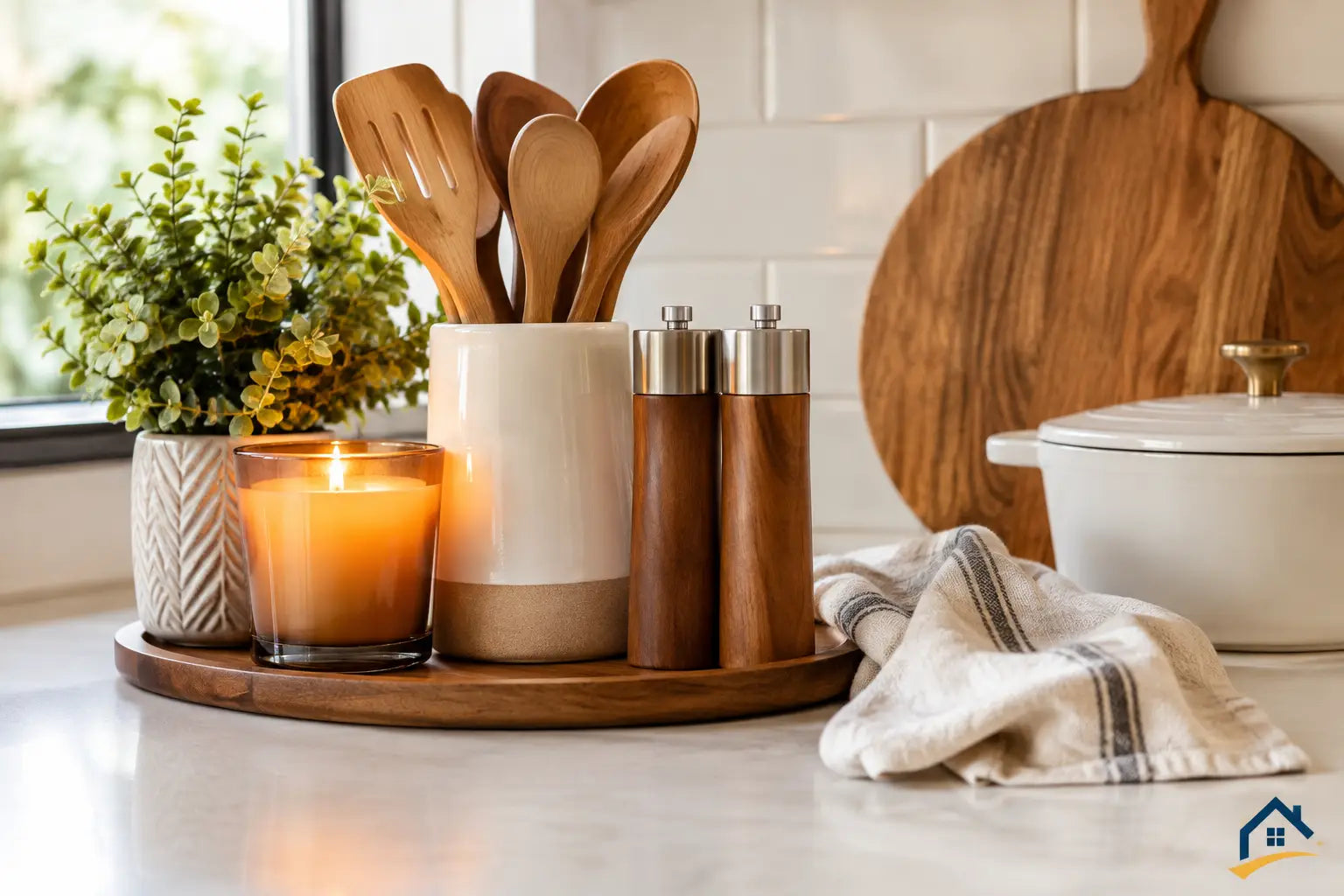
Make the kitchen smell fresh, not artificial
Kitchens need a slightly different approach. They already carry the aromas of coffee, toast, herbs, and whatever is on the stove. Heavy gourmands can clash with those natural smells, so fresh citrus, basil, mint, rosemary, grapefruit, and clean linen notes are usually a better fit.
Lemon is a classic for good reason. It signals cleanliness and brightness, especially after cooking. But a lemon fragrance with a little thyme, sage, or rosemary feels more refined than a sharp, one-note citrus. It evokes an open, sunlit kitchen rather than a cleaning product.
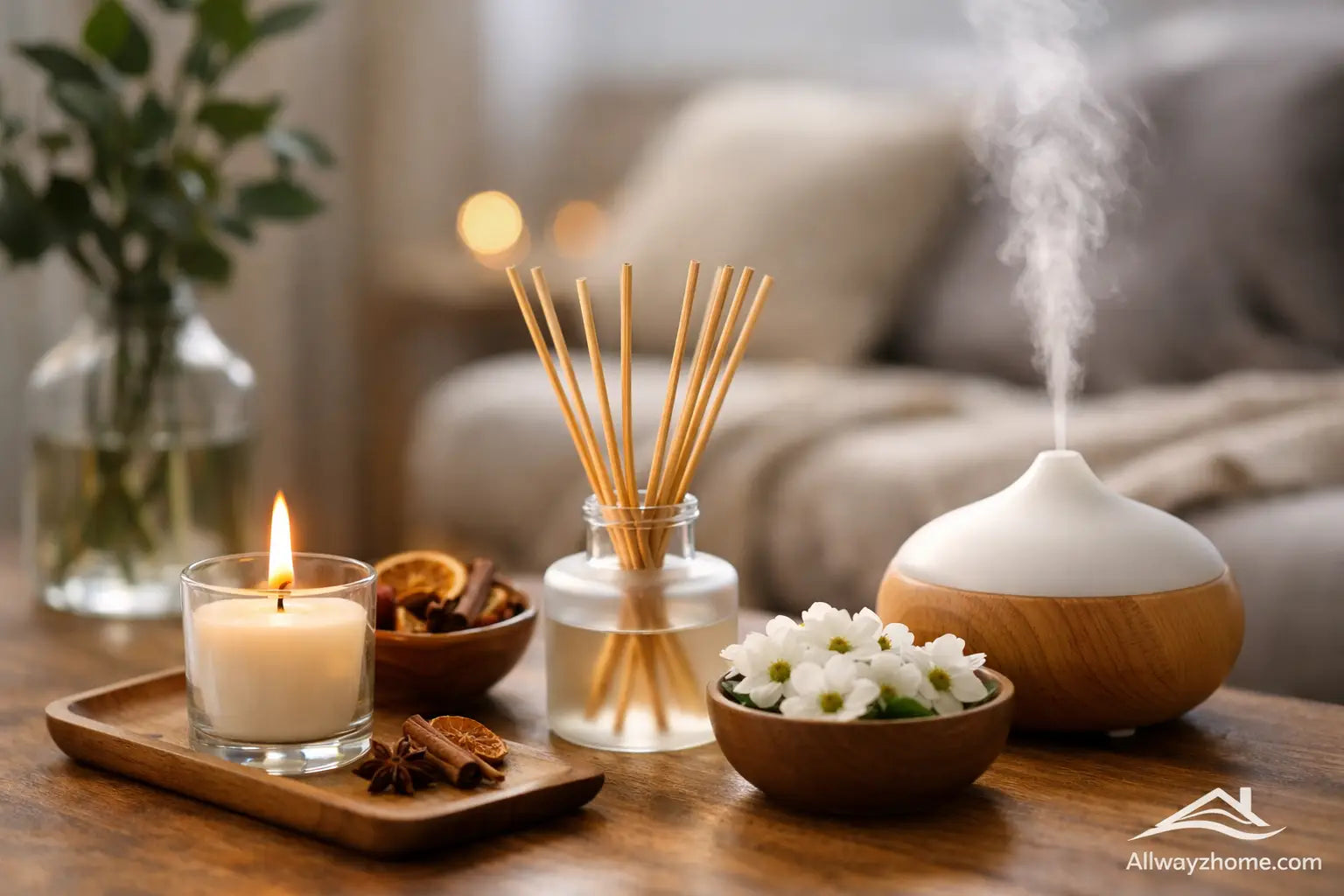
For a kitchen that doubles as a gathering place, try a diffuser with a subtle herb-and-citrus blend. Unlike a candle, it can provide a steady background fragrance without needing a flame while people are moving in and out of the room. Keep the reeds or diffuser on a counter away from heat and food prep areas.
Turn bathrooms into small moments of calm
A bathroom is one of the easiest rooms to elevate with scent because it is compact and used often. This is where airy, restorative fragrances shine: eucalyptus, lavender, aloe, white tea, sea salt, and soft florals all suggest a clean, relaxed retreat.
Eucalyptus and mint feel especially refreshing in a guest bathroom, while lavender brings a quieter, wind-down mood to a primary bath. If you like floral scents, choose petals balanced by green leaves, tea, or light woods. A dense floral can feel old-fashioned in a small room, but a softened blend feels polished and serene.
A reed diffuser is practical here, while a small candle can add a special touch before a bath or when guests are visiting. Pair the fragrance with folded hand towels, a simple tray, and a planter with a touch of greenery to make an everyday space feel intentionally prepared.
Use bedrooms for softer, more personal scents
Bedrooms are not the place for a scent that tries to impress the whole house. They are for comfort. Lavender, chamomile, soft musk, linen, sandalwood, and delicate vanilla can help create a familiar end-of-day ritual.
Linen scents are especially effective if you want a bedroom to feel freshly made even on a busy week. A light room mist on bedding or curtains can be lovely, but test it first on an inconspicuous area and use a light hand. Fragrance should never replace laundering sheets or opening a window when the weather allows.
For a more personal touch, choose a scent that marks a meaningful season in your life: the warm vanilla you burned in your first home, a cedar blend that reminds you of winter weekends, or lavender used during a peaceful bedroom refresh. These small associations are what make a space feel uniquely yours.
Let the season guide your fragrance choices
Changing scent with the season is one of the simplest ways to refresh a home without replacing decor. In spring and summer, citrus, green tea, cucumber, jasmine, and sea salt feel light and open. In fall, apple, cardamom, pumpkin, clove, and warm woods bring depth, though spice should be used sparingly in smaller spaces. Winter invites richer notes like fir, orange peel, vanilla, amber, and cedar.
You do not need to retire every favorite scent when the calendar changes. Instead, adjust its weight. A cedar-and-citrus blend can work all year, feeling fresh in summer and cozy in cooler months. This approach keeps your home recognizable while still making each season feel special.
Avoid the common fragrance mistakes
More fragrance does not equal more hospitality. Layering multiple strong candles, plug-ins, sprays, and diffusers can quickly make a home feel stuffy. Choose one primary scent family for connected rooms, then use complementary notes in separate areas. For example, citrus and herbs in the kitchen can sit comfortably alongside warm woods in the living room.
It also helps to consider sensitivity. Some guests have allergies, migraines, asthma, or simply a low tolerance for fragrance. Keep scent levels modest, use products as directed, and offer fresh air whenever possible. If you are hosting someone you know is sensitive, a clean home, fresh flowers, and a gentle unscented atmosphere are more considerate than any candle.
Finally, do not try to cover an odor with fragrance. Empty the trash, wash textiles, clean drains, and air out rooms first. Fragrance is most beautiful when it enhances a clean space rather than fighting one.
Create a scent story that feels like home
The most memorable homes have a point of view, and fragrance can be part of it. Perhaps yours is sunny citrus and herbs, warm amber and woods, or fresh linen softened with lavender. Once you find a scent family that feels right, repeat it in small ways through candles, diffusers, and gift-ready fragrance sets for a consistent, welcoming impression.
For a thoughtful housewarming or wedding gift, a beautifully chosen home fragrance feels personal without requiring you to guess someone’s exact decor style. Add it to a basket with a cozy throw, kitchen essentials, or a customized keepsake, and the gift becomes an invitation to make new memories at home.
Choose the scent that makes you exhale when you walk through the door. That quiet sense of ease is the one guests will remember long after the evening ends.