Cart
0

Table of Contents
- Why Minimalist Decor Matters in Small Spaces
- How Negative Space and Visual Clutter Shape Your Room
- Minimalist Apartment Layout Ideas That Maximize Square Footage
- Space-Saving Minimalist Storage Solutions for Every Room
- Minimalist Interior Design Rules That Actually Work
- Common Mistakes That Undermine Minimalist Decor
- Balancing Minimalism With Warmth and Comfort
- Conclusion
Last Updated: August 5, 2026
Why Minimalist Decor Matters in Small Spaces
Minimalist decor is essential for small living spaces because it creates psychological and physical comfort in compressed square footage. When you remove visual clutter, your brain processes the environment more easily. A room with fewer items feels larger, calmer, and more intentional because your eyes have less to process.
The key is avoiding the mistake of confusing minimalism with emptiness. Real minimalism means keeping only what serves a purpose or brings genuine joy, then arranging those pieces with intention so every item earns its square footage.
AllWayzHome understands this balance. Their curated collections are designed specifically for people who want to add warmth and character without overwhelming compact living areas. Rather than hunting for pieces that work together, their bundles combine complementary items, candles, planters, storage solutions, so your space feels cohesive from day one.
When you apply minimalist principles to a small apartment, you're not sacrificing comfort. You're optimizing it by saying: "Every object in this space has a reason to be here."
How Negative Space and Visual Clutter Shape Your Room
Negative space, the empty areas between and around objects, is your most powerful design tool in a small room. When you leave breathing room on shelves and walls, your eye travels freely and the room feels larger because your brain isn't competing for attention between dozens of objects.
Visual clutter operates like sensory noise. Each item demands mental processing. Multiply that across an entire room and you've created cognitive fatigue. People in cluttered spaces report feeling more stressed and less able to relax. In a minimalist space, your attention settles naturally on what matters: a single piece of art, a plant on a floating shelf, a throw blanket's texture.
The American Psychological Association's research on environmental design shows that spaces with intentional, limited decoration produce lower stress responses than highly decorated spaces. One beautiful candle from AllWayzHome on a clear surface creates more impact than five generic decorations fighting for attention.
The practical result: your small space feels larger, your mind feels calmer, and you actually enjoy the objects you've chosen to keep.
Minimalist Apartment Layout Ideas That Maximize Square Footage
Strategic furniture placement creates spatial flow and functional zones without dividing the room visually. A low-profile sofa can separate a living zone from a sleeping zone without blocking sight lines. A single tall shelf creates a visual boundary while maintaining the open floor plan that makes small spaces feel larger.
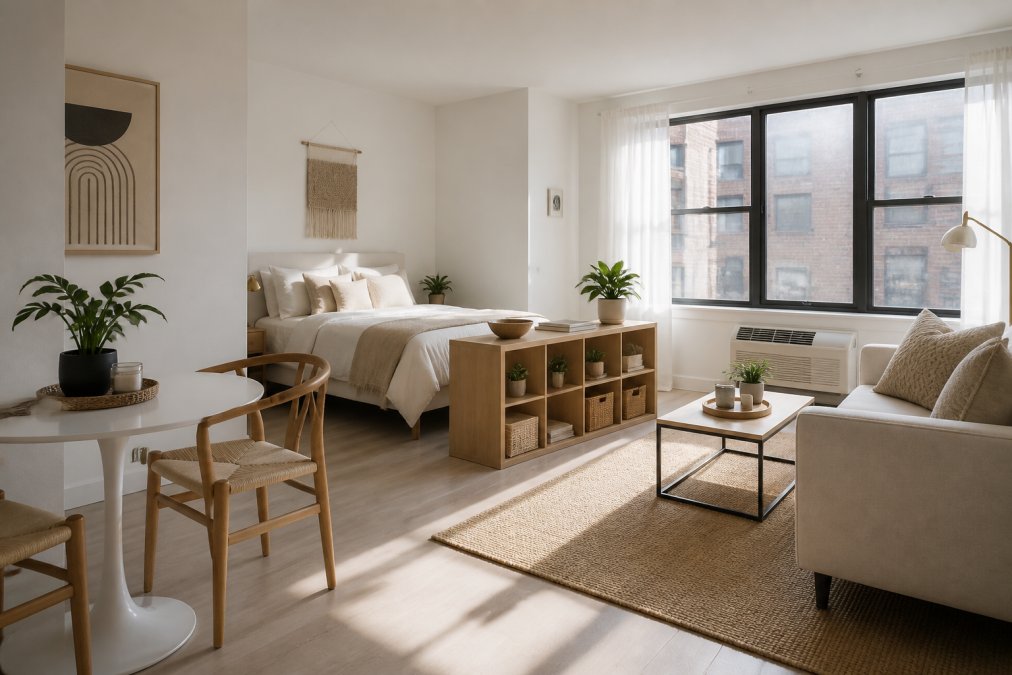
Multi-functional furniture is the backbone of minimalist apartment design. A coffee table with hidden storage serves double duty. A bed frame with drawers eliminates the need for a separate dresser. A desk that folds into the wall disappears when not in use.
Vertical space is where most people fail. Floating shelves don't consume floor space but provide storage and display area. Wall-mounted desks, fold-down tables, and hanging organizers transform empty vertical real estate into functional zones. Use the walls instead of the floor.
AllWayzHome's floating wall shelf demonstrates this principle perfectly. At just 3D-printed construction, it provides display space without visual weight. Arrange a few carefully selected items, a plant, a candle, a small book, and create a focal point that draws the eye upward. When your eye travels up, the room feels taller.

Space-Saving Minimalist Storage Solutions for Every Room
Storage in a minimalist apartment isn't about hiding clutter. It's about creating homes for the things you've decided to keep. Intentional storage means organizing your belongings so they're accessible and part of your design.
Closed storage works best for items you use regularly but don't want visible: linens, kitchen tools, cleaning supplies. Open storage works for items beautiful enough to display: books, plants, carefully chosen décor.
Drawer dividers and small containers transform storage from chaotic to intentional. Use small trays or boxes to create zones within drawers. Each category has a home, making maintenance effortless.
Wall-mounted organizers reclaim floor space. Over-the-door racks, wall-mounted pegboards, and hanging shelves provide storage without consuming square footage. In a bedroom, wall-mounted shelves above the desk eliminate the need for a tall bookcase.
AllWayzHome's Tidy Catch-All Tray offers a minimalist approach to surface organization. Rather than letting items scatter across nightstands, a single designated tray contains keys, wallet, glasses, and small items. The tray itself becomes part of your décor while keeping surfaces clear and functional.

Vertical storage in closets maximizes space dramatically. Shelf dividers prevent stacks from toppling. Hanging organizers create additional zones. The goal is to fit what you actually need in an organized, accessible way.
Minimalist Interior Design Rules That Actually Work
The first rule is that form follows function. Before choosing a piece for aesthetic reasons, ask: "Does this object serve a purpose in my daily life?" This filters out decorative items that consume valuable real estate without contributing to how you actually live.
The second rule is the color palette constraint. A minimalist space typically uses three to five colors maximum. Neutral base colors (white, gray, beige, black) provide stability. One or two accent colors add personality without chaos.
Texture layering replaces color variety in minimalist design. Use different textures, a smooth ceramic planter, a woven throw blanket, a wooden shelf, a soft area rug, to add warmth and dimension while maintaining clean lines.
Lighting is the minimalist tool most people overlook. Strategic lighting, a floor lamp in a corner, candles on a shelf, a desk lamp for focused work, creates zones and mood while serving functional purposes. AllWayzHome's elegant candle sets accomplish this beautifully. A candle is lighting, scent, and warmth in a single object.
The rule of intentional empty space means leaving gaps. Don't fill every shelf or hang art on every wall. The empty spaces make the filled spaces matter.
Clean lines and minimal ornamentation define minimalist aesthetics. Furniture with straight edges and simple silhouettes maintains visual calm without feeling cold or industrial.
Common Mistakes That Undermine Minimalist Decor
The biggest mistake is confusing minimalism with deprivation. Minimalism isn't about having nothing. It's about having only what matters. If warmth matters to you, warm elements belong in your minimalist space.
Another error is treating minimalism as a fixed aesthetic rather than a personal principle. Your minimalist space should reflect what you actually use and what genuinely brings you joy. If you love books or plants, a minimalist apartment with these elements is still minimalist if they're healthy and intentional.
Many people fail to maintain minimalist spaces because they lack systems. Without designated storage and organizational rules, clutter creeps back. The minimalist apartment that works has systems that make maintenance effortless.
Poor lighting choices undermine minimalist design constantly. A minimalist space with harsh fluorescent lighting feels cold. The same space with warm lamp lighting and candles feels inviting.
Balancing Minimalism With Warmth and Comfort
Minimalism without warmth is a gallery. Comfort without minimalism is clutter. The balance requires intentionality about what creates comfort for you.
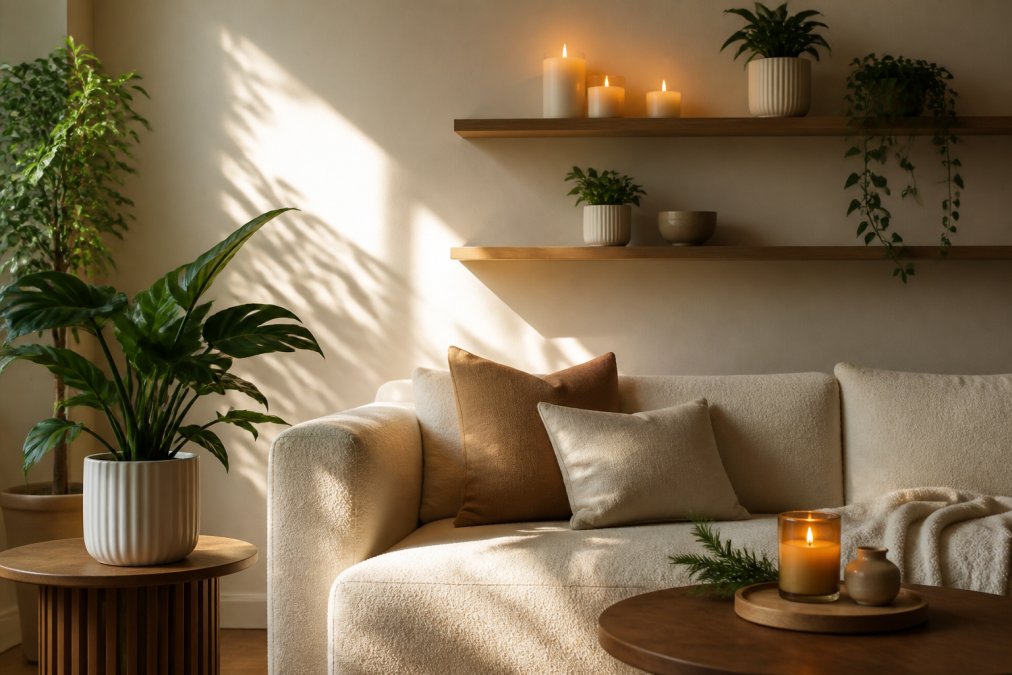
Texture adds warmth to a minimalist space. A chunky knit throw blanket on a simple sofa feels inviting. A natural fiber area rug grounds the room. Wood elements add organic warmth that metal and glass alone cannot provide.
Scent is an underutilized tool for creating sanctuary. A minimalist space can feel sterile without scent. Candles, diffusers, and plants introduce subtle fragrance that makes a room feel lived-in and cared for. AllWayzHome's candle and fragrance sets add sensory richness without visual clutter.
Plants bring life and warmth to minimalist spaces. A single large plant in a corner or several smaller plants on shelves creates visual interest and improves air quality. Plants are functional and beautiful.
Soft furnishings create comfort. A cushion on a hard chair, a throw blanket on a sofa, a rug under bare feet, these elements make minimalist spaces livable. Choose them intentionally: one beautiful cushion beats five generic ones.
Personal objects create warmth without clutter if chosen carefully. A few meaningful items, a framed photo, a beloved book, a memento, tell your story. Display them intentionally rather than scattered randomly.
Lighting temperature matters significantly. Warm white light (2700K-3000K) creates coziness. Cool white light feels clinical. In a minimalist apartment, warm lighting is essential.
The goal is a space that feels both calm and alive. Minimalist design provides the calm. Warmth, through texture, scent, plants, soft furnishings, and lighting, provides the aliveness.
Small spaces demand intentional choices. Every object should serve a function or bring genuine joy. When you apply minimalist principles, reducing sensory noise, using negative space strategically, choosing quality over quantity, your apartment transforms. It feels larger, you feel calmer, and you appreciate the things you've chosen to keep.
AllWayzHome makes this balance easier. Their curated bundles are designed so pieces work together beautifully, their planters and shelving solutions maximize vertical space, and their candle sets add warmth without clutter.
Explore More at AllWayzHome and discover how intentional living transforms small spaces into sanctuaries.
| Common Minimalist Mistake | Why It Fails | The Fix |
|---|---|---|
| Stripping space completely bare | Creates cold, uninviting environment | Keep items that add warmth and texture |
| Replicating someone else's design | Doesn't match your actual lifestyle | Design around what you genuinely use |
| Ignoring lighting | Makes minimalist space feel austere | Use warm lighting and candles |
| Skipping storage systems | Clutter creeps back gradually | Create designated homes for everything |
| Avoiding all color | Feels sterile and lifeless | Use 1-2 accent colors intentionally |
| Neglecting plants and greenery | Removes life from the space | Add plants that thrive in your environment |
Frequently Asked Questions
How does minimalist decor actually make a small room look bigger?
Minimalist decor reduces visual clutter and sensory noise, allowing your eye to move freely through the space without distraction. Uncluttered surfaces, negative space, and a cohesive color palette create an open, breathable design that feels larger than its actual square footage. Multi-functional furniture and clean lines further enhance spatial flow, making the room feel less cramped and more intentional.
What are the core minimalist interior design rules I should follow?
The foundation of minimalist interior design includes: prioritize function over decoration, keep only items that serve a purpose or bring joy, maintain a neutral color palette with selective accent colors, use negative space intentionally, choose multi-functional furniture, and embrace clean lines and architectural balance. These rules create a serene sanctuary while ensuring your space remains livable and comfortable, not cold or sterile.
Is minimalist decor expensive to implement in a rental?
No. Minimalist decor is actually budget-friendly because it requires fewer items overall. Focus on quality essentials rather than quantity, use affordable storage solutions like the Tidy Catch-All Tray ($30), and invest in versatile pieces that work across multiple rooms. Renter-friendly options include floating shelves, planters, and decluttering your existing items, all of which cost little to nothing and require no permanent changes.
Won't a minimalist apartment feel cold or unwelcoming?
Not when done thoughtfully. Minimalism doesn't mean sterile or empty. Layer textures through soft furnishings, add warmth with candle decor and ambient lighting, incorporate indoor greenery like honeycomb planters, and choose a warm neutral palette. The key is balancing restraint with intentional comfort, every item you keep should contribute to both function and the calm, inviting atmosphere you want to create.
This article was written using GrandRanker