Cart
0
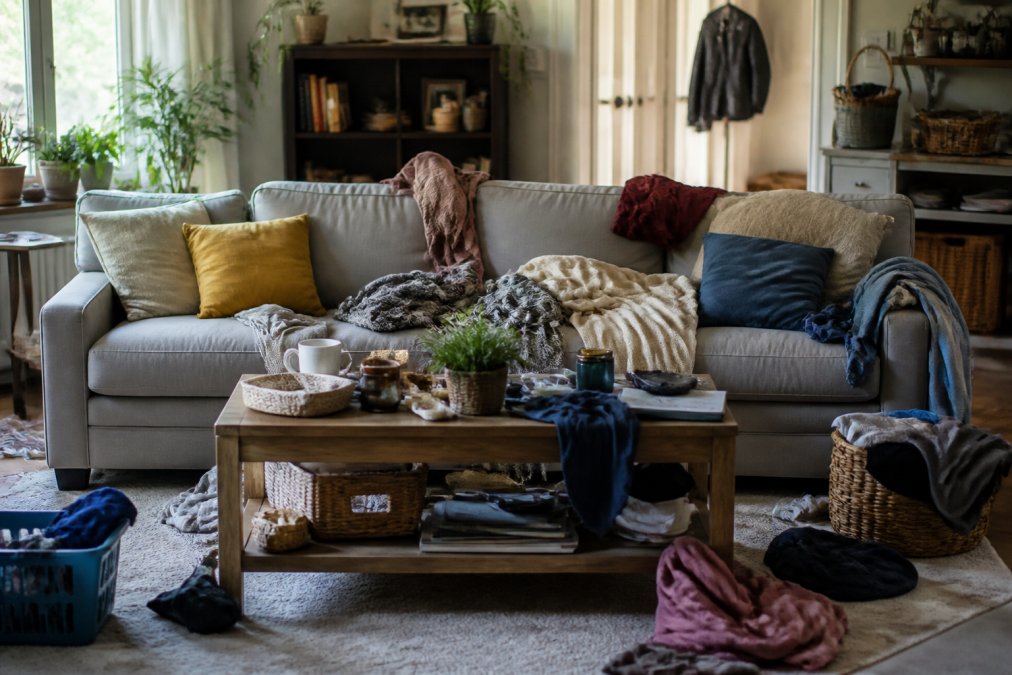
Table of Contents
- Identify Your Clutter Triggers and Problem Areas
- Assess Furniture Scale and Spatial Flow
- Minimize Visual Noise Through Strategic Accessorizing
- Minimalist Living Room Decor Ideas That Actually Work
- How to Organize a Living Room on a Budget
- Create Designated Zones and Manage Dead Space
- Maintain Your Decluttered Living Room Long-Term
- Conclusion
Last Updated: August 3, 2026
Identify Your Clutter Triggers and Problem Areas
Clutter stems from predictable sources: items without designated homes, excess textiles, and accumulated decorative objects. Remote controls scatter across tables. Throw pillows outnumber seating. Decorative pieces that once felt meaningful now create visual noise.
Common clutter sources in living rooms
Magazine stacks, outdated books, and electronics consume valuable surface space and make rooms feel smaller. A single shelf shouldn't hold more than three to five functional items plus one or two intentional decorative pieces.
Throw blankets and pillows deserve special attention. Many believe more textiles equal more comfort, but the opposite is true. A single quality blanket folded neatly creates visual interest; five stacked haphazardly creates chaos. The Velveteen Plush Blanket from AllWayzHome offers textural value without bulk.
Decorative accessories accumulate over years, figurines, candles, frames, vases, until your coffee table resembles a miniature shop. Each piece competes for attention, diluting the impact of anything you genuinely love.
The psychological impact of visual clutter
Research shows visual clutter creates cognitive load, triggering stress and reducing focus. Your brain works harder to filter irrelevant information, affecting your nervous system. Conversely, removing unnecessary items and creating breathing room leaves people feeling more relaxed, focused, and at ease. This is neurological, not superficial.
Assess Furniture Scale and Spatial Flow
Oversized sofas, massive entertainment centers, and too many side tables are the structural foundations of a cluttered living room. Even beautiful pieces can suffocate a space when improperly scaled.
Right-sizing furniture for your room
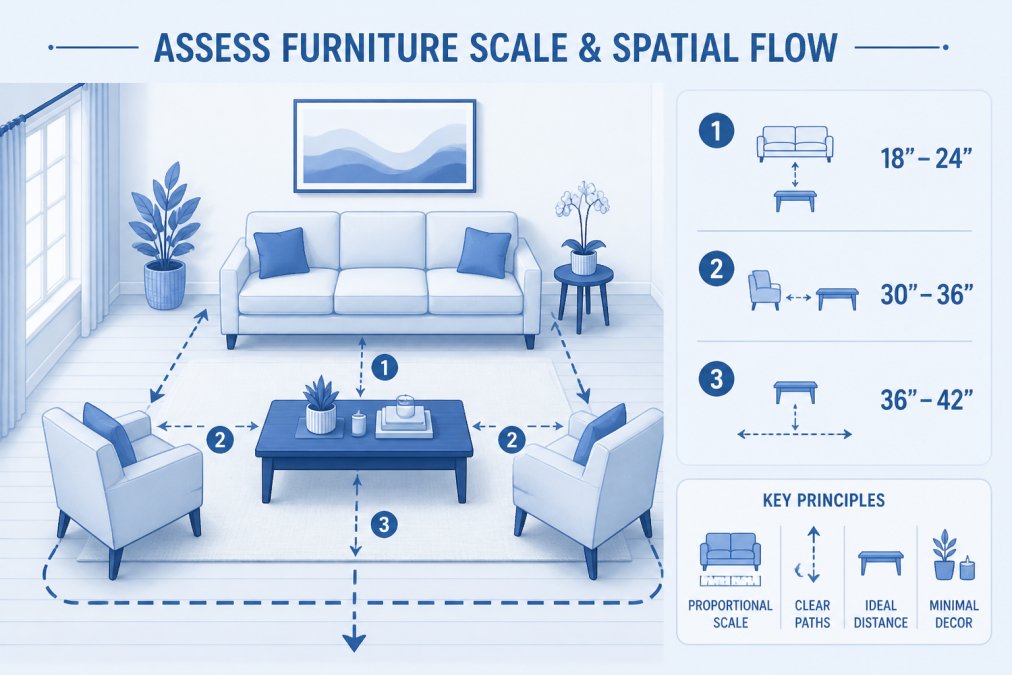
Measure your room first. A sofa should take up no more than one-third of the wall it sits against. A coffee table should sit 12-18 inches from the sofa with comfortable walking space around it. One well-placed side table per seating zone is typically sufficient.
Multi-functional furniture helps. A storage ottoman serves as footrest and blanket storage. A console table behind the sofa holds a lamp and curated items without demanding visual weight.
Creating clear traffic patterns
Clear pathways make a room feel larger and less cluttered. Arrange furniture to define a walking route from your entry to the sofa. The sofa should face a focal point, TV, window, or fireplace. Side tables sit at sofa ends, not in the middle of the room. A rug should anchor the seating area without blocking movement.
Minimize Visual Noise Through Strategic Accessorizing
More decor doesn't equal more personality. A room with ten decorative pillows feels chaotic; one statement pillow feels curated. Restraint is key.
The difference between functional and decorative items
Functional items serve a purpose: lamps provide light, throw blankets provide warmth, side tables hold drinks. Decorative items are purely visual. Before adding any accessory, ask: does this serve a purpose, or is it purely visual? If purely visual, does it genuinely enhance the aesthetic?
Curating a balanced collection of accents
Start by removing everything from surfaces, then reintroduce items one at a time. A curated living room typically includes:
- One statement artwork or small gallery wall
- One or two accent pillows on the sofa
- One quality throw blanket
- One decorative object per surface
- Functional lighting with aesthetic appeal
AllWayzHome's Tidy Catch All Tray 1.0 balances function and form perfectly. It contains remotes, keys, and small objects in a single attractive vessel rather than scattered across tables.

Pro Tip
If you can name every item in your living room and explain why it's there, you've achieved proper curation. If you find yourself saying "it's just been there," it's time to remove it.
Minimalist Living Room Decor Ideas That Actually Work
Minimalism means intentional, not sparse. Every item should contribute to the overall feeling you want to create.
Negative space and breathing room
Negative space is essential. When surfaces are completely covered, the eye has nowhere to rest. A coffee table with nothing on it or just a single decorative object looks intentional. The same table covered with magazines, coasters, and remotes looks cluttered. Apply this principle to every surface: shelves, side tables, and mantels should have more empty space than occupied space.
A shelf with five books, a small vase, and a framed photo, with visible space between items, looks curated. The same shelf packed tightly looks crowded.
Textural balance without overcrowding
Texture creates visual interest without adding clutter. A linen sofa, wooden side table, wool area rug, and ceramic vase provide variety. Aim for three to four primary textures: soft textiles, natural wood, a natural fiber rug, and one accent material like ceramic or glass.
The Modern Floating Wall Shelf from AllWayzHome adds texture through its 3D-printed design, creating visual interest on vertical surfaces without consuming floor space.

Key Takeaway
Negative space is not empty; it's the foundation of a calm living room. Every object should have room to breathe.
How to Organize a Living Room on a Budget
Fixing clutter doesn't require expensive furniture or storage systems. Often, the solution is rearranging what you have.
DIY storage hacks using what you have
Baskets under side tables hold throw blankets and magazines while adding texture. Vertical storage, wall-mounted or floating shelves, holds books and plants without consuming floor space. The Ribbed Modern Bookend from AllWayzHome works with floating shelves to organize items while creating visual interest.

Drawer dividers keep remote controls and charging cables corralled in one location. Repurpose existing items: a decorative tray groups related items; a decorative box hides items while keeping them accessible.
Affordable multi-functional furniture and decor
An ottoman with hidden storage holds blankets while providing a footrest. A console table behind the sofa creates surface space without taking floor area. A storage bench serves as seating, footrest, and storage.
When shopping on a budget, prioritize function first, aesthetics second. AllWayzHome's curated bundles combine functional items like the Tidy Catch All Tray with aesthetic pieces, ensuring everything works together visually and functionally.
Create Designated Zones and Manage Dead Space
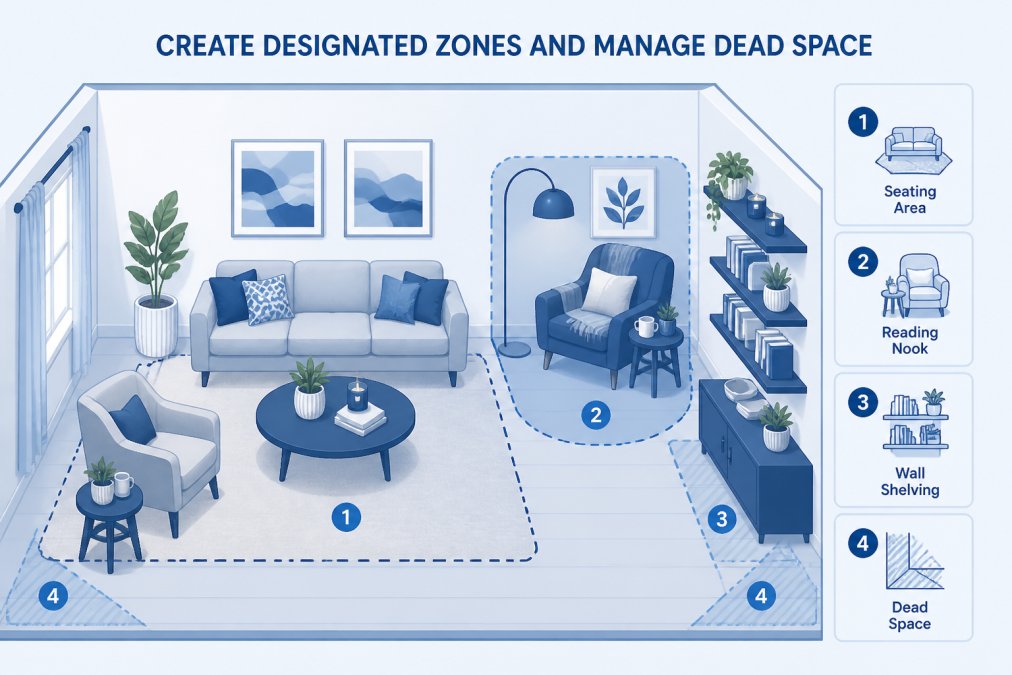
Distinct functional zones feel more organized than blended spaces. A reading nook, seating area, and work corner should be visually distinct.
Using rugs and furniture arrangement to define areas
A rug anchors a zone and creates visual boundaries. A rug under the main seating area defines that space; a smaller rug under a reading chair defines that zone separately. Furniture arrangement reinforces these zones, preventing items from migrating between them.
Tackling awkward corners and underused spaces
Transform dead space into functional areas. A tall plant in a dark corner brings life without requiring floor area. A narrow console table against an unused wall creates display space. A reading nook in a corner with an armchair, small table, and floor lamp transforms wasted space into a functional zone.
Maintain Your Decluttered Living Room Long-Term
Decluttering is a one-time project; staying decluttered requires systems and habits.
Seasonal rotation and storage habits
Seasonal rotation prevents permanent clutter. Heavy blankets belong in storage during summer. Holiday decorations should be boxed away. Establish a "one in, one out" rule: when you bring in a new item, remove something of similar size. Create designated storage outside the living room for items you want to keep but don't currently display.
Simple maintenance routines to prevent re-cluttering
A five-minute daily reset prevents clutter from building. Each evening, return items to their designated homes. A monthly edit allows you to reassess what's working. A quarterly deep clean gives you a chance to dust, reorganize, and reconsider your layout.
Watch Out
The biggest mistake is decluttering once and expecting it to stay that way. Without maintenance habits, clutter returns within 2-3 months. Systems matter more than the initial purge.
| Maintenance Task | Frequency | Time Required | Impact |
|---|---|---|---|
| Daily reset (return items to homes) | Daily | 5 minutes | Prevents daily accumulation |
| Weekly surface clearing | Weekly | 10-15 minutes | Maintains visual clarity |
| Monthly reassessment | Monthly | 20-30 minutes | Catches creeping clutter early |
| Seasonal rotation | Quarterly | 1-2 hours | Prevents permanent overflow |
A cluttered living room is a series of small decisions. Remove items without purpose. Right-size furniture. Curate accessories. Define functional zones. Establish maintenance routines. These steps compound into a space that feels calm, intentional, and genuinely livable.
Clutter returns naturally, it's the path of least resistance. Maintaining a decluttered space requires ongoing intention, but the payoff is significant: a room that supports your mental state and makes you want to spend time there.
AllWayzHome understands this balance between function and beauty. Their curated collections, from the Tidy Catch All Tray that organizes small items to the Modern Floating Wall Shelf that adds visual interest without floor clutter, are designed around the principle that every piece should earn its place. [AllWayzHome's home decor(https://allwayzhome.com/blogs/news/aesthetic-home-decor-ideas-for-small-living-rooms) collection | allwayzhome.com] offers bundles combining functional storage with aesthetic pieces, making it easier to build a cohesive, intentional living room. Start with one strategic piece and build from there.
Frequently Asked Questions
How do I know if my cluttered living room has a furniture scale problem?
Oversized furniture that dominates the room or too many pieces crammed together are the main signs. If you can't walk easily through the space or seating arrangements feel cramped, your furniture likely doesn't match your room's proportions. Measure your room and furniture before buying, and aim for pieces that leave at least 18 inches of walking space around major items. A single large sofa often works better than multiple smaller pieces in a compact living room.
What are budget-friendly ways to organize a cluttered living room without buying new storage?
Use decorative baskets under side tables, repurpose ottomans with hidden storage, stack books and magazines vertically on shelves, and install floating shelves for vertical storage. Catch-all trays like the Tidy Catch All Tray ($30) corral remotes, coasters, and small items on side tables. Use the backs of open shelving for wall-mounted organizers, and group similar items together to create visual order without purchasing additional furniture.
How does lighting affect the appearance of clutter in a living room?
Poor lighting makes clutter more visible and spaces feel smaller and more chaotic. Bright, layered lighting (overhead, task, and accent lights) helps define zones, highlights organized areas, and reduces visual noise. Dimmer switches let you adjust brightness for different moods. Shadows from inadequate lighting can make even a tidy room look disorganized. Adding a floor lamp or table lamp to dark corners improves both the room's appearance and your ability to locate items quickly.
What's the best way to use rugs to fix a cluttered living room?
A rug anchors your seating area and defines a designated zone, which instantly makes a room feel more organized. Choose a rug large enough that at least the front legs of furniture sit on it, creating visual cohesion. A single well-placed rug prevents the eye from bouncing across scattered furniture and creates a focal point. Avoid small rugs that make spaces look fragmented; they add visual noise instead of reducing it. A quality rug also helps absorb sound and makes the space feel intentional and curated.
This article was written using GrandRanker