Cart
0

Table of Contents
- Why Renter-Friendly Lighting Matters for Dark Rooms
- Best Renter-Friendly Lighting Ideas for Every Space
- How to Brighten a Dark Apartment Without Overhead Lights
- Warm vs Cool Light Bulbs for Dark Spaces
- Electrical Safety and Load Management in Older Apartments
- Lighting and Seasonal Affective Disorder in Rental Spaces
- Rental-Friendly Cable Management and Installation
- Lighting Solutions for Specific Rental Room Types
Renter-Friendly Lighting for Dark Rooms: A Complete Guide
Last Updated: August 4, 2026
Why renter-friendly lighting matters for dark rooms is one of the most overlooked aspects of apartment living. The right lighting transforms not just how a room looks, but how you feel in it. At AllWayzHome, we understand that renters need solutions that work without permanent changes. Below, we'll show you exactly how to brighten dark apartments using non-invasive, affordable, and genuinely effective strategies.
According to the U.S. Department of Energy, inadequate lighting affects mood, productivity, and sleep quality. Yet most rental apartments come with bare overhead fixtures or insufficient natural light. The good news: you don't need to rewire your space or negotiate with your landlord. Renter-friendly lighting solutions deliver professional results without leaving a trace.
Key Takeaway
The key insight: layered lighting (ambient, task, and accent combined) brightens dark rooms more effectively than any single fixture. Most renters use only one light source and wonder why their space still feels dim.
Why Renter-Friendly Lighting Matters for Dark Rooms
Poor lighting affects your circadian rhythm, increases eye strain, and can worsen seasonal affective disorder (SAD) symptoms. Renters face a unique constraint: permanence. You can't rewire, install recessed lighting, or mount heavy fixtures into plaster. This means you need solutions that are non-invasive, portable, and effective.
Research from the American Psychological Association indicates that environmental lighting significantly impacts mood and cognitive function. For renters in dark spaces, basement apartments, interior rooms, or buildings with limited window access, the psychological impact compounds over time. Adding proper lighting isn't a luxury; it's foundational to creating a livable space.
Watch Out
Common mistake: Buying a single bright floor lamp and expecting it to solve darkness. One light source creates shadows and uneven illumination. Your space needs multiple light layers from different angles.
Best Renter-Friendly Lighting Ideas for Every Space
Plug-in Pendants and No-Drill Solutions
Plug-in pendant lights are the renter's secret weapon. Unlike hardwired pendants, these hang from tension rods or adhesive hooks and plug into standard outlets. A tension rod stretches between two walls at ceiling height, and the pendant hangs from it. No drilling, no landlord approval needed. When you move, you take it with you.
The real advantage: they're adjustable. You can raise or lower the pendant by changing the rope length, and you can reposition the tension rod to different walls as your furniture layout changes.
Pro Tip
Pro tip: Use a plug-in pendant with a dimmer-compatible bulb (LED dimmable options are now standard). This lets you adjust brightness throughout the day without replacing fixtures.
Floor Lamps and Table Lamps for Layered Lighting
Floor lamps are the foundation of renter-friendly lighting because they require zero installation. Arc floor lamps curve over furniture and direct light downward, ideal for reading corners. Torchiere lamps direct light upward toward the ceiling, bouncing down as soft ambient lighting. Table lamps work best on nightstands, desks, or console tables, providing focused task lighting.
One floor lamp in a dark corner plus one table lamp on a side surface creates noticeably brighter, more balanced lighting than relying on ceiling fixtures alone. When selecting lamps, look for adjustable brightness (dimmable bulbs) and warm color temperatures (2700K) to avoid harsh, clinical lighting.
Rechargeable and Battery-Operated Options
For renters without convenient outlet placement, rechargeable and battery-operated lights offer flexibility. USB-rechargeable desk lamps, LED strip lights powered by batteries, and cordless pendant lights all work without permanent wiring. Rechargeable options typically hold a charge for 8-12 hours, making them suitable for evening use. Use them as supplementary lighting, not primary illumination.
How to Brighten a Dark Apartment Without Overhead Lights
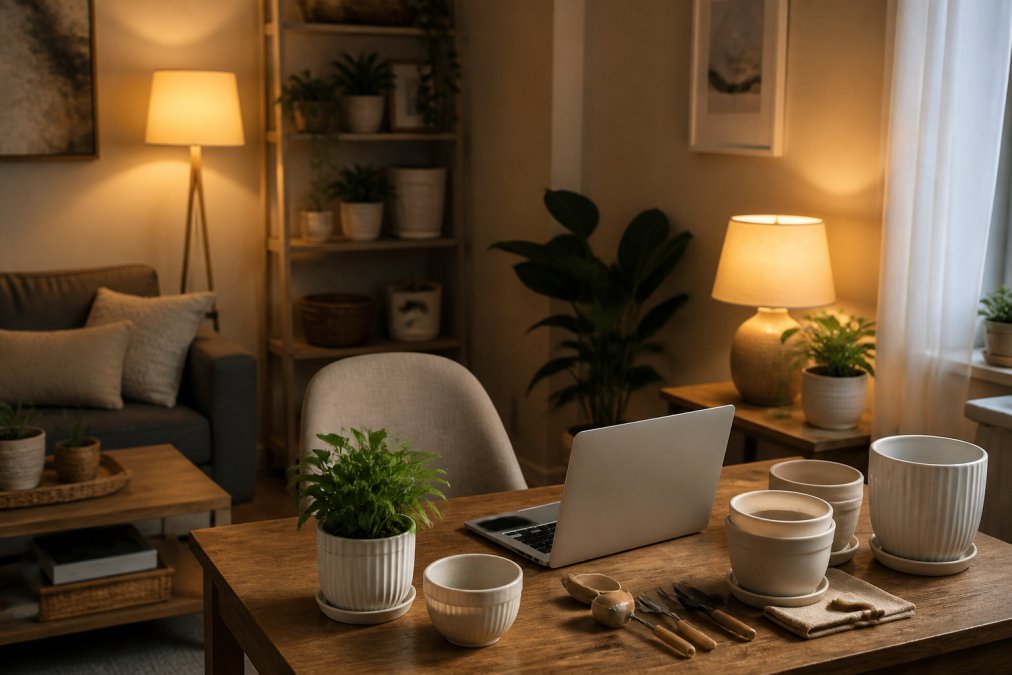
Light Layering: Ambient, Task, and Accent Lighting
The most effective approach to brightening dark apartments is light layering, combining three types of lighting to create balanced, functional illumination.
Ambient lighting is your baseline, the general illumination that fills a room. For renters, this typically comes from floor lamps with upward-facing shades, plug-in pendants, or wall sconces mounted on adhesive strips.
Task lighting targets specific activities: a desk lamp for work, a reading light by your bed, or a bright light over your kitchen counter.
Accent lighting highlights architectural features or creates mood. String lights, LED strip lights behind floating shelves, or small uplights in corners add visual interest.
The formula: ambient + task + accent = a room that feels bright, functional, and inviting. Start with ambient: choose one floor lamp or plug-in pendant as your primary light source. Add task lighting where you work or read. Then introduce accent lighting if your space and outlets allow.
Maximizing Natural Light With Mirrors and Reflection
Natural light is free and psychologically beneficial, but dark rooms often have limited window access. Mirrors multiply whatever natural light exists by reflecting it deeper into the space. Position mirrors opposite or adjacent to windows so they catch daylight and bounce it across the room. Large mirrors work best, but even small decorative mirrors contribute. The AllWayzHome collection includes pieces like the Wall Clock Living Room 3D Frameless Acrylic Mirror that serve double duty as both functional timepieces and reflective surfaces that amplify natural light.

A mirror opposite a window can increase the perceived brightness of a room by 20-30% without using any electricity.
Pro Tip
Pro tip: Hang mirrors at an angle rather than perfectly flat. This directs reflected light toward seating areas and work zones instead of bouncing it straight back out the window.
Diffusing Light for a Softer Glow
Harsh, direct light creates shadows and makes small spaces feel cramped. Use lampshades with fabric or frosted materials instead of bare bulbs. Sheer white or cream fabrics diffuse light beautifully. Frosted or opal glass diffuses light while maintaining brightness. Avoid dark or opaque shades in dark rooms; they absorb light rather than spreading it.
For plug-in pendants and overhead fixtures, choose shades that glow rather than cast light downward in a cone. String lights with frosted or fabric-wrapped bulbs create diffused accent lighting. A 60-watt equivalent bulb in a bare socket feels harsh; the same bulb in a fabric shade feels warm and bright.
Warm vs Cool Light Bulbs for Dark Spaces
Understanding Color Temperature and Kelvin Scale
Color temperature is measured in Kelvin (K), a scale that describes whether light appears warm (yellowish) or cool (bluish).
2700K (warm white): Yellowish, similar to incandescent bulbs. Creates a cozy, relaxing atmosphere. Best for bedrooms, living rooms, and spaces where you want to unwind.
3000K (soft white): Slightly warmer than cool white, a middle ground. Works well in kitchens and bathrooms where you need visibility without clinical coldness.
4000K (cool white): Neutral, similar to daylight. Good for task lighting, home offices, and areas requiring focus.
5000K and above (daylight): Bluish, mimics midday sun. Can feel harsh in residential spaces and may suppress melatonin production in the evening.
For dark rooms, brightness (measured in lumens) and color temperature are separate specifications. A 2700K bulb at 800 lumens feels warm and bright. A 5000K bulb at the same lumens feels clinical and harsh.
The practical choice for most dark apartments: start with 2700K or 3000K bulbs in ambient lighting. Use 4000K or neutral white for task lighting where you need clarity.
Warm White vs Cool White: Which Brightens Better
Cool white (4000K+) feels brighter because it's closer to daylight and higher in the blue spectrum. But warm white (2700K) actually distributes light more evenly and feels more livable over long periods.
- If you want visual brightness for tasks: Choose 4000K or neutral white. It provides clarity and reduces eye strain during detailed work.
- If you want a room to feel bright and inviting: Choose 2700K warm white. It feels cozier and still provides adequate illumination when paired with layered lighting.
- If you're managing SAD symptoms: Consider a mix. Use warmer light in living spaces and a 5000K daylight lamp in your workspace during winter mornings.
The lumens specification matters more than color temperature for actual brightness. A 2700K bulb at 1000 lumens outshines a 4000K bulb at 600 lumens, despite the cool white appearing "brighter" to our eyes.
Key Takeaway
Key insight: Don't confuse color temperature with brightness. Warm white at high lumens beats cool white at low lumens every time. Choose based on the feeling you want, then select lumens for the actual brightness level you need.
Electrical Safety and Load Management in Older Apartments
Older apartments present a hidden challenge: electrical load limits. Most rental apartments built before 1980 have 60-amp service. Modern apartments typically have 100-200 amps. A 60-amp panel can safely handle about 12,000 watts total.
Before installing multiple plug-in lighting solutions, check your electrical panel. If you see fuses instead of breakers, or if breakers trip frequently, your apartment likely has limited capacity. Avoid daisy-chaining power strips (plugging one strip into another), which is a fire hazard. Instead, use outlets on different circuits.
LED bulbs draw minimal power (8-12 watts vs. 60 watts for incandescent), so switching to LEDs throughout your apartment reduces overall load. A typical renter-friendly lighting setup, two floor lamps, one plug-in pendant, and a few table lamps, all LED, draws roughly 40-60 watts total, well within safe limits.
Watch Out
Safety concern: Never use extension cords as permanent solutions. If you don't have convenient outlets for your lighting setup, ask your landlord about installing additional outlets. Temporary cords are fire hazards in walls or under furniture.
Lighting and Seasonal Affective Disorder in Rental Spaces
Seasonal affective disorder (SAD) is a real condition affecting millions of Americans, particularly in northern states with long winters and limited daylight. Inadequate indoor lighting exacerbates SAD symptoms because it fails to stimulate the circadian rhythm and serotonin production that daylight provides.
For renters managing SAD, lighting becomes therapeutic. Aim for 10,000 lux (a measure of light intensity) during morning hours. A typical room lit with standard ambient lighting provides 300-500 lux. To reach therapeutic levels, you'd need a specialized SAD light box, which ranges from $30-$200.
Daylight-spectrum bulbs (5000K+) are more effective for SAD management than warm white. Use them in your workspace or a morning reading spot, not throughout your apartment. Light exposure is most effective in the morning. A 20-30 minute session with a 10,000 lux light box early in the day can significantly reduce SAD symptoms.
Rental-Friendly Cable Management and Installation
Adhesive Hooks and Tension Rod Solutions
The difference between a renter-friendly lighting setup and a tangled mess is cable management. Exposed cords don't just look unprofessional; they're tripping hazards and damage magnets.
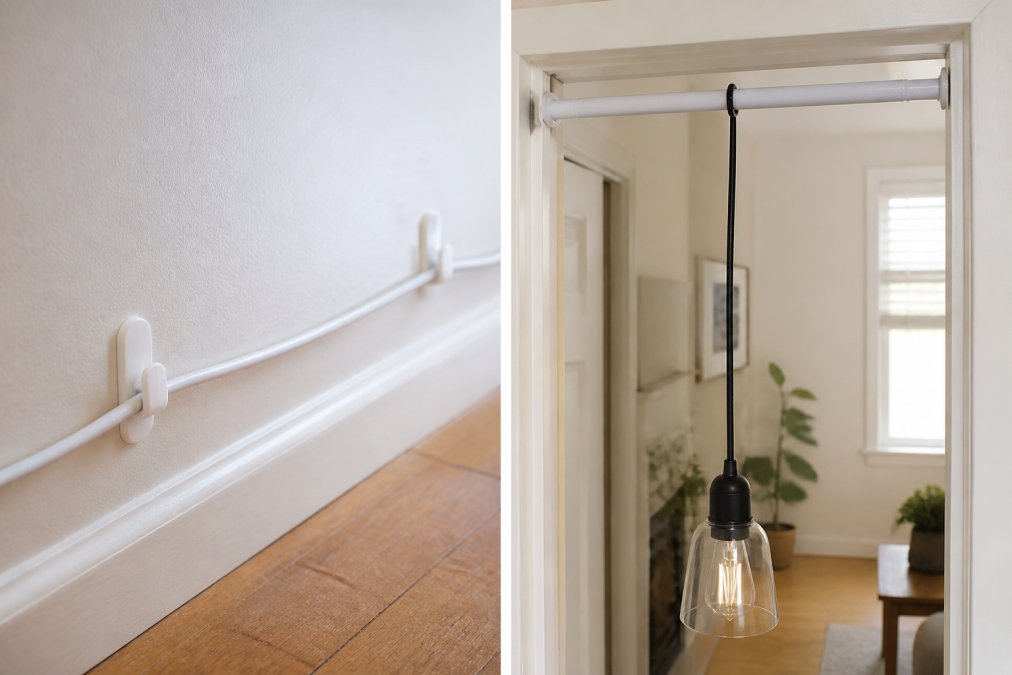
Adhesive hooks (command strips rated for your cord weight) route cables along baseboards and walls without drilling. Use them to guide cord runs from outlets to fixtures, keeping cables off the floor and out of walkways.
Tension rods mount pendant lights at ceiling height without any permanent installation. They grip between two walls or fit snugly in doorways. Pendant cords hang from them, and power cords run down the wall to nearby outlets.
Every cord should have a clear path from outlet to fixture. Avoid coiling excess cord behind furniture, where it can overheat. Instead, use cable clips or spiral wrap to bundle excess cord neatly, then store it in a drawer or closet.
Cord Management Without Damage
Renters' biggest fear: losing a security deposit due to damage. Proper cord management prevents both physical damage and the appearance of damage.
Use adhesive-backed cable clips, not nails or screws. These clips stick to walls and baseboards, hold cords securely, and leave no holes when removed. They're rated for different weights; choose clips rated for your cord thickness.
Avoid running cords under rugs or furniture. This creates fire hazards and damages both the cord and your flooring. Instead, use cord covers (plastic or fabric channels) to route cables along baseboards where they're visible but organized.
For temporary installations like plug-in pendants, use tension rods instead of ceiling hooks. Command strips (adhesive hooks) come in various weight ratings. For a pendant cord, use strips rated for at least 5 pounds. Anything that could damage paint or drywall when removed is not renter-friendly. Adhesive, tension, and removable clips are your allies.
Lighting Solutions for Specific Rental Room Types
Windowless Bathrooms and Interior Spaces
Windowless rooms present the ultimate dark apartment challenge: no natural light whatsoever. For windowless bathrooms, bright task lighting is essential. A vanity light (plug-in or adhesive-mounted) above or beside the mirror provides the illumination needed for grooming. Combine this with ambient lighting, a small wall sconce or ceiling light, to prevent harsh shadows.
Interior hallways and closets benefit from motion-activated LED lights. These battery-powered fixtures turn on when you enter and off after a set time, providing practical illumination without permanent installation. They're cheap ($15-$30) and genuinely useful in dark hallways.
Bedrooms, Living Rooms, and Kitchens
Each room type has different lighting needs.
Bedrooms need warm ambient lighting (2700K floor or table lamps) for relaxation, plus task lighting by the bed for reading. A plug-in pendant overhead provides additional ambient light if the room is particularly dark.
Living rooms benefit from layered lighting: a floor lamp in a corner for ambient light, task lighting for any work areas, and accent lighting (string lights, LED strips) to add visual interest.
Kitchens require bright task lighting over counters and the sink. Under-cabinet LED strip lights (plug-in, battery-powered, or adhesive-mounted) illuminate work surfaces without overhead fixtures. Combine this with ambient lighting from a floor lamp or plug-in pendant to avoid a surgical-light effect.
For kitchens, consider the AllWayzHome Modern Floating Wall Shelf. It serves as both storage and accent lighting, adding warmth to a dark kitchen while keeping the space organized.

| Room Type | Primary Lighting | Task Lighting | Accent Lighting | Color Temp |
|---|---|---|---|---|
| Bedroom | Floor lamp or plug-in pendant | Bedside table lamp | Optional string lights | 2700K |
| Living Room | Floor lamp + torchiere | Desk lamp if needed | LED strips, string lights | 2700K-3000K |
| Kitchen | Plug-in pendant or under-cabinet | Counter task light | Floating shelf with LED | 3000K-4000K |
| Bathroom | Vanity light | Mirror-mounted task light | Ambient corner light | 3000K-4000K |
| Hallway | Motion-activated LED | N/A | N/A | 3000K |
Transforming a dark rental apartment doesn't require permission, expensive renovations, or permanent changes. The right combination of layered lighting, strategic placement, and smart cable management creates a bright, inviting space that feels like home, regardless of how many windows your lease includes.
AllWayzHome specializes in curated home décor bundles that complement your lighting setup. From decorative vases and floating shelves to wall clocks that double as reflective surfaces, our collection helps you create a cohesive, well-lit living space that feels intentional and warm. Explore our selection and discover how thoughtful design transforms your rental into a sanctuary.
Frequently Asked Questions
Why does renter-friendly lighting matter more in dark apartments?
Dark rental spaces limit your ability to create a comfortable, inviting home. Poor lighting affects mood, productivity, and how spacious a room feels. Renter-friendly solutions let you add ambient lighting, task lighting, and accent lighting without permanent changes, making your rental feel brighter and more personalized. This is especially important if you're dealing with limited natural light or no overhead fixtures.
What's the best way to brighten a dark apartment without overhead lights?
Use light layering by combining floor lamps, table lamps, and plug-in pendants to create ambient, task, and accent lighting. Position floor lamps in dark corners, place table lamps on side tables for task work, and hang pendants from tension rods. Add mirrors to reflect available light and maximize its reach. Warm white bulbs (2700K Kelvin) create a cozy feel while cool white (4000K) feels brighter and more energizing.
Should I use warm white or cool white bulbs in dark rental spaces?
Warm white bulbs (2700K Kelvin) feel inviting and hide shadows well, making dark rooms feel cozier. Cool white bulbs (4000K-5000K Kelvin) appear brighter and are better for task areas like kitchens or desks. For dark apartments, start with warm white for living areas and bedrooms, then add cool white task lighting where you need visibility. Combining both creates balanced, functional lighting without feeling harsh.
What rental-friendly lighting solutions won't damage my apartment?
Use adhesive hooks to hang pendant lights from tension rods, plug-in options instead of hardwired fixtures, and floor/table lamps that need no installation. Adhesive hooks are removable and won't leave marks if applied correctly. Tension rods fit in doorways without drilling. Avoid hardwiring, drilling, or mounting anything permanently. Always check your lease before installation and test removable solutions in inconspicuous spots first to ensure they don't damage paint or walls.
This article was written using GrandRanker