Cart
0
Table of Contents
- Assess Light and Kitchen Conditions Before You Start
- Best Indoor Plants for Kitchen Shelves
- How to Style Open Kitchen Shelves with Plants and Containers
- Weight Capacity and Shelf Material Compatibility
- How to Care for Kitchen Plants and Maintain Your Arrangement
- Ergonomic Placement and Maintenance Access
- Common Mistakes to Avoid When Arranging Kitchen Shelf Plants
- Conclusion
Last Updated: August 14, 2026
Assess Light and Kitchen Conditions Before You Start
The foundation of any successful indoor plant arrangement on open kitchen shelves starts with understanding your specific light environment. Spend a few days observing how light moves across your shelves throughout the day, noting that morning light differs from afternoon light and seasonal changes affect intensity significantly.
Kitchen conditions also include humidity levels, temperature fluctuations near appliances, and air circulation patterns. Most kitchens experience higher humidity due to cooking and steam, which benefits many houseplants but requires careful moisture control. Shelves near ovens, refrigerators, or heating vents experience stress that some plants tolerate better than others.
Document your light conditions honestly. If your kitchen receives fewer than 3 hours of direct sunlight daily, you'll need shade-tolerant species. Bright indirect light from north-facing or east-facing windows suits most kitchen plants well. South and west-facing windows provide intense light for sun-loving varieties but may scorch sensitive foliage if not filtered.
Air circulation prevents fungal issues and keeps plants healthy. Position plants where air naturally flows around them rather than in enclosed shelf spaces, which trap moisture and invite pest problems.
Best Indoor Plants for Kitchen Shelves
Selecting the right species is critical for successful kitchen shelf arrangements. The best plants tolerate variable light, handle humidity well, and stay relatively compact. Pothos and philodendrons thrive in medium to low light and cascade elegantly over shelf edges. Snake plants bring architectural interest with upright, sculptural leaves and tolerate neglect, low light, and irregular watering. Peperomias offer compact, textured foliage perfect for filling gaps, while ZZ plants provide glossy, tropical-looking fronds and handle inconsistent care remarkably well.
For trailing options, string of pearls, string of hearts, and donkey tail succulents create beautiful spillover effects on higher shelves. Herbs like basil, oregano, and thyme combine practicality with aesthetic appeal. Ferns suit kitchens with consistent humidity and indirect light, though they need regular misting. African violets work if positioned away from direct water splashes and given bright indirect light.
How to Style Open Kitchen Shelves with Plants and Containers
Choose the Right Pots and Containers
Container selection shapes both the aesthetic and practical success of your arrangement. The right pot complements your kitchen decor while providing proper drainage and structural support. AllWayzHome's curated planter collections offer thoughtfully designed options that combine style with function, including their 3-Piece White Ceramic Planter Pot Set with Fluted Design featuring drainage holes and saucers, ensuring water doesn't damage your shelves while adding timeless elegance to your display.

Ceramic and stoneware planters suit most kitchen aesthetics. Glazed finishes work well in contemporary kitchens, while matte finishes pair beautifully with farmhouse or minimalist styles. Terracotta brings warmth and classic appeal but requires more frequent watering. Lightweight plastic or resin planters offer flexibility for renters and those concerned about shelf weight capacity.

Match pot size to your plant's root system. A pot that's too large retains excess moisture and promotes root rot, while one that's too small restricts growth. Most indoor plants thrive in containers just slightly larger than their current root ball. Use saucers or pot feet to protect surfaces from water rings and ensure air circulation underneath.
Color coordination matters for visual cohesion. A monochromatic palette creates a calm, intentional look, or select 2-3 complementary colors and repeat them across your arrangement.
Mix Heights, Textures, and Trailing Vines
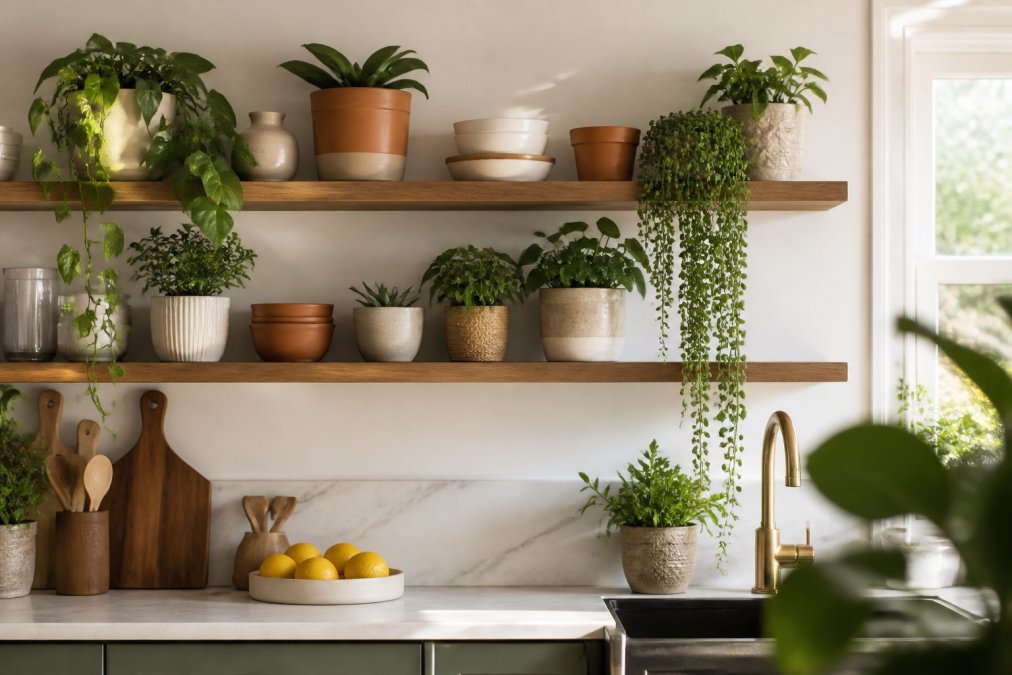
Layering plants at different heights creates visual interest and prevents your shelf from looking flat. Position taller, upright plants toward the back or sides, medium-height plants in the middle, and trailing vines toward the front edges. This staggered arrangement draws the eye across the entire shelf and makes efficient use of vertical space.
Texture variation is equally important. Combine smooth, glossy leaves with fuzzy foliage, feathery fronds, and sculptural forms. Trailing vines add softness and movement, breaking up hard shelf lines and creating a lived-in aesthetic. Position vines where they can spill freely without blocking access to other plants or kitchen items.
Repeat textures and heights across the shelf in an asymmetrical pattern. For example: tall upright plant on the left, medium plant with trailing vine in the center, shorter plant with textured leaves on the right. This rhythm feels balanced without being perfectly symmetrical.
Create Visual Depth and Asymmetrical Balance
Asymmetrical balance feels more dynamic than perfect symmetry. Group plants in odd numbers, three or five, rather than pairs. Position the tallest plant slightly off-center rather than dead in the middle.
Layering plants at different depths adds three-dimensional interest. Place some pots directly against the back of the shelf and others slightly forward. Color blocking helps establish visual depth: group plants with similar foliage colors together, then contrast with a plant featuring different coloring.
Don't fill every inch of shelf. Empty space between groups of plants gives your arrangement room to breathe and prevents visual overwhelm. This restraint actually makes the plants more impactful.
Weight Capacity and Shelf Material Compatibility
Most standard kitchen shelves support 25-50 pounds per linear foot, depending on material and installation. Calculate the combined weight of your plants, soil, and containers before arranging. A single large pot with moist soil can weigh 15-20 pounds.
Wooden shelves require different considerations than metal or glass. Solid wood handles weight well but absorbs water damage easily. Use saucers under all pots to protect wood from moisture stains. Laminate shelves are more vulnerable to water damage than solid wood. Metal shelves resist water damage but can rust if moisture sits on the surface. Glass shelves are elegant but can be damaged by pots shifting or heavy weight concentrated in small areas.
Bracket spacing affects weight capacity significantly. If your shelves feel bouncy or flex when pressed, they're overloaded or inadequately supported. Redistribute weight or reduce the number of plants.
Use saucers or waterproof trays under every pot. Some people place a waterproof mat across the entire shelf before arranging plants. This extra layer of protection saves your shelves and prevents water from dripping to shelves below.
How to Care for Kitchen Plants and Maintain Your Arrangement
Watering, Humidity, and Air Circulation
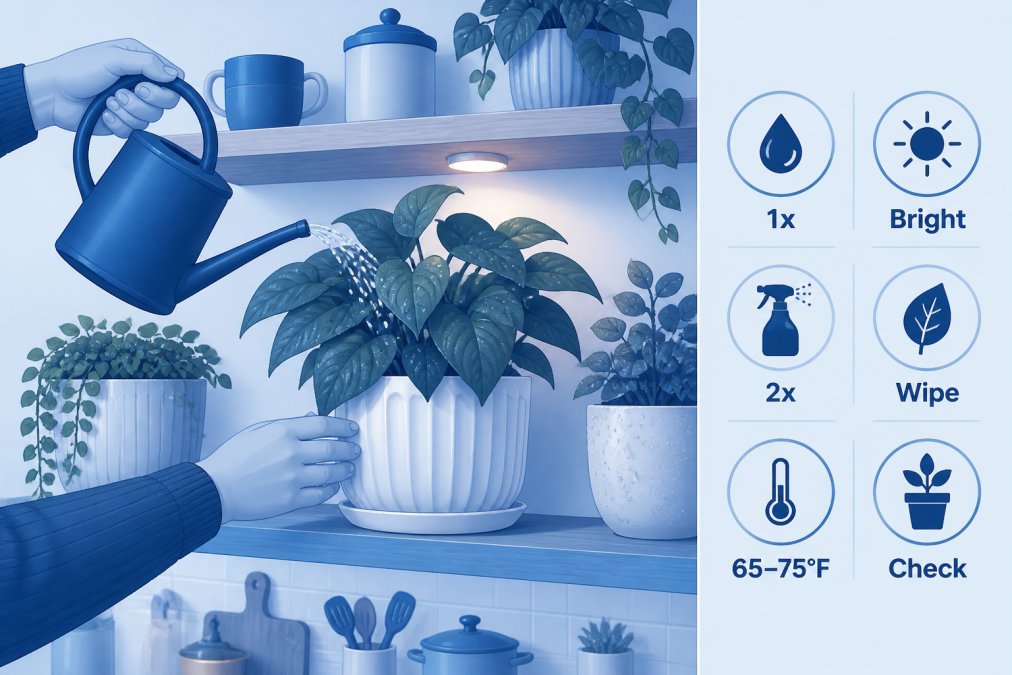
Most indoor plants prefer soil that's moist but not soggy. Check soil moisture by inserting your finger an inch deep; if it feels dry, water thoroughly until water drains from the bottom. Kitchen humidity naturally benefits most houseplants, but shelves can experience dry pockets near appliances or heating vents. Mist plants 2-3 times weekly to maintain humidity and prevent spider mites. Group plants closely together to create a humid microclimate.
Air circulation prevents fungal issues and keeps leaves healthy. Position plants where kitchen air naturally flows around them. If your kitchen lacks natural circulation, a small fan running occasionally helps tremendously.
Let tap water sit overnight before watering to allow chlorine to dissipate, or collect rainwater. Wipe foliage occasionally with distilled water to remove hard water deposits and keep plants looking their best.
Kitchen-Specific Pest Management
Spider mites thrive in dry conditions and warm kitchens, causing yellowing leaves and fine webbing. Prevent infestations by maintaining humidity and checking plants regularly. Isolate any infested plant immediately.
Fungus gnats breed in consistently moist soil and are attracted to kitchen food scraps. Allow soil to dry slightly between waterings, use sticky traps near plants, and avoid leaving standing water in saucers.
Scale insects and mealybugs occasionally appear on kitchen plants. Inspect new plants carefully before placing them on your shelves. If you notice cottony clusters or small brown bumps on stems, treat immediately with neem oil or insecticidal soap.
Prevent pest problems through good hygiene. Don't leave food debris near plants, wipe leaves occasionally with a damp cloth, and isolate any plant showing pest damage until treated successfully.
Ergonomic Placement and Maintenance Access
Position plants where they won't interfere with reaching frequently used items. Mid-shelf placements work best for active plant care. Avoid placing plants so high that watering or inspecting them requires a step stool.
Consider the weight of water-filled pots when arranging them. Heavy, wet pots are dangerous to lift from high shelves. Position larger, thirsty plants on lower or mid-level shelves where you can safely water and care for them. Smaller succulents that need infrequent watering can occupy higher shelves more safely.
If you frequently use the counter space below open shelves, ensure plants don't drip water onto your work surface or food preparation areas. Position plants toward the back of shelves or use waterproof trays to catch any drips.
Common Mistakes to Avoid When Arranging Kitchen Shelf Plants
Overcrowding is the most common mistake. Cramming too many plants together creates humidity pockets that encourage fungal problems and makes maintenance nearly impossible. Leave space between plants for air circulation.
Ignoring light requirements leads to slow decline. Match plant selection to your actual light conditions rather than hoping plants will adapt. If you love a plant but your light doesn't suit it, create a rotation system.
Inconsistent watering causes more plant deaths than any other factor. Establish a watering schedule and stick to it. Most kitchen plants prefer watering once or twice weekly. Set a phone reminder if needed.
Using pots without drainage holes guarantees problems. Always use pots with drainage holes and saucers to catch excess water. If you love a decorative pot without drainage, use it as a cache pot.
Forget about seasonal changes affects plant health. Winter brings lower light and drier air from heating systems. Reduce watering frequency in winter and move plants closer to windows if possible. Adjust plant positions seasonally to match changing light angles.
Neglecting to dust leaves reduces photosynthesis and makes pest infestations harder to detect. Wipe leaves monthly with a soft, damp cloth.
Creating a beautiful, thriving arrangement of indoor plants on open kitchen shelves requires balancing aesthetics with practical horticultural care. AllWayzHome's thoughtfully curated planter collections, including their 4 Inch Self Watering Planter and 3-Piece White Ceramic Planter Pot Set with Fluted Design, make it easier to achieve both. Start with the right containers, position plants strategically for light and air circulation, and commit to consistent care. Your kitchen will transform into a warm, inviting space where living plants add both beauty and character to your daily routine. Explore more curated home essentials to complete your kitchen's transformation.

| Arrangement Element | Purpose | Best Placement |
|---|---|---|
| Tall upright plants | Create height and focal points | Back or sides of shelf |
| Trailing vines | Add softness and movement | Front edges or cascading over |
| Medium plants with texture | Fill visual gaps and add interest | Center or middle positions |
| Compact succulents | Occupy tight spaces with minimal care | Any position with good light |
| Decorative containers | Tie arrangement to kitchen decor | Repeated throughout for cohesion |
Frequently Asked Questions
What are the best low-maintenance plants for kitchen shelves?
Pothos, snake plants, and philodendrons thrive in kitchens with moderate light and humidity. These trailing and upright varieties tolerate inconsistent watering and adapt to kitchen temperature fluctuations. Succulents work well on higher shelves where they receive brighter light. When selecting plants, prioritize shade-tolerant varieties if your kitchen lacks direct sunlight, and choose plants with compact growth habits that won't outgrow shelf space quickly.
How do you ensure plants get enough light on kitchen shelves?
Position plants closest to windows or under skylights where they receive 3-6 hours of indirect light daily. North-facing shelves work for shade-tolerant plants like pothos and ferns. South or west-facing shelves support light-loving plants like succulents and herbs. Rotate plants monthly so all sides receive equal exposure. If natural light is limited, keep plants on lower shelves near the kitchen sink where reflective surfaces bounce light upward.
How do you balance plants and kitchenware on open shelves?
Arrange plants and kitchen items in a 60-40 ratio, with plants occupying slightly less space to maintain functional access to dishes and glasses. Group plants in odd numbers (three or five) for visual interest, and stagger heights so shorter items fit between taller plants. Use decorative containers that complement your kitchen's color palette. Leave space between groupings so shelves don't feel crowded, and ensure trailing vines don't block access to frequently used items.
What should I know about shelf material compatibility with plants?
Wood shelves absorb moisture from pot drainage and soil, potentially warping or staining over time. Use pot saucers under all planters to protect wood surfaces. Metal shelves handle moisture better but may rust if exposed to constant water. Glass shelves show water spots but are easiest to clean. Ensure your shelf can support the combined weight of soil-filled pots, a 5-inch ceramic planter with moist soil weighs 3-4 pounds. Distribute weight evenly across the shelf to prevent sagging.
This article was written using GrandRanker