Cart
0
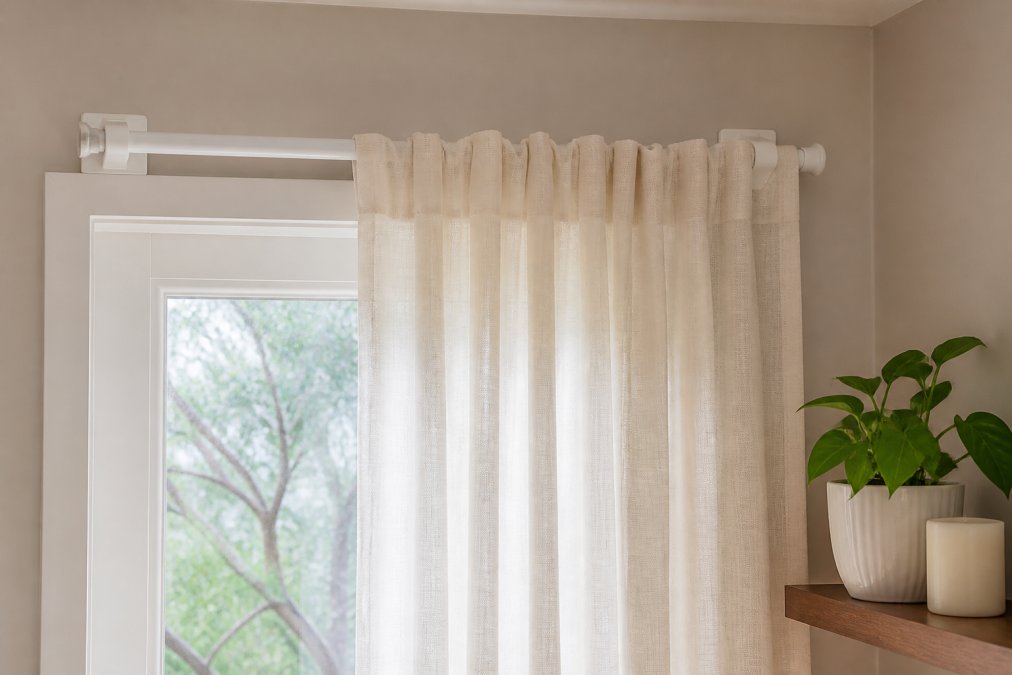
Table of Contents
- Why No-Drill Curtain Rod Solutions Matter for Renters
- No-Drill Curtain Rod Brackets That Tap Into Window Trim
- Tension Curtain Rods for Heavy Curtains
- How to Hang Curtains Without Damaging Walls
- Self-Adhesive Curtain Rod Brackets and Command Hooks
- Comparison of Weight Limits Across No-Drill Options
- Aesthetic Integration and Interior Design Considerations
- Long-Term Durability and Damage Assessment
Last Updated: August 9, 2026
Why No-Drill Curtain Rod Solutions Matter for Renters
Renters face a persistent problem: how to personalize a space without forfeiting a security deposit. Traditional curtain installation requires drilling holes into walls, which landlords explicitly prohibit. A no-drill curtain rod solves this tension by offering damage-free alternatives that look polished while protecting your rental agreement.
Drilling unauthorized holes can cost anywhere from $50 to several hundred dollars in damages when you move out. No-drill solutions eliminate this friction entirely. AllWayzHome understands the challenge renters face when trying to create a warm, inviting space without permanent modifications. Whether you're hanging lightweight sheers or medium-weight drapery, the right no-drill system makes the difference between a temporary setup that feels makeshift and a curated interior that reflects your style.
Several categories of damage-free hardware exist, each with distinct trade-offs. Some rely on tension mechanisms that grip between surfaces. Others use adhesive technology. A few attach to existing window trim or blinds. Understanding these options helps you choose the solution that matches your window type, curtain weight, and aesthetic goals.
Pro Tip
The most common mistake renters make is buying the cheapest adhesive brackets without checking weight capacity. A $5 set might fail within months, leaving you with damaged paint and curtains on the floor. Spending slightly more on proven hardware prevents costly replacements and wall damage.
No-Drill Curtain Rod Brackets That Tap Into Window Trim
How Tap-In Brackets Work
Tap-in brackets represent the fastest installation method for no-drill curtain rod solutions. These brackets feature a patented design that wedges into the top of wooden window trim using nothing but a hammer and a few gentle taps. The mechanism is straightforward: each bracket has a specially angled edge that catches the underside of the trim when tapped downward. The friction created by this tight fit holds the bracket securely in place. A rubber or felt pad on the bracket's underside prevents marking or scuffing the wood. Installation typically takes under 60 seconds per window.
Kwik-Hang No-Drill Curtain Rod Brackets exemplify this category. They're made in the USA and come in multiple finishes including Black, Silver, Brass, White, and Bronze. The brackets accommodate standard curtain rods and install without any permanent modification to your rental.
Weight Capacity and Installation
Tap-in brackets support up to 20 pounds, making them suitable for lightweight sheers through medium-weight drapery. Installation requires one critical condition: your window must have wooden trim at least half an inch wide. PVC trim is too soft and may crack. Metal won't grip reliably. MDF lacks the density needed for a secure hold. Hardwoods are so dense that tapping can split the wood or bend the bracket.
The process is simple: position the bracket where you want the rod to sit, tap gently with a hammer until fully seated, and you're done. The bracket grips immediately and can hold weight right away.
Key Takeaway
Tap-in brackets are the fastest no-drill curtain rod solution if your windows have wooden trim. Installation takes under a minute per bracket, and they support up to 20 pounds without any wall damage.
Tension Curtain Rods for Heavy Curtains
Tension rods work by creating pressure between two surfaces, gripping through friction rather than fasteners or adhesive. You extend the rod until it's tight, then it stays in place through the spring-loaded mechanism inside. The appeal is obvious for renters: zero holes, zero adhesive, zero permanent marks. The downside is that tension rods require a snug fit to work properly. Too loose and they'll sag or fall. Too tight and you risk creating indentations in drywall or cracking trim.
Spring-Loaded Tension Mechanisms
Most tension rods use an internal spring mechanism that creates outward pressure. You compress the rod to fit it into the space, then release it. The spring pushes outward, pressing the rod ends against the surfaces on either side.
Umbra Anywhere Tension Rod & Room Divider represents a premium option. It adjusts from 36 to 66 inches wide and 7 to 10 feet tall, giving flexibility for unusual window sizes. The wrap-around design keeps curtains flush against the wall, improving blackout performance.
RoomDividersNow Premium Tension Curtain Rod takes a heavy-duty approach. Made from hardened, annealed steel, it's designed for larger spans and heavier curtains. The 1-inch diameter rod provides substantial support, and the 1-5/8 inch end caps with rubber grips protect walls and windows from marks.
Load-Bearing Capacity and Span Limitations
Tension rod capacity varies by model and span. A tension rod supporting 15 pounds across a 36-inch span might only handle 8 pounds across 60 inches. Umbra's system maxes out at 15 pounds. RoomDividersNow's heavy-duty rods can handle significantly more weight but require careful measurement to ensure they're tight enough.
The real limitation with tension rods is fit. The rod must be tight enough to create sufficient friction. If your window frame is uneven or the walls aren't parallel, the rod might not grip evenly.
Watch Out
Tension rods can create permanent indentations in drywall if overtightened. The rubber end caps help, but pushing too hard leaves marks that may not fully disappear. Measure carefully and apply even pressure on both sides to avoid this damage.
How to Hang Curtains Without Damaging Walls
Surface Preparation Before Installation
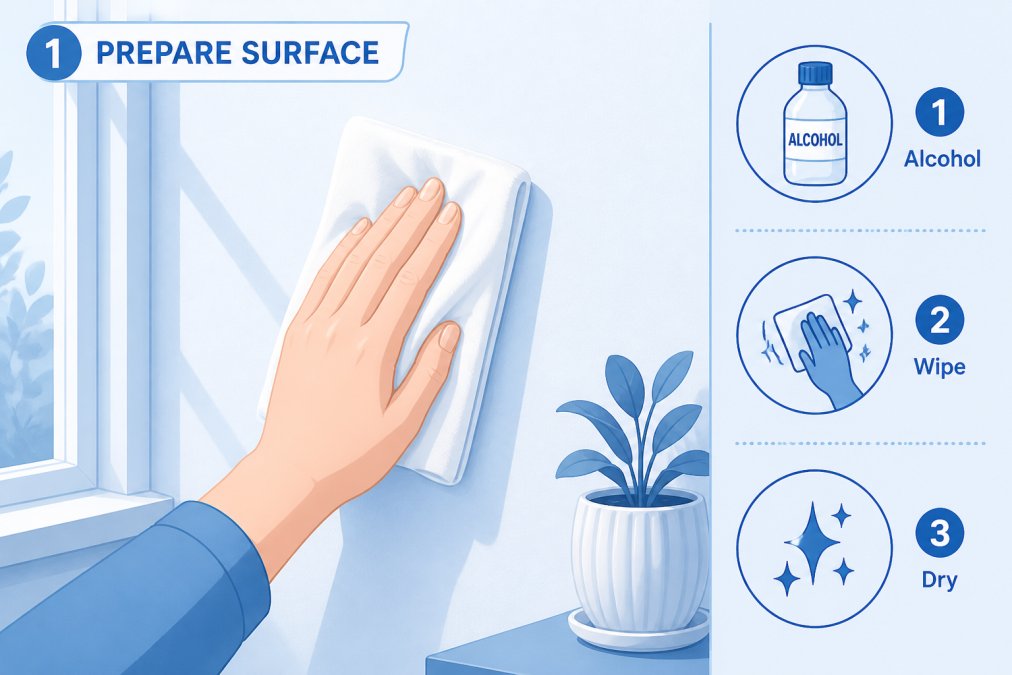
The difference between adhesive brackets that stay put for years and those that fail within months comes down to surface preparation. Clean the surface thoroughly with a cloth slightly dampened with rubbing alcohol to wipe down the area where you'll install the bracket. This removes dust, skin oils, and any residue that might prevent adhesive from bonding. Let the surface dry completely, at least 30 seconds.
For textured drywall, adhesive brackets struggle to create full contact. If your walls are textured, consider tension rods or tap-in brackets instead. If you must use adhesive, sand the installation area lightly with fine-grit sandpaper to create a smoother surface, then clean again.
Temperature matters too. Adhesive works best in temperatures between 60°F and 85°F. If your space is cold, wait for a warmer day or use a hair dryer on low heat to warm the wall surface before installation.
Adhesive Bracket Installation Steps
Once your surface is clean and dry, follow this process for reliable installation:
-
Position the bracket without removing the adhesive backing. Hold it where you want it mounted and verify it's level and at the right height.
-
Remove the adhesive backing carefully. Peel back just enough to expose the adhesive.
-
Press firmly for 30 seconds. Apply steady pressure across the entire bracket.
-
Wait before hanging the rod. Most adhesive brackets require 24 hours before they can support weight. This isn't optional.
-
Test the bracket before installing curtains. After 24 hours, press on the bracket firmly. It should feel completely solid with no flex.
Self-Adhesive Curtain Rod Brackets and Command Hooks
Adhesion Performance on Different Surfaces
Adhesive brackets work best on smooth, non-porous surfaces: painted drywall, glass, metal, tile, and laminate. They struggle on textured surfaces, wallpaper, and any surface that's dusty or oily.
Command Decorative Curtain Rod Hooks from 3M are the market standard for adhesive solutions. They're rated to hold up to 10 pounds (some variants specify 5 pounds, so check your specific product). The hooks fit standard 0.5 to 0.75 inch diameter curtain rods.
Generic self-adhesive brackets sold at retailers often cost less but vary wildly in quality. The adhesive itself matters. Acrylic-based adhesive bonds through a chemical reaction that strengthens over time. Rubber-based adhesive creates an immediate bond but weakens as the adhesive ages. 3M uses acrylic adhesive, which is why Command hooks outlast cheaper alternatives.
Removal Without Residue or Wall Damage
Proper removal of adhesive brackets prevents wall damage and sticky residue. Wait at least 24 hours after installation before removing anything. The adhesive needs time to fully cure, which paradoxically makes removal easier.
To remove, pull slowly and steadily at a 45-degree angle toward the wall. Don't jerk or pull straight out, this increases the chance of pulling paint or drywall with it. If residue remains, use a plastic scraper or old credit card to gently roll the adhesive off the wall. Heat from a hair dryer on low can soften stubborn residue.
Command makes removal strips designed specifically to replace their hooks. These strips adhere to the hook's base and release the adhesive without pulling paint.
Key Takeaway
Adhesive brackets work well on smooth surfaces and can be removed cleanly if you follow proper technique. The 24-hour cure time is essential for both installation reliability and clean removal.
Comparison of Weight Limits Across No-Drill Options
Understanding weight capacity helps you choose the right solution for your specific curtains. Different fabrics and sizes create vastly different loads.
| Solution | Weight Capacity | Best For | Surface Requirements |
|---|---|---|---|
| Tap-In Brackets (Kwik-Hang) | 20 lbs | Medium-weight drapery, multiple panels | Wooden trim, minimum 1/2" wide |
| Tension Rods (Umbra Anywhere) | 15 lbs | Lightweight to medium sheers, room dividers | Flat surfaces, parallel walls |
| Tension Rods (RoomDividersNow) | 25-30 lbs | Heavy drapery, large spans | Solid surfaces, careful measurement required |
| Command Hooks | 5-10 lbs | Lightweight sheers, valances, single panels | Smooth, non-porous surfaces |
| Self-Adhesive Brackets (Generic) | 5-15 lbs | Lightweight to medium curtains | Smooth, clean surfaces |
| NoNo Bracket | Varies by blinds | Medium curtains over existing blinds | Existing blind headers required |
| Umbra Cappa Adhesive Rod | 10-12 lbs | Light to medium curtains | Smooth surfaces |
Weight capacity depends on several factors beyond the bracket itself. The width of the window span affects how much weight the system can support. A 36-inch span allows more weight than a 60-inch span on the same bracket. The curtain fabric matters too. Velvet and blackout materials weigh significantly more than cotton or linen.
Most residential windows use standard-weight drapery that falls between 8 and 15 pounds total. If you're unsure about your curtain weight, measure them on a bathroom scale.
Aesthetic Integration and Interior Design Considerations
A no-drill curtain rod is hardware, but it's also visible design. The bracket finish, rod color, and installation style either complement your interior or stand out awkwardly.
Tap-in brackets come in multiple finishes: Black, Silver, Brass, White, and Bronze. Matching these to your window trim and overall décor creates a cohesive look. A brass bracket looks intentional on a traditional window with wood trim. A matte black bracket suits modern interiors. White brackets disappear against white trim, creating a clean aesthetic.
Tension rods present a different challenge. They're functional and minimalist, which works well in contemporary spaces. In traditional interiors with ornate trim, a plain tension rod can look utilitarian and out of place. Umbra's designs address this by offering decorative end caps in various finishes.
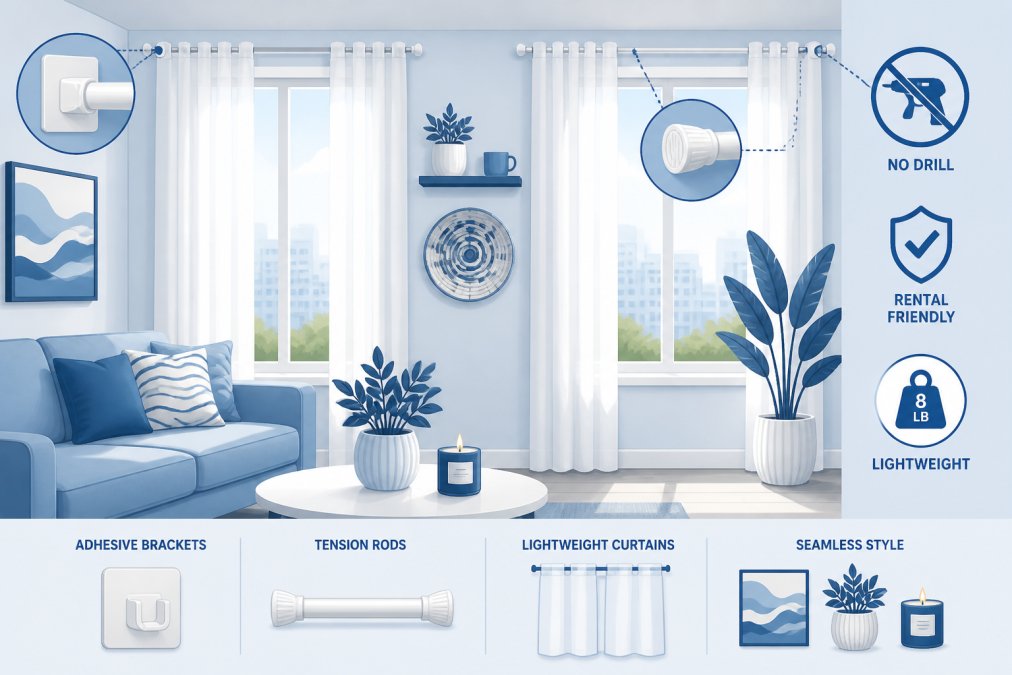
Adhesive brackets work best when they're nearly invisible. The goal is for the bracket to disappear and the curtain to appear to float. Command hooks come in Matte Black and White, giving you options.
The curtain rod itself matters as much as the brackets. A thin, delicate rod suits lightweight sheers and modern spaces. A thicker, more substantial rod complements heavier fabrics and traditional interiors. Most no-drill systems use standard 5/8-inch diameter rods, which is proportional to most residential windows.
Curtain length and fullness affect the overall aesthetic more than the hardware. AllWayzHome's approach to home décor emphasizes intentional design choices that transform a space. The same principle applies to curtains and hardware.
Long-Term Durability and Damage Assessment
No-drill solutions are marketed as damage-free, but "damage-free" requires proper technique and realistic expectations. Some methods leave no marks whatsoever. Others cause minor marks that fade or disappear over time.
Tap-in brackets are genuinely damage-free when installed properly. The bracket grips the trim without puncturing or cracking it. Removing the bracket leaves no holes or marks. This is the gold standard for damage-free installation.
Tension rods can create indentations in drywall if overtightened. These indentations may be temporary or permanent, depending on how severe the pressure was. Walls painted with flat or matte paint show indentations more obviously than glossy finishes.
Adhesive brackets leave no holes, but they can pull paint off the wall during removal if the wall is old or the paint is poorly adhered. Modern drywall with quality paint rarely experiences this problem. The risk is manageable with careful removal technique.
Generic self-adhesive brackets have the highest failure rate over time. The adhesive weakens after 12 to 18 months in many cases. Command hooks and premium adhesive solutions last longer, typically holding strong for 2 to 3 years before showing signs of weakening.
NoNo Brackets, which attach to existing blinds, avoid wall damage entirely since they don't contact the wall. The risk instead transfers to the blinds themselves. The blinds must be sturdy enough to support the curtain weight.
Long-term durability also depends on environmental factors. Humidity weakens adhesive bonds. Direct sunlight can degrade adhesive over time. Temperature swings cause expansion and contraction, which stresses adhesive connections. Bathrooms and kitchens, which are humid, are harder on adhesive brackets than living rooms.
Frequently Asked Questions
Is there a way to hang curtain rods without drilling holes?
Yes, several damage-free alternatives exist. Tension rods use spring-loaded mechanisms to grip between window frames or walls without any fasteners. Adhesive brackets and Command hooks stick directly to smooth surfaces. Tap-in brackets hammer into wooden window trim. Each method offers different weight capacities, from 5 lbs for adhesive hooks to 20 lbs for tap-in brackets, so choose based on your curtain weight and surface type.
Can tension curtain rods hold heavy curtains?
Heavy-duty tension rods can support moderate curtain weights. Standard tension rods typically hold 10-15 lbs, while premium options like RoomDividersNow rods with 1-inch diameter steel construction provide stronger gripping power for heavier fabrics. However, for very heavy drapery, tap-in brackets or screw-mounted hardware remains more reliable. Always verify the specific weight limit before purchasing, especially if your curtains exceed 15 lbs.
How do I hang curtains in a rental without losing my security deposit?
Stick with damage-free methods: adhesive brackets on smooth walls, tension rods that create no marks, or tap-in brackets on wooden trim (which leave minimal impact). Avoid drilling into drywall or permanent wall modifications. Before installation, document your walls with photos. When removing, follow adhesive removal instructions carefully to avoid peeling paint. These renter-friendly approaches protect your deposit while giving you the window treatment you want.
What are the best no-drill curtain rod brackets for heavy curtains?
Tap-in brackets like Kwik-Hang support up to 20 lbs and work on wooden window trim without tools. Heavy-duty tension rods from RoomDividersNow offer strong steel construction for weights up to 15 lbs. For surfaces without wooden trim, adhesive brackets cap out around 10 lbs. Match your choice to your curtain weight, window structure, and surface type. Tap-in brackets win for the heaviest loads on traditional windows.
No-drill curtain rod solutions transform the rental experience by eliminating the choice between personalization and security deposits. AllWayzHome recognizes that renters deserve spaces that feel intentional and beautiful, not temporary or sparse. By understanding the trade-offs between tap-in brackets, tension rods, and adhesive solutions, you can choose hardware that matches your windows, your curtains, and your interior style, all without drilling a single hole.
This article was written using GrandRanker