Cart
0
Table of Contents
- How to Create a Relaxing Home Environment: Start with Your Foundation
- Declutter for Mental Clarity and Visual Calm
- Calming Home Decor Ideas: Color Palettes and Neutral Tones
- Lighting for Relaxation: Ambiance Over Brightness
- Incorporate Nature Into Home: Plants and Natural Elements
- Aromatherapy and Scent: Engaging Your Senses
- Create Tech-Free Zones and Mindfulness Spaces
- Small-Space Solutions and Neurodivergent-Friendly Adjustments
Last Updated: July 20, 2026
How to Create a Relaxing Home Environment: Start with Your Foundation
Creating a peaceful home comes down to intentional choices that engage your senses and reduce mental clutter. Research from the American Psychological Association on stress and home environments shows that our physical surroundings directly influence our nervous system, affecting everything from sleep quality to daily anxiety levels. A thoughtfully designed sanctuary becomes a refuge where your brain can actually rest.
This guide covers seven concrete strategies to transform your home into a place of genuine calm. We're talking about functional relaxation: spaces that actively soothe your nervous system, support focus, and make daily routines feel serene. Most of these changes cost nothing or very little.
Declutter for Mental Clarity and Visual Calm
Clutter isn't just messy, it's neurologically demanding. Research from Princeton University's study on physical clutter and cognitive function found that disorganized environments reduce focus and increase stress hormones.
The Psychology Behind Clutter and Stress
Your brain treats each visible object as a potential task. A stack of unopened mail, clothes on a chair, or papers on a desk all register as "things to do" at a subconscious level. This "cognitive load" exhausts your mind even when you're not actively thinking about it. Clutter also triggers cortisol release, keeping your nervous system in low-level activation, never fully relaxed.
A Practical Decluttering Approach
Start small. Choose one area: a nightstand, shelf, or desk surface. Spend 20-30 minutes there using this framework:
- Remove everything from the space
- Keep only items you use regularly or genuinely love
- Return items to their designated home
- Assess the empty space, you'll likely need only 40% of what you originally had
Once one area feels calm, move to the next. This incremental approach builds momentum and makes the process sustainable.
Pro Tip
Tackle closets, drawers, and cabinets first. They're out of sight but still occupy mental space. Once hidden clutter is gone, visible spaces feel lighter even before you organize them.
Calming Home Decor Ideas: Color Palettes and Neutral Tones
Certain colors activate the nervous system; others calm it. Neutral palettes, warm whites, soft grays, warm beiges, muted taupes, create visual rest without demanding attention.
Why Neutral Tones Create Peaceful Spaces
Warm neutrals feel more inviting than cool grays, which can feel clinical. Think of the difference between a beige that leans toward cream (warm, enveloping) versus taupe (cooler, more distant). You don't need to paint your entire home. Start with textiles: curtains, rugs, and throw pillows in soft neutrals create an immediate shift.
Soft Furnishings and Textures That Soothe
Texture matters as much as color. Rough, scratchy materials create subtle tension; soft textures calm the nervous system. Layer different textures to create depth without visual chaos:
- Soft blankets (wool, cotton, velveteen) for tactile comfort
- Rugs with varied pile heights to add dimension underfoot
- Linen curtains that diffuse light gently
- Upholstered furniture with natural fabrics
The Velveteen Plush Blanket from AllWayzHome ($38.52) engages the sensory system in a calming way. Drape it over a chair or bed to create an immediate sense of coziness.
Key Takeaway
The most relaxing spaces combine visual simplicity (neutral colors, minimal clutter) and tactile richness (soft textures, varied materials). Together, they create an environment where your nervous system can truly rest.
Lighting for Relaxation: Ambiance Over Brightness
Harsh, bright lighting activates the nervous system and suppresses melatonin production. Creating a relaxing home means rethinking how light moves through your space.
Natural Light and Window Treatments
Natural light during the day is essential for mood regulation and sleep quality. However, unfiltered afternoon sun creates glare. Linen curtains or light-filtering shades allow natural light while softening its intensity. As evening approaches, close curtains or blinds to signal your body that it's time to wind down, triggering melatonin production.
Layered Lighting for Evening Calm
Professional designers use "layered lighting", multiple light sources at different intensities adjusted based on time of day and needs. Create three layers:
- Ambient lighting (soft overhead or wall-mounted fixtures at low brightness)
- Task lighting (reading lamps for focused activity)
- Accent lighting (candles, string lights, or decorative lamps)
During evening hours, rely on the lower layers. Candles are particularly effective; their flickering light and warm color temperature (around 1800K) naturally calm the nervous system. The Black Orchid Private Reserve Candle from AllWayzHome ($35.00) combines ambient lighting with aromatherapy.
Avoid blue-spectrum lighting after sunset. Blue light suppresses melatonin and tricks your brain into thinking it's daytime. If you must use screens, enable "night mode" or wear blue-light blocking glasses.
Incorporate Nature Into Home: Plants and Natural Elements
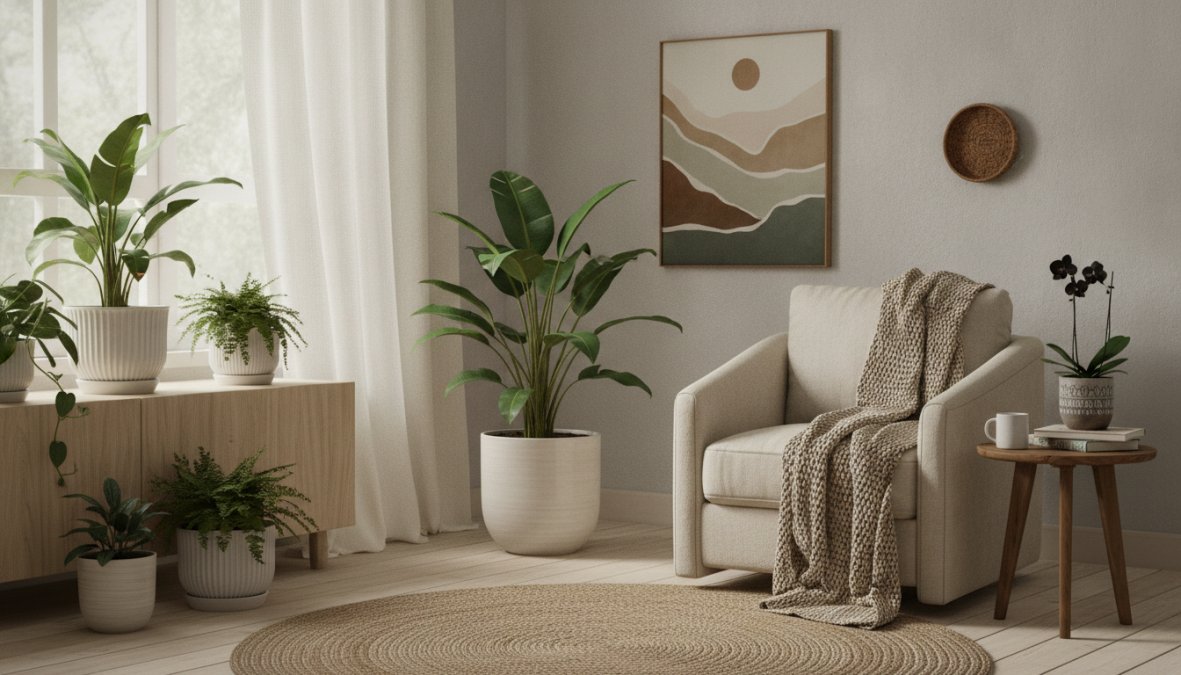
Biophilic design, incorporating natural elements into indoor spaces, reduces stress and increases calm. Research from the University of Exeter on indoor plants and mental wellbeing demonstrates that even small amounts of greenery improve mood, focus, and perceived air quality.
Low-Maintenance Indoor Plants for Every Space
You don't need a green thumb. Hardy species thrive on neglect:
- Pothos: nearly impossible to kill, grows in low light, purifies air
- Snake plant: requires minimal water, tolerates poor lighting, releases oxygen at night
- ZZ plant: extremely hardy, glossy leaves add visual interest
- Peace lily: flowers indoors, prefers low light, wilts when thirsty
- Monstera: larger statement plant, grows in moderate indirect light
Place plants at varying heights to create visual depth. The key is consistency, choose plants that match your lifestyle.
Natural Materials and Botanical Décor
Beyond living plants, natural materials create calm. Wood, stone, clay, and fiber ground a space and connect it to the natural world. Incorporate natural elements through wood furniture, stone or ceramic planters, woven baskets, botanical wall art like the Sylvie Zen Garden framed canvas set from AllWayzHome ($109.99), and natural fiber rugs.
Aromatherapy and Scent: Engaging Your Senses
Scent is the sensory pathway most directly connected to emotion and memory. The olfactory system bypasses the thinking brain and goes straight to the limbic system, where emotions are processed.
How Scent Influences Mood and Relaxation
Lavender, chamomile, and sandalwood reduce anxiety and promote relaxation. Citrus scents energize; floral scents calm; woodsy scents ground. However, scent is personal. Choose fragrances you genuinely enjoy rather than following trends.
Budget-Friendly Scent Solutions
Simple, effective options include candles, essential oil spray, dried herbs or flowers in small bowls, fresh flowers, and opening windows. The Cinnamon Swirl Signature Candle from AllWayzHome ($18.95) offers warmth and comfort at an accessible price point.
Watch Out
Avoid synthetic air fresheners and heavily scented products. They often contain phthalates that irritate the respiratory system. Natural scents from real plants, essential oils, or quality candles are preferable.
Create Tech-Free Zones and Mindfulness Spaces
Digital devices emit constant stimulation, notifications, blue light, and psychological pressure. Creating zones free from technology allows your nervous system to truly rest.
Designing a Meditation or Reading Nook
A dedicated mindfulness space requires minimal investment. Choose a corner and design it for calm activities: reading, meditation, journaling, or sitting. Essential elements include comfortable seating, soft lighting, no screens, minimal visual clutter, and optional plants or natural elements. This space becomes a psychological anchor where your brain associates the location with calm.
Making Your Bedroom a True Sanctuary
The bedroom deserves special attention because sleep quality affects everything else. Include no work materials, no screens for 30 minutes before bed, cool temperature (65-68°F), dark environment, soft high-quality bedding, and minimal decoration. The bedroom is a sanctuary for sleep and rest, everything in it should support that purpose.
Small-Space Solutions and Neurodivergent-Friendly Adjustments
Creating a relaxing home in a small apartment or for neurodivergent needs requires different strategies than traditional design advice.
Maximizing Calm in Compact Living
Small spaces amplify clutter's impact. This requires ruthless prioritization: keep only essentials and items you love, use vertical space, choose multipurpose furniture, create visual zones, and use mirrors strategically. In small spaces, quality matters more than quantity. One beautiful plant is better than five mediocre ones.
Sensory Regulation for Neurodivergent Needs
Neurodivergent individuals often need different environmental supports. A relaxing home for neurodivergent people might include consistent, predictable layouts, clear visual boundaries, reduced sensory input, fidget-friendly elements, sound management, lighting control, and organization systems that match how your brain works. The goal is reducing decision fatigue and sensory overwhelm.
Creating a relaxing home environment aligns your physical space with your nervous system's actual needs. It requires decluttering, choosing calming colors and textures, designing thoughtful lighting, incorporating nature, using scent intentionally, and protecting tech-free time. AllWayzHome's curated collections make it easier to build these elements cohesively. The result is a sanctuary that actively supports your wellbeing.
| Strategy | Primary Benefit | Time to Implement | Best Starting Point |
|---|---|---|---|
| Decluttering | Reduces mental load and visual chaos | 30 min per area | One small space (nightstand, shelf) |
| Neutral colors & soft textures | Calms nervous system through visual and tactile input | 1-2 weeks | Swap one pillow or blanket |
| Layered lighting | Supports natural sleep rhythms and reduces evening stress | 1-2 weeks | Add one warm lamp or candles |
| Indoor plants | Improves air quality and mood; connects to nature | Ongoing | One hardy plant (pothos or snake plant) |
| Intentional scent | Triggers emotional calm through olfactory pathway | Immediate | One quality candle |
| Tech-free zone | Allows genuine nervous system rest | 1 day | Designate one corner without devices |
| Neurodivergent adjustments | Reduces sensory overwhelm and decision fatigue | Ongoing | Assess which sensory inputs overwhelm you most |
Frequently Asked Questions
What makes a home feel relaxing and peaceful?
A relaxing home environment combines several sensory and psychological elements: low visual clutter, a neutral color palette, soft ambient lighting, pleasant scents, natural elements like plants, and designated tech-free zones. The key is intentional design that minimizes stress triggers, like visual noise and harsh lighting, while maximizing comfort through soft textures, calming décor, and opportunities for mindfulness. Personal touches that reflect your values matter too, as intentional living creates spaces that genuinely support your wellness rather than just looking calm.
How can I declutter for mental clarity without spending a lot of money?
Decluttering for mental clarity doesn't require purchases, it's about removing what doesn't serve you. Start by sorting items into three categories: keep, donate, and discard. Focus on one room or area at a time to avoid overwhelm. Remove items that create visual noise or negative associations. Once decluttered, use affordable storage solutions like baskets, boxes, or shelves you already own to organize remaining items. This approach reduces stress-inducing clutter immediately while costing nothing, and it often reveals what truly matters to you about your living space.
What's the best way to incorporate nature into a small apartment?
In small spaces, vertical gardening and multipurpose plants maximize impact. Hang planters on walls, use corner shelves for trailing plants, or place a single statement plant near a window. Low-maintenance indoor plants like pothos, snake plants, or ZZ plants thrive in limited light and require minimal care. You can also incorporate nature through botanical wall art, natural wood furniture, or stone accents. Even one or two well-placed plants significantly improve air quality and create a sense of calm without consuming precious floor space.
How does lighting affect creating a relaxing home environment?
Lighting profoundly impacts relaxation because harsh, bright light triggers alertness while soft, warm light signals safety and calm. Natural light during the day supports healthy circadian rhythms and mood. For evenings, use layered lighting with dimmers, warm-toned bulbs (2700K or lower), and accent lights like lamps rather than overhead fixtures. Avoid blue light from screens before bed, and consider warm-toned candles or soft table lamps in relaxation zones. This approach to lighting for relaxation helps regulate your nervous system and supports better sleep and overall wellness.
This article was written using GrandRanker