Cart
0
A console table is often the first little scene you create at home. It catches keys, welcomes guests, and sets the mood before anyone sees the living room. Learning how to style entryway console decor is less about filling every inch of the tabletop and more about choosing a few beautiful, useful pieces that tell a warm story about the people who live there.
The best entryways feel collected rather than overly coordinated. A family-name sign, a softly glowing candle, a bowl for daily essentials, or a small planter can make a simple table feel distinctly yours. Start with what your household actually needs, then layer in the details that make arriving home feel special.
Start with the Console Table’s Job
Before choosing decor, consider what happens in your entryway each day. A narrow hallway table may need to hold mail and keys without creating visual clutter. A larger foyer console may have room for a decorative tray, a statement lamp, and a few meaningful keepsakes. Function should shape the styling, not limit it.
Think about the table itself, too. A slim console looks best with lighter visual weight: a single mirror, petite vase, and low-profile catchall. A substantial wood table can carry a larger lamp, fuller greenery, or a layered arrangement of framed art. If your entryway is busy with bags, shoes, and coats, keep the tabletop edit especially simple so the whole area still feels calm.
How to Style Entryway Console Decor in Layers
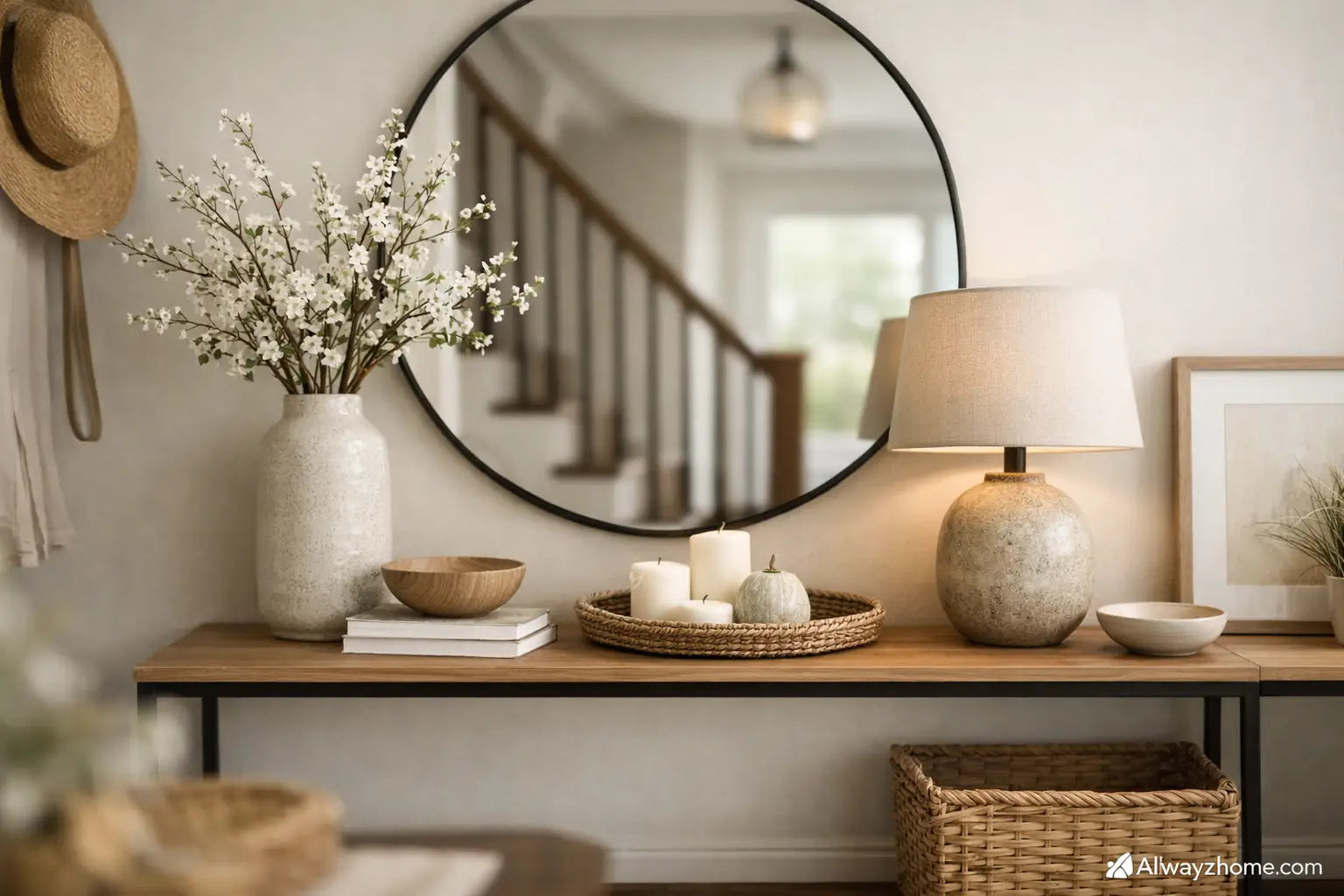
A polished console usually has three visual levels: something on the wall, something with height on the table, and smaller accents near the front. This approach creates dimension without requiring a crowded collection of objects.
Begin with an anchor above the table
Choose one focal point that grounds the arrangement. A round mirror brings softness to a space full of straight lines and is especially helpful in a smaller or darker entry. A framed family name piece, personalized coordinates print, or welcoming wall art brings a more personal, gift-worthy touch. For a wider console, two complementary frames can work beautifully, but leave breathing room between them.
Your anchor should generally be narrower than the table, rather than stretching edge to edge. It does not need to be perfectly centered in every case. If you plan to place a taller lamp or a large plant on one side, shifting the wall art slightly can create an appealing, relaxed balance.
Add height with lighting or greenery
A table lamp does more than decorate. It gives the entryway a warm evening glow, which makes a home feel more inviting the moment the door opens. Choose a lamp with a textured ceramic, glass, wood, or metal base that echoes another finish in the room. If there is no outlet nearby, a battery-operated candle lantern or a full vase of branches can provide the same vertical lift.
Greenery is a reliable way to bring life to a console, especially when the rest of the palette is neutral. A leafy indoor plant in a simple planter feels fresh and relaxed. If your entry has limited natural light or you travel frequently, choose a realistic faux stem arrangement instead. The goal is not a high-maintenance display. It is a welcoming one.
Ground the arrangement with a tray
A tray is one of the easiest ways to make everyday essentials look intentional. Use it to corral keys, sunglasses, mail, and a small candle, or reserve it for decorative pieces if you have a separate drop zone. Wood, woven, marble-look, and metal trays all create a different mood, so let the surrounding finishes guide your choice.
For a family that uses the entryway hard, a tray should be roomy and easy to wipe clean. For a more formal foyer, it can hold a beautiful fragrance set, a petite bud vase, and a meaningful object from a favorite trip. Practicality is not the opposite of elegance here. It is what lets the styling work every day.
Use the Rule of Three, Then Edit
Groupings of three are naturally easy on the eye because they give the arrangement variation in height and shape. You might pair a lamp, a stack of two books, and a small sculptural bowl. Or style a planter beside a framed photo and a candle. The items do not have to match, but they should share something: a warm neutral color, similar material, or a gently collected feel.
Avoid lining everything up at the same height. A tall vase, medium frame, and low dish create a more inviting rhythm. When you are finished, remove one item before you decide you are done. That small edit often creates the airy, elevated look people are trying to achieve.
Make It Personal Without Making It Busy
Your entryway is an ideal place for details that feel emotional: an engraved keepsake, a custom family-name accent, a photo from a milestone celebration, or a small bowl passed down through the family. These pieces turn a styled surface into a real welcome home.
Personalized decor works best when it has room to be noticed. Instead of surrounding a custom sign or monogrammed accent with many small objects, let it be the star and choose only one or two supporting pieces. This is also why personalized home decor makes such a thoughtful housewarming or wedding gift. It gives the recipient a beautiful starting point for a space that feels like theirs.
If you rent or expect to move soon, lean into pieces you can easily take with you: framed prints, tabletop signs, planters, candles, and trays. They create a sense of permanence without requiring a major installation.
Choose a Palette That Connects to the Rest of Your Home
An entryway does not have to match every room, but it should feel like it belongs. Pull one or two colors or finishes from nearby spaces. If your living room has warm wood and cream textiles, use a wood tray, ivory candle, and soft green plant in the entry. If your home leans modern, black accents and a clean-lined vase can create a quieter, more tailored welcome.
For an easy seasonal refresh, keep the large pieces consistent and swap the small accents. In fall, add amber glass and a cinnamon-forward candle. During winter gatherings, a subtle evergreen stem and a polished metallic touch feel festive without taking over the table. Spring calls for lighter florals or fresh green leaves, while summer can be as simple as a woven tray and citrus-inspired fragrance.
The trade-off is worth considering: seasonal decor can make an entry feel joyful, but too many theme-specific pieces may feel dated quickly. A few intentional changes are usually enough.
Add Storage Where It Matters Most
Beautiful styling falls apart when the surface becomes a landing pad for everything. If your console has drawers, dedicate one to the items that tend to pile up, such as spare keys, dog-walking supplies, or outgoing mail. If it has an open shelf, add matching baskets to hide shoes, umbrellas, or everyday accessories.
For tables without storage, use a lidded box or a deeper decorative bowl to contain visual noise. Keep only the items you reach for daily on display. A styled entryway should make leaving easier, not make you search through a pile of pretty objects for your keys.
A Simple Formula for Any Entryway
When you are unsure where to begin, use this flexible combination: an anchor on the wall, one tall element, one practical catchall, one personal detail, and one source of softness such as greenery, a candle, or a textured accent. Adjust the scale to fit your table rather than forcing every category onto a small surface.
For example, a compact apartment console may need only a round mirror, petite lamp, key bowl, and one framed photo. A spacious foyer might welcome a large mirror, matching lamps, a low tray with a candle, and a planter beneath the table. The formula stays the same, but the proportions change.
A thoughtfully styled entryway does not need to be perfect to feel beautiful. Let it hold the rituals of your real life, then add the personal details that make opening the front door feel like coming back to yourself. With warm layers, useful storage, and a few pieces chosen with heart, every arrival can begin with a little more joy.