Cart
0
Table of Contents
- Best Kitchen Essentials for First Time Homeowners: Where to Start
- Kitchen Essentials Checklist for New Home: The Non-Negotiables
- How to Stock a Kitchen on a Budget: Smart Spending Strategies
- Must Have Kitchen Gadgets for Beginners: Practical Picks Under $50
- Kitchen Textiles and Small Luxuries: Affordable Touches That Matter
- Sustainable and Space-Smart Kitchen Essentials
- Curating Your Kitchen: A Practical Framework for First-Time Buyers
- Conclusion: Building Your Kitchen Foundation
Last Updated: July 13, 2026
Best Kitchen Essentials for First Time Homeowners: Where to Start
Setting up a kitchen from scratch doesn't have to be expensive or complicated. The best kitchen essentials focus on versatility, durability, and real-world usefulness rather than trendy gadgets that collect dust. First-time homeowners typically allocate $800-$2,000 for initial kitchen setup, yet many struggle to identify which items actually matter. This guide cuts through that noise by identifying the exact tools that will serve you well for years to come.
Kitchen Essentials Checklist for New Home: The Non-Negotiables
A functional kitchen starts with items you'll use daily. The non-negotiables are tools that solve real problems: cutting, mixing, storing, and cooking.
Cutting Tools and Knives
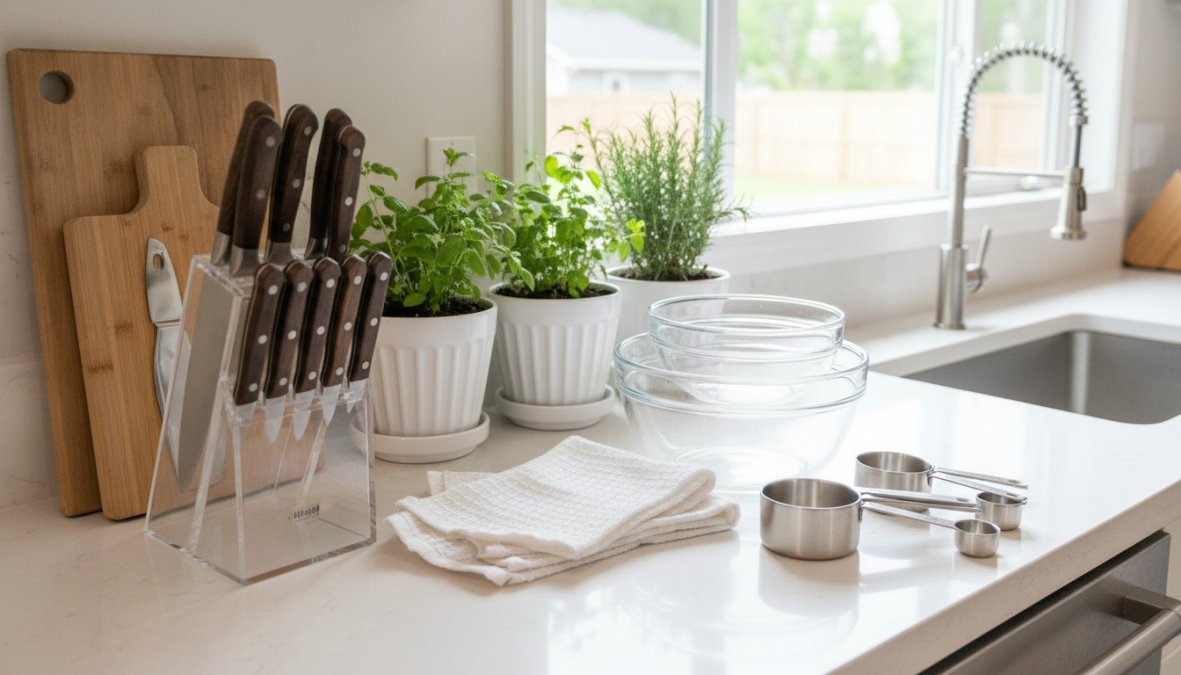
A quality chef's knife is the single most important tool you'll own. You'll use it for 80% of your cutting tasks. The Opinel Les Forgés 6-Inch Chef's Knife represents the sweet spot for first-time homeowners: sharp, balanced, and reasonably priced.
Most new cooks make the mistake of buying large knife sets. You'll realistically use three: the chef's knife, a paring knife, and a serrated bread knife. AllWayzHome's [5 Piece Professional Kitchen Knife Set](https://allwayzhome.myshopify.com/products/5-piece-professional-kitchen-knife-set) at $59.99 gives you this core trio plus two utility blades, all made from 3CR13 stainless steel.
Beyond the knife, you need a sharpening solution. The SharpenX Knife Sharpening System costs around $40 and handles maintenance sharpening without professional experience.
Pro Tip
A sharp knife is safer than a dull one. Dull blades require more force and slip more easily. Sharpen your chef's knife every two weeks rather than waiting until it's destroyed.
Food Storage and Mixing
Glass mixing bowls are non-negotiable for actual cooking. They're microwave-safe, oven-safe, freezer-safe, and don't absorb odors or stains. AllWayzHome's Mix & Store Glass Bowl Set at $25.99 offers nesting design that saves cabinet space while providing multiple sizes for mixing, storing leftovers, marinating, and meal prep.
Stainless steel measuring cups and spoons won't stain or warp like plastic, and they're easier to read at a glance. Baking requires precision, but even everyday cooking benefits from consistent measurements.
Cooking Basics and Heat Tools
A large stainless steel pot (8-quart capacity) and a medium saucepan (3-quart) handle 95% of stovetop cooking. Stainless steel lasts forever and actually improves with use, unlike non-stick cookware that requires replacement every few years.
An instant-read thermometer eliminates guesswork when cooking meat or poultry. The OXO Good Grips Thermocouple Thermometer at $120.99 reads in under three seconds and prevents dry chicken, undercooked pork, and countless dinner failures.
A wooden cutting board and a half-sheet pan (13x18 size) round out your basics. Wood is gentler on knife edges than plastic or glass and has antimicrobial properties that plastic lacks.
How to Stock a Kitchen on a Budget: Smart Spending Strategies
The biggest mistake first-time homeowners make is buying everything at once. Start with essentials from the checklist above (roughly $200-$300), then spend the next six months cooking regularly and noting what you wish you had. This real-world feedback prevents buying items that sounded useful but don't fit your actual cooking style.
Quality matters for items you use daily. A $15 knife will frustrate you every time you cut an onion. A $60 knife brings genuine joy to the task. Conversely, specialized equipment like a pasta maker can wait until you know you'll actually use it.
| Item | Budget | Priority | Timeline |
|---|---|---|---|
| Chef's knife | $60 | Must-have | Week 1 |
| Mixing bowls | $26 | Must-have | Week 1 |
| Paring knife | $15 | Must-have | Week 2 |
| Cutting board | $20 | Must-have | Week 2 |
| Measuring cups/spoons | $12 | Must-have | Week 3 |
| Sheet pan | $15 | Must-have | Week 3 |
| Thermometer | $120 | High-priority | Month 1 |
| Wooden spoons | $10 | High-priority | Month 1 |
| Colander | $12 | High-priority | Month 2 |
Watch Out
Avoid "starter kits" that bundle 20 items for $99. You'll end up with nine things you don't want. Buy individual items and only add what serves your actual cooking patterns.
Must Have Kitchen Gadgets for Beginners: Practical Picks Under $50
The real test for any gadget is whether you'll use it weekly. If the answer is no, it's clutter masquerading as convenience.
High-Impact Tools Worth the Investment
A microplane zester costs $15 and transforms how you cook. Fresh lemon zest, grated garlic, and finely grated hard cheese elevate everyday dishes. The Microplane Classic Zester/Grater has razor-sharp blades that make the task effortless.
A rice cooker at $50 frees up a burner and produces consistent results every time. The Hamilton Beach Digital Programmable Rice Cooker handles rice, grains, and steamed vegetables, earning its counter space for busy first-time homeowners.
A colander costs $12 and is essential for pasta, rinsing vegetables, and draining canned beans. Stainless steel lasts forever; plastic warps and stains.
A quality can opener at $15-$20 makes opening cans genuinely pleasant instead of frustrating. Cheap openers slip and leave sharp edges.
Wooden spoons and silicone spatulas at $3-$8 each are worth buying several. Wood doesn't conduct heat like metal, keeping your hand safer when stirring hot pots.
Kitchen Textiles and Small Luxuries: Affordable Touches That Matter
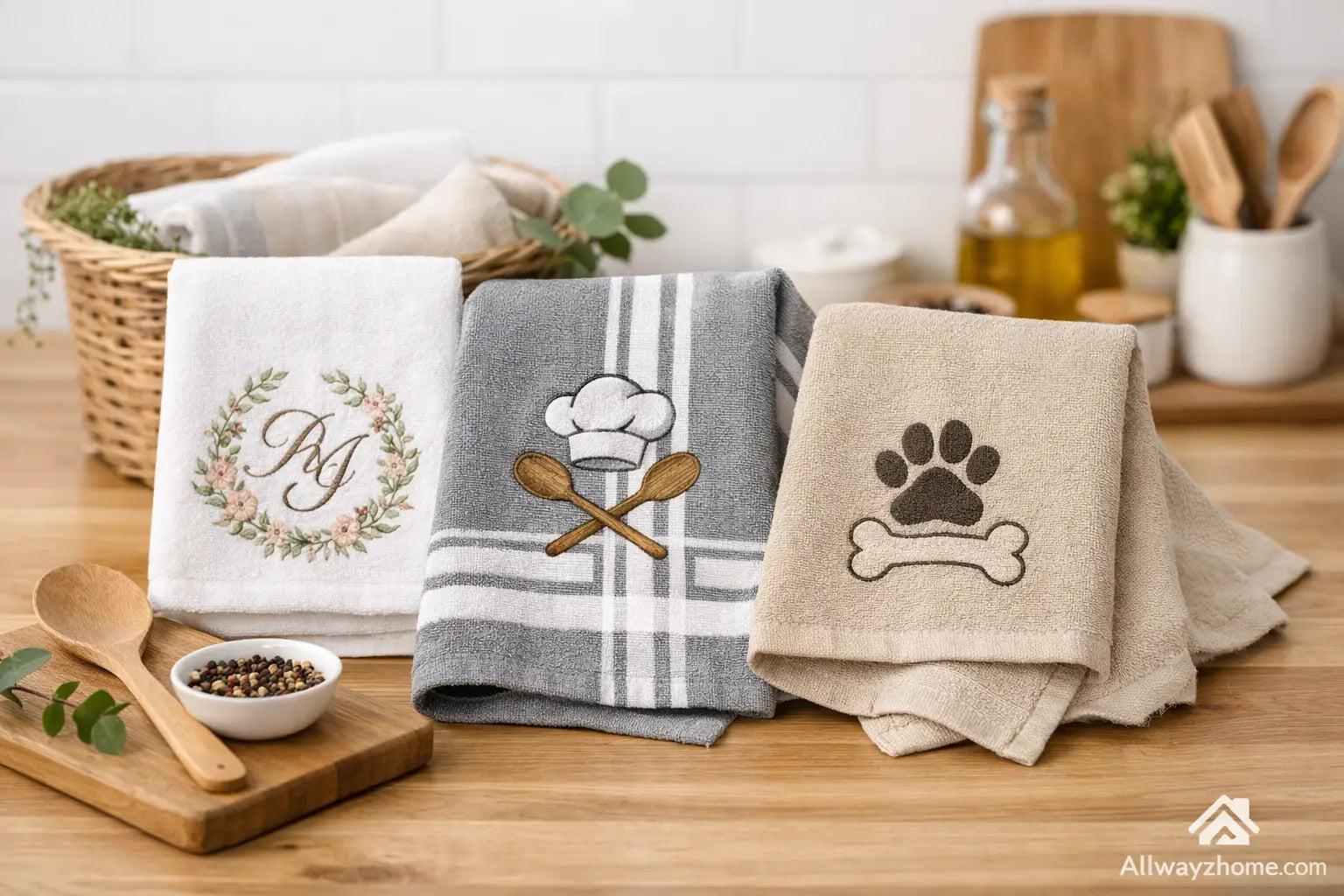
Kitchen towels are functional items you interact with multiple times daily. Quality towels absorb faster, wash cleaner, and last for years instead of months. AllWayzHome's Flour Sack Kitchen Towels at $19.99 are made from 100% organic cotton and improve with every wash. The Verona Waffle Kitchen Towels at $15.25 offer a softer option that still performs.
Cotton flour sack towels are the professional choice: lint-free, highly absorbent, and durable. Waffle-weave towels offer a softer aesthetic while maintaining function. Both are infinitely better than thin polyester towels.
Invest in one good pair of oven mitts and one or two pot holders. Cheap ones don't insulate well and can transfer heat to your hand. A simple wooden spoon rest (around $8) prevents your counter from getting oily when you set down cooking utensils.
Sustainable and Space-Smart Kitchen Essentials
Eco-Friendly Options for Conscious Homeowners
Sustainability doesn't require spending more; it requires buying items that last. A $60 knife used for ten years is more sustainable than three $20 knives replaced every three years. Glass storage containers outlast plastic by decades. Stainless steel cookware functions perfectly after fifty years.
AllWayzHome's focus on quality, durable items aligns naturally with sustainability. The Flour Sack Kitchen Towels are made from organic cotton and wash indefinitely, replacing disposable paper towels. Wooden cutting boards, wooden spoons, and natural fiber kitchen towels reduce your plastic footprint without requiring sacrifice.
Buy glass storage containers instead of plastic. They cost slightly more upfront but never need replacing. Invest in reusable alternatives that work with whatever you choose to buy.
Essentials for Apartments and Small Kitchens
Small kitchens require ruthless prioritization. Every item must earn its space through daily use. Vertical storage is your friend: wall-mounted knife strips, hanging pot racks, and shelf risers multiply storage without taking up counter space.
Nesting bowls and measuring cups take up a fraction of traditional sets. Collapsible storage containers save space when empty. A magnetic strip holds knives without using drawer space. Multifunctional items are essential: a sheet pan doubles as a cutting surface, a large pot with a steamer insert handles both boiling and steaming.
Curating Your Kitchen: A Practical Framework for First-Time Buyers
Before buying anything, ask yourself three questions: Will I use this weekly? Does it solve a real problem in my cooking? Will it still be useful in five years?
Most kitchen gadgets fail at least one test. Start with the non-negotiables: knife, mixing bowls, cutting board, measuring cups, and basic cookware. Then add items only as you discover genuine gaps in your workflow. This approach prevents buyer's remorse and keeps your kitchen functional rather than cluttered.
Quality matters for items you use daily. A $200 chef's knife used every single day costs less per use than a $15 gadget you use twice. Fewer, better items beat more, mediocre ones every time.
Conclusion: Building Your Kitchen Foundation
The first year in your new home is the perfect time to build a kitchen that actually works for how you cook. Start with the recommended essentials and let your actual cooking patterns guide future purchases rather than magazine spreads or influencer recommendations.
Invest in quality where you'll notice it daily: your knife, cutting board, and mixing bowls. Be willing to spend less on specialized equipment until you know you'll use it. Transform your kitchen into a space where cooking feels effortless instead of frustrating.
Frequently Asked Questions
What are the absolute kitchen essentials for a first apartment or new home?
The core kitchen essentials for first time homeowners include a quality chef's knife, cutting board, mixing bowls, measuring cups and spoons, a skillet, a pot, utensils (spatula, spoon, tongs), and food storage containers. Start with these functional basics, then add specialty tools as you discover your cooking style. Quality matters more than quantity, one good knife beats five mediocre ones.
How much should I budget for kitchen essentials as a new homeowner?
You can build a functional kitchen on a budget of $100-$300 for absolute essentials. AllWayzHome's Flour Sack Kitchen Towels ($19.99) and Verona Waffle Kitchen Towels ($15.25) add practical comfort affordably. For cutting tools, the 5 Piece Professional Kitchen Knife Set ($59.99) delivers excellent value. The Mix & Store Glass Bowl Set ($25.99) covers storage. Prioritize quality basics over quantity, avoid impulse gadgets until you know your cooking needs.
What kitchen tools do I really need versus what is a waste of money?
Essential tools: sharp knife, cutting board, mixing bowls, measuring cups, wooden spoon, spatula, tongs, and pot. Skip specialty gadgets (ice cream makers, rice cookers) until you cook regularly. Avoid single-purpose tools. Invest in multi-use items instead. For example, a quality thermometer ($15-$120) is worthwhile if you cook meat often; otherwise, it's unnecessary. Kitchen textiles like quality towels improve daily life without breaking the budget.
How do I stock a kitchen from scratch as a first-time homeowner?
Start with a phased approach: Phase 1 (Week 1) covers cutting and mixing, knife, board, bowls, measuring tools. Phase 2 (Week 2) adds cooking vessels, pots, pans, utensils. Phase 3 (Week 3) includes storage and textiles, containers, towels, organizers. Avoid buying everything at once; cook first, then add tools as you need them. This prevents clutter and lets you choose quality items that match your actual cooking habits.
This article was written using GrandRanker