Cart
0

A bookshelf can hold novels, but it can also hold the feeling of home. The secret to style bookshelf decor is not filling every open inch with objects. It is choosing a few meaningful pieces that bring color, memory, texture, and warmth to the room. When done well, your shelves feel collected over time rather than arranged in a rush.
Whether you are refreshing a living room, making a new house feel settled, or adding a thoughtful finishing touch before guests arrive, bookshelf styling is one of the simplest ways to transform a space instantly. You do not need a designer's eye or a room full of expensive décor. You need a clear point of view and a little breathing room.
Start With What You Want the Room to Feel Like
Before placing a single book, consider the mood you want to create. A calm, serene room may call for soft neutrals, ceramic vases, gentle greenery, and books in muted tones. A cozier family room can welcome framed memories, layered wood accents, candles, and well-loved paperbacks. For a more polished look, repeat a few colors found elsewhere in the room, such as the shade of a throw pillow, rug, or curtain.
This early decision makes editing easier. A shelf does not have to match every item in the room, but it should feel connected to its surroundings. Think of it as a small, personal display within the larger story of your home.
It also helps to decide what your bookshelf needs to do. In a compact apartment, it may need to provide real storage as well as visual appeal. In a formal sitting room, it may be more decorative. The balance between function and beauty depends on your space, and both approaches can feel elevated.
Clear the Shelves Before You Build the Look
The most useful first step is often the least glamorous: take everything off the shelves. This lets you see the proportions of the bookcase and separate what you genuinely love from what has simply been sitting there.
Set aside books you reach for, family photographs, travel keepsakes, favorite vessels, and objects that carry a story. Then remove the pieces that feel random, damaged, or out of scale. Not every gift or souvenir needs to be on display. A curated shelf feels warmer than a crowded one because each piece has room to be noticed.
Give the bookcase a quick dusting and consider the backdrop, too. A dark painted wall behind an open bookcase creates drama, while a lighter background keeps the display airy. You can also add a subtle peel-and-stick wallpaper or grasscloth-inspired liner to the back panel for softness and depth. Keep the pattern understated if your shelves already hold plenty of color.
Style Bookshelf Decor in Balanced Layers
The most inviting shelves have variation. Instead of placing objects in a straight, uniform row, combine different heights, shapes, and materials. A stack of books can support a small candle or sculptural object. A taller vase can sit beside a horizontal row of books. A framed photo can lean gently behind a smaller decorative piece.
Aim for balance, not perfect symmetry. If one upper shelf includes a tall planter on the left, another shelf can carry visual weight on the right with a stack of books and a rounded bowl. The eye should move comfortably across the bookcase without landing on one crowded or empty area.
Leave a little open space on every shelf. This negative space is what gives décor a calm, intentional look. It allows a personalized family-name sign, a favorite photograph, or a beautiful candle vessel to feel special rather than lost among too many accessories.
Use Books as Design Elements
Books are the foundation of most bookshelf displays, but they do not all need to stand upright. Mix vertical rows with horizontal stacks to create natural rhythm. Place your most attractive hardcovers where they will be seen, and group spines by color only if that fits your style. A fully color-coordinated shelf can look striking, but it may be less practical if you regularly search for specific titles.
For an easy compromise, organize books loosely by tone or keep one shelf color-focused while leaving the rest more relaxed. Turn a few books with worn or overly bright spines backward if you prefer a quieter palette, but do not hide every title. A home should still look lived in.
Add Objects With Shape and Soul
Once the books are placed, choose a small number of decorative accents. Rounded bowls, textured vases, woven boxes, candleholders, small trays, and framed art all add dimension. Materials matter as much as color: ceramic, glass, natural wood, brass, woven fibers, and linen-covered books create a richer, more welcoming result than a shelf filled with one finish.
Choose pieces with personal meaning whenever possible. A framed wedding photo, a small souvenir from a favorite trip, or a personalized décor piece with a family name or meaningful coordinates turns a pretty arrangement into one that belongs specifically to you. These details are especially lovely in a new home, where familiar touches help a room feel established.
Bring in Greenery and a Gentle Glow
A little greenery keeps a bookshelf from feeling static. A trailing plant looks beautiful near the top of a bookcase, where its leaves can soften sharp lines. Compact planters work well on middle shelves, while preserved stems in a narrow vase add height without needing much maintenance.
Choose the plant size carefully. A leafy arrangement can make a spare shelf feel alive, but oversized foliage may block books or overwhelm a smaller unit. If your shelves receive little natural light or you prefer low-maintenance décor, a quality faux stem can still bring the same softness.
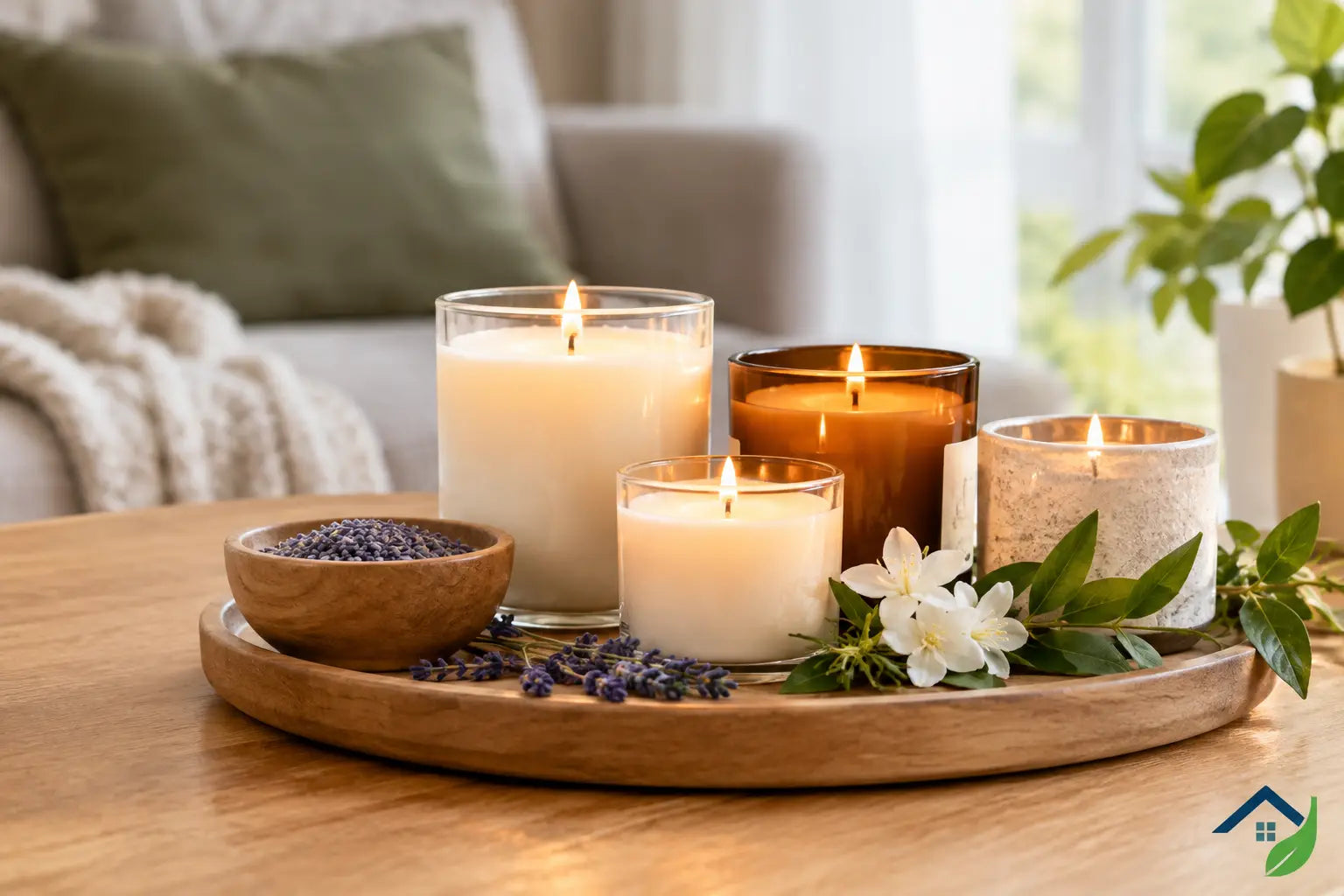
Candles offer another layer of comfort. Place one on a stack of books, in a small tray, or beside a framed print for a quiet, finished moment. Select scents that suit the room and season, but keep safety first: never burn a candle inside a crowded shelf or beneath a low overhang. A beautiful unlit candle can be just as decorative, while a nearby tabletop is a better place to enjoy its glow.
Let Color Repeat, Not Compete
A bookshelf is an ideal place to echo the colors already present in your home. Pick two or three recurring shades and allow them to appear in book spines, artwork, pottery, or small accents. For example, warm white, soft sage, and natural wood can make a room feel restful, while navy, cream, and brass bring a more tailored character.
Avoid trying to match everything exactly. Slight variations in tone make a display feel collected and natural. What matters is that the palette has a common thread. If your room is filled with warm finishes, a sudden collection of icy silver objects may feel disconnected unless that contrast is repeated elsewhere.
Seasonal updates can be subtle. In autumn, trade a bright vase for an amber glass vessel or add a richer-toned candle. During spring, introduce fresh green stems or a lighter framed print. A few thoughtful changes can refresh the shelf without requiring an entirely new arrangement.
Give Meaningful Pieces the Best Placement
The center shelves are typically at eye level, making them the right place for your most personal or visually special items. Display a wedding portrait, a custom home accent, or a gift that marks a milestone where it can be appreciated every day. Lower shelves are excellent for heavier books, storage baskets, and practical pieces that keep the room organized.
If you are styling a bookshelf for a housewarming, anniversary, or newlywed home, start with one meaningful focal piece and build around it. A personalized sign or candle-and-home décor gift can become the heart of the arrangement, surrounded by books, greenery, and a few complementary accents. This approach feels much more intentional than trying to decorate every shelf at once.
Edit Until It Feels Easy
Step back several feet from the bookcase after each round of styling. Notice where your eye gets stuck. Is one shelf noticeably fuller than the others? Are there too many tiny objects competing for attention? Does the arrangement feel too matched, or does it lack any repeated color or material?
Make small changes rather than starting over. Remove one piece, shift a stack of books, or move a vase to a lower shelf. Often, the final layer of style bookshelf decor comes from subtraction. The goal is not to prove how much you own. It is to make room for the objects, stories, and details that help every corner truly feel like yours.
A well-styled bookshelf should never feel frozen. Let it evolve with a new favorite read, a meaningful gift, a family photograph, or a seasonal candle that makes an ordinary evening at home feel a little more special.