Cart
0
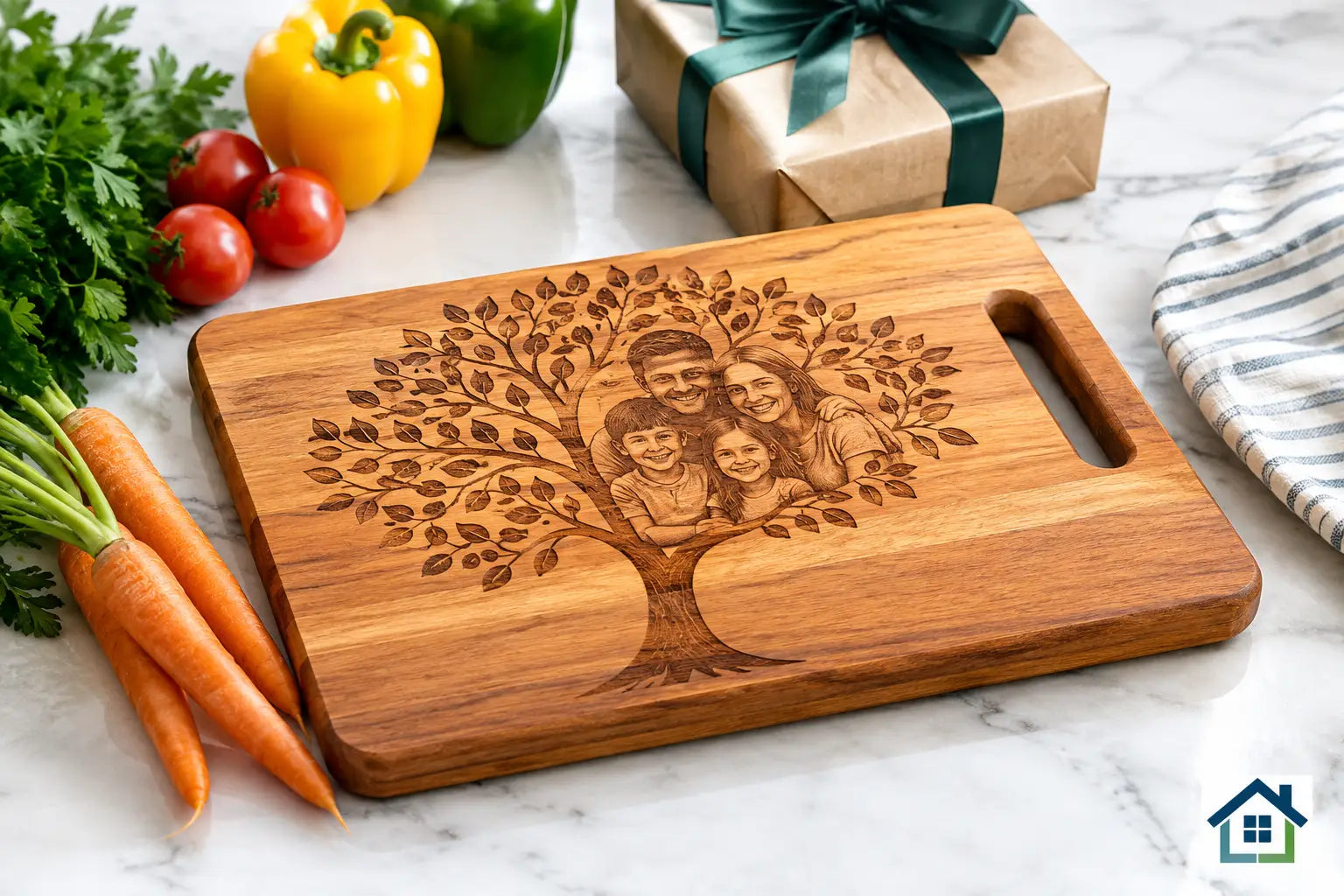
A cutting board is usually tucked into a cabinet until dinner starts. Add a family name, a meaningful date, or the coordinates of a first home, and it becomes something people want to leave on the counter. This personalized cutting board review looks at what makes these pieces feel genuinely special, where they shine as gifts, and what to consider before choosing one for a kitchen you love.
Why personalized cutting boards feel more memorable
The appeal is not just the engraving. A personalized board takes an everyday kitchen essential and gives it a sense of place. It can mark the home where a couple began their next chapter, welcome friends to a new address, or bring a little more warmth to a kitchen that is already full of good memories.
That combination of beauty and purpose is what separates a personalized board from a standard decorative sign. When it is made from a kitchen-friendly material and designed with care, it can work as a serving surface for breads, cheeses, fruit, and casual appetizers while also adding personality to an open shelf or countertop.
For gift buyers, it solves a familiar problem: finding something that feels polished without feeling generic. A monogrammed kitchen towel can be lovely, but a personalized cutting board often has more presence. It feels substantial when unwrapped, photographs beautifully, and is easy to connect to the recipient's story.
Personalized cutting board review: what deserves attention
Not every custom board delivers the same experience. The best choice depends on whether it will be used daily, styled as a serving board, or displayed as a keepsake. Looking beyond the name or message is the difference between a thoughtful purchase and a piece that ends up stored away.
Material sets the tone and the lifespan
Wood is the classic choice, especially for a warm, inviting home. Acacia often offers dramatic grain variation and rich color, giving each board an organic, one-of-a-kind look. Maple tends to be lighter and cleaner in appearance, which suits bright, minimal kitchens. Walnut brings depth and contrast for a more elevated, moody feel.
Bamboo can be an approachable option, particularly for lighter-use boards, but it may not have the same heirloom feel as a solid hardwood piece. Glass, marble, and slate boards can make striking serving pieces or décor accents, yet they are less practical for regular knife work. Glass and stone surfaces can dull blades, while heavier materials are better reserved for charcuterie, desserts, or display.
If the board is meant for chopping vegetables every day, solid wood is usually the most forgiving and practical choice. If the goal is a beautiful housewarming presentation, a serving board with a personalized design may be exactly right. There is room for both, but the intended use should lead the decision.
Engraving should be clear, balanced, and personal
The most successful designs feel connected to the recipient rather than crowded with details. A surname and established year create a timeless look. First names and a wedding date make sense for newlyweds. Coordinates can quietly commemorate a first home, favorite gathering place, or meaningful destination.
Look for an engraving layout with breathing room around the text. Delicate script can be romantic, but it should still be readable. Bold lettering often works best on boards with pronounced grain, where subtle details may visually disappear. The placement matters, too. A centered design can feel formal and gift-ready, while a smaller corner engraving leaves the board looking more like an everyday kitchen piece.
Before ordering, double-check spelling, punctuation, dates, and coordinate formatting. Custom items are personal by nature, which means a small typo is harder to overlook. Take one quiet minute to review the proof details before adding the piece to your cart.
The practical trade-off: display piece or workhorse?
A personalized board can be both useful and beautiful, but it is worth being realistic about how engraving changes the way people use it. Deep engraving across the center of a board can create grooves that collect crumbs, moisture, or food residue. For that reason, a heavily engraved board may be better for serving dry foods or styling near the stove than for handling raw meat or daily meal prep.
A design placed along one edge offers more uninterrupted space for slicing and chopping. This is often the best option for someone who truly cooks and wants a board that earns its place in the kitchen. It still carries a personal detail, but it does not ask the recipient to choose between protecting the design and using the board.
Size also shapes usability. A smaller board is charming for a quick snack, coffee station, or countertop vignette, but it can feel limiting when preparing a full meal. A medium or larger board is more versatile for chopping, serving, and entertaining. For a wedding or housewarming gift, a generously sized board often feels more celebratory and useful.
When a personalized board makes the right gift
Few gifts work across as many home-centered occasions. A personalized cutting board feels especially fitting for weddings, engagements, housewarmings, anniversaries, and holidays spent around the table. It also makes a lovely host gift when you want to bring something more lasting than a bottle of wine.
The key is matching the personalization to the moment. Newlyweds may appreciate shared names and a date. New homeowners may prefer a family name, a simple welcome message, or the coordinates of their front door. For a parent, grandparent, or enthusiastic home cook, a sentimental phrase can feel more intimate than a formal monogram.
A board becomes even more giftable when presented as part of a relaxed entertaining moment. Pairing it with a candle, a kitchen towel, or a small selection of pantry favorites can make the gesture feel considered without becoming overly elaborate. AllWayzHome approaches these everyday essentials as pieces that help make a home feel distinctly yours, whether you are gifting a new beginning or refreshing your own space.
Care makes a meaningful difference
Wood boards need a little attention, but the routine is simple. Hand-wash with mild soap and warm water, then dry promptly with a clean towel. Avoid soaking it in the sink or putting it in the dishwasher, where prolonged water exposure and heat can lead to warping, splitting, or a faded finish.
Conditioning the wood occasionally with food-safe mineral oil helps preserve its color and keeps it from drying out. A board used several times a week may benefit from oiling about once a month; a display or serving board may need it less often. If the surface begins to look pale or thirsty, it is ready for care.
For engraved areas, use a soft brush if crumbs collect in the lettering. This small step helps preserve the crispness of the design and keeps the board looking ready for its next gathering. A well-cared-for personalized piece can become more beautiful over time as the wood develops character.
Is it worth choosing a personalized cutting board?
For the right recipient, absolutely. The value is less about replacing every cutting board in the kitchen and more about creating one piece that carries meaning. It offers a useful foundation for casual hosting, a warm visual detail for the counter, and a reminder of the people and places that make a house feel like home.
The best purchase is one that respects both form and function: a material suited to its purpose, a size that fits real life, and personalization that feels lasting rather than trendy. Choose a design that invites use, or choose one meant to be displayed with pride. Either way, let it be a small daily invitation to gather, cook something comforting, and make room for another good memory.