Cart
0
Table of Contents
- Why Indoor Plants Improve Home Atmosphere: The Science Behind It
- Air Purifying Plants: Removing Harmful Pollutants
- Indoor Plants for Mental Health: Stress Reduction and Mood Improvement
- Indoor Plants for Home Decor: Aesthetic and Atmospheric Benefits
- Easy Care Indoor Plants: Low-Maintenance Options for Any Home
- Humidity Regulation and Transpiration: Natural Climate Control
- Practical Tips for Maximizing Plant Effectiveness in Your Home
- Plants vs. Mechanical Air Purifiers: What Works Best
Why Indoor Plants Improve Home Atmosphere: Science & Benefits
Last Updated: July 18, 2026
Indoor plants remove volatile organic compounds from the air while producing oxygen through photosynthesis. This guide explains why indoor plants improve home atmosphere through air purification and psychological well-being, and how to maximize their benefits in your living space.
Why Indoor Plants Improve Home Atmosphere: The Science Behind It
Indoor plants work on two levels: physiological (air quality and humidity) and psychological (mood and stress reduction). Plants actively modify your environment through phytoremediation, where leaves and roots absorb harmful substances from the air and soil.
Plants metabolize volatile organic compounds (VOCs) like formaldehyde, benzene, and trichloroethylene, which off-gas from furniture, carpeting, and building materials. Research from the American Society of Interior Designers documents that certain plant species measurably reduce airborne toxins in enclosed spaces.
Biophilia, our innate connection to living things, means proximity to plants reduces cortisol levels and activates the parasympathetic nervous system. This is measurable through heart rate variability and stress hormone testing. When surrounded by green, your brain interprets the environment as safe, triggering calming neurochemical responses.
Key Takeaway
Indoor plants work through two mechanisms simultaneously: they purify air at the molecular level while reducing stress through psychological connection to nature.
How Plants Remove Carbon Dioxide and Produce Oxygen
Plants absorb carbon dioxide and transform it into glucose while releasing oxygen as a byproduct. During daylight hours, plants are net oxygen producers. A single mature pothos plant can process roughly 2.5 parts per million of CO2 in a small room over several hours.
Larger-leafed plants like monstera and philodendron outperform small-leafed varieties because they have more surface area for gas exchange. A 6-inch pothos produces more oxygen than a 2-inch snake plant, but both contribute meaningfully when given adequate light.
Pro Tip
Place your largest-leafed plants near windows where they receive bright indirect light for 4-6 hours daily to maximize their photosynthetic output.
VOC Absorption and Air Purification Through Phytoremediation
Volatile organic compounds off-gas from common household items: formaldehyde from particleboard furniture, benzene from plastics, and trichloroethylene (TCE) from dry-cleaned clothing. Modern sealed homes trap these compounds inside.
Plants absorb VOCs through leaf stomata and transport them to the root zone, where soil microorganisms metabolize them into harmless byproducts. A collection of 5-10 well-placed plants noticeably reduces VOC concentrations over weeks. Effectiveness depends on air circulation, light availability, and plant health.
NASA's Clean Air Study found certain species removed up to 87% of VOCs in controlled conditions. Real-world homes typically see 20-40% reduction with strategic plant placement.
The Role of Soil Microorganisms in Air Purification
Potting soil contains bacteria and fungi that actively break down volatile organic compounds plants transport to the root zone. Healthy soil develops a stronger microbial community over time, making older, well-established plants more effective at air purification than newly repotted specimens.
Premium potting soils with added beneficial microbes support stronger microbial communities than cheap, sterile mixes. Consistent moisture (not waterlogged, not bone-dry) cultivates a living air purification system that improves over time.
Air Purifying Plants: Removing Harmful Pollutants
Specific Pollutants Plants Remove: Formaldehyde, Benzene, and Trichloroethylene
Different plants excel at removing different pollutants. Formaldehyde removal is strongest in spider plants, snake plants, and peace lilies. Benzene removal is particularly strong in English ivy and chrysanthemums. Trichloroethylene (TCE) removal is documented in peace lilies, pothos, and areca palms. Ammonia removal happens most efficiently in philodendrons and spider plants.
Watch Out
No single plant removes all pollutants equally. A room with new furniture and fresh paint requires a diverse plant collection covering multiple species.
Best Air-Purifying Plant Varieties and Their Effectiveness
Spider Plant is the most resilient air-purifying plant for beginners. It tolerates neglect, grows rapidly, and removes formaldehyde consistently. Place 3-4 spider plants in a 200-square-foot room for noticeable VOC reduction.
Snake Plant removes formaldehyde and benzene while requiring minimal care. It thrives in low light and tolerates infrequent watering, making it ideal for offices and bedrooms.
Peace Lily removes formaldehyde, ammonia, and TCE. It visibly wilts when thirsty, giving you a clear watering signal.
Pothos (Devil's Ivy) removes formaldehyde, benzene, and xylene. It thrives in low to moderate light and is nearly indestructible.
Areca Palm removes formaldehyde, xylene, and toluene. Its height and lush appearance make it a statement piece for bright living rooms.
English Ivy is exceptional for benzene removal and works well in hanging baskets or trailing from shelves.
| Plant Variety | Best For | Light Needs | Water Frequency | VOC Removal Strength |
|---|---|---|---|---|
| Spider Plant | Beginners, rapid growth | Bright indirect | Weekly | Formaldehyde (high) |
| Snake Plant | Low-light spaces, neglect tolerance | Low to moderate | Every 2-3 weeks | Formaldehyde, benzene |
| Peace Lily | Humidity, visual signal | Low to moderate | When wilting | Formaldehyde, ammonia, TCE |
| Pothos | Versatility, any space | Low to bright indirect | Weekly | Formaldehyde, benzene, xylene |
| Areca Palm | Statement piece, larger rooms | Bright indirect | 2-3 times weekly | Formaldehyde, xylene, toluene |
| English Ivy | Hanging baskets, cool spaces | Bright indirect | 2-3 times weekly | Benzene (high) |
Indoor Plants for Mental Health: Stress Reduction and Mood Improvement
How Plants Reduce Stress and Anxiety
The presence of plants lowers cortisol, your body's primary stress hormone. Spending 10-15 minutes near plants activates your parasympathetic nervous system, counteracting the fight-or-flight response. This is measurable through salivary cortisol testing and heart rate variability.
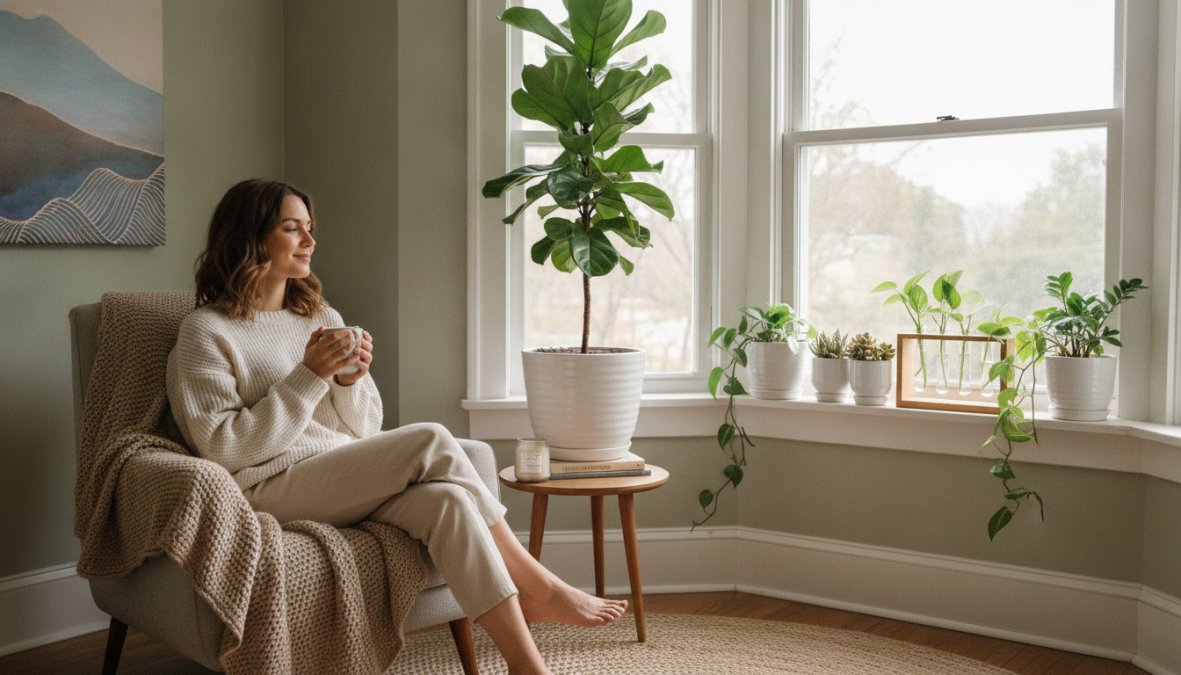
Green wavelengths have a naturally calming effect on the human brain. Touch matters too, caring for plants engages your hands in repetitive, purposeful action that quiets anxiety-inducing rumination. Higher oxygen availability from plants supports cognitive function and reduces physiological anxiety symptoms.
Biophilia and Psychological Well-Being
Biophilia is the innate human tendency to seek connection with nature. For 99% of human history, proximity to plants signaled safety and resource availability. Your brain still interprets green, growing things as "this environment supports life."
When surrounded by plants, your brain relaxes because it perceives abundance and safety. Nurturing plants creates a sense of purpose and competence. Research from the University of Exeter found indoor plant presence increased productivity by 15% and reduced stress-related symptoms in office workers, especially those who actively engaged with plant care.
Key Takeaway
Plants reduce stress through three simultaneous pathways: visual calming (green wavelengths), physiological (oxygen, air quality), and psychological (biophilia, nurturing behavior).
Indoor Plants for Home Decor: Aesthetic and Atmospheric Benefits
Creating Visual Warmth and Character in Your Space
Plants add texture, color variation, and living movement to static spaces. A room with only furniture feels cold; add plants, and it becomes warm and inviting. Variety in plant forms, trailing vines, upright stems, broad leaves, delicate fronds, creates visual rhythm and depth.
Color variation from deep forest green snake plants to bright lime pothos growth adds subtle complexity. The living quality of plants keeps your environment feeling dynamic rather than static. Textural variety engages the eye and makes spaces feel richer.
Choosing Planters That Complement Your Home Style
The planter matters as much as the plant. The [3-Piece White Ceramic Planter Pot Set with Fluted Design & Saucers](https://allwayzhome.myshopify.com/products/3-piece-white-ceramic-planter-pot-set-with-fluted-design-saucers) ($38.99) provides timeless elegance suitable for minimalist, modern, and transitional interiors.
The 4 Inch Self Watering Planter ($28.80) combines practical watering systems with modern design. Self-watering planters solve inconsistent watering problems by drawing just the right amount of moisture from the base.
The Modern Indoor Planter with Drainage - 3D Printed Fluted Plant Pot ($26.00) features bold lines and clean design appropriate for contemporary spaces. Planter selection reflects your design philosophy and makes plants intentional design elements.
Easy Care Indoor Plants: Low-Maintenance Options for Any Home
Hardy Plants for Low-Light Conditions
Snake Plant is the gold standard for low-light tolerance. It survives in spaces with only indirect ambient light and requires watering only every 2-3 weeks.
Pothos adapts to any light condition and grows slowly in dim spaces, rapidly in bright ones.
Peace Lily actually prefers lower light than many plants and signals water needs by drooping.
ZZ Plant tolerates neglect, low light, and irregular watering.
Calathea varieties add dramatic foliage patterns and thrive in moderate indirect light, ideal for bathrooms.
Self-Watering Solutions and Minimal-Care Varieties
The AllWayzHome [4 Inch Self Watering Planter](https://allwayzhome.myshopify.com/products/4-inch-self-watering-planter-large-indoor-outdoor-plant-pot-with-drainage-terracotta-green-beige-modern-ribbed-design) ($28.80) uses a wick system where plants draw water as needed, eliminating feast-or-famine watering patterns.
The Arch Wave Propagation Station ($28.80) provides a beautiful way to root cuttings, extending plant life and creating new ones at zero cost.
Minimal-care varieties include succulents, sansevieria, ZZ plants, pothos, and philodendrons. Match plant requirements to your actual habits: choose drought-tolerant plants if you forget to water, or moisture-loving plants if you tend to overwater.
Pro Tip
Start with three low-maintenance plants: a snake plant for low light, a pothos for any space, and a peace lily for humidity-prone areas. These cover 80% of home environments and forgive inconsistent care.
Humidity Regulation and Transpiration: Natural Climate Control
Plants release water vapor through transpiration, where water absorbed by roots travels through the plant and exits through leaf stomata. A single large plant can transpire several liters of water per week, significantly increasing humidity in surrounding air.
Indoor air in winter drops to 20-30% humidity because heating systems remove moisture. Dry air irritates sinuses and dries skin. Plants naturally humidify the air, raising humidity toward the healthier 40-60% range. This is particularly valuable in winter when mechanical humidifiers consume energy.
Humidity also protects furniture and wood. Extremely dry air causes wood to crack and shrink. Humidity from plants helps preserve these materials while improving air quality and reducing stress.
Practical Tips for Maximizing Plant Effectiveness in Your Home
Strategic Plant Placement for Different Room Layouts
Living Rooms: Place larger plants near windows where they receive bright indirect light 4-6 hours daily. Position trailing plants on high shelves to create visual interest while improving air circulation.
Bedrooms: Prioritize plants that improve air quality during sleep hours. Peace lilies and snake plants near windows work well. Avoid plants requiring frequent watering that might disturb sleep routines.
Bathrooms: High humidity makes bathrooms ideal for calathea, peace lily, and pothos. Position plants on shelves above sinks to avoid water splash.
Offices: Low-light tolerant plants work in spaces without windows. Group 3-5 plants to create a green corner that improves air quality and reduces stress.
Kitchens: Position plants on windowsills away from direct heat and cooking fumes.
Air circulation matters significantly. Plants in stagnant corners contribute less than plants positioned where natural air movement carries their oxygen and humidity throughout the room.
Balancing Plant Benefits with Potential Challenges
Overwatering creates conditions for root rot and fungal growth. Underwatering stresses plants and reduces effectiveness. Finding the right watering frequency requires observation and adjustment.
Pests occasionally infest houseplants. Starting with pest-resistant varieties (snake plants, pothos, ZZ plants) reduces this risk. Some people experience allergies to plant pollen or mold in soil. Consider varieties with minimal pollen and ensure soil dries slightly between waterings.
In humid climates, multiple plants might push humidity above 60%, creating conditions for mold growth. Monitor humidity with a simple meter ($10-15) and prioritize air circulation.
Watch Out
Plants require commitment. A neglected plant becomes a source of stress rather than stress relief. Start with hardy, low-maintenance varieties and expand only after establishing a consistent care routine.
Plants vs. Mechanical Air Purifiers: What Works Best
Mechanical air purifiers remove particulate matter and some VOCs rapidly. Plants work continuously without electricity but don't remove particulate matter and work more slowly. The best approach combines both: use mechanical purifiers for rapid particulate removal and plants for continuous passive air quality improvement, humidity regulation, and psychological benefits.
For people with allergies or asthma, mechanical purifiers are essential. For people seeking stress reduction, plants are superior because they engage biophilia and provide visual engagement. Over 10 years, plants are dramatically more economical than mechanical systems while providing additional benefits.
Indoor plants improve home atmosphere through physiological air purification, psychological stress reduction, humidity regulation, and aesthetic enhancement. Start with hardy, low-maintenance varieties, spider plants, pothos, and snake plants, and expand as you develop confidence. AllWayzHome's curated planter selection, including the [3-Piece White Ceramic Planter Pot Set](https://allwayzhome.myshopify.com/products/3-piece-white-ceramic-planter-pot-set-with-fluted-design-saucers) ($38.99) and self-watering options, makes it simple to create a cohesive plant display that transforms your home into a sanctuary. The investment in plants pays dividends through improved air quality, reduced stress, and a living environment that supports your well-being.
Frequently Asked Questions
How do indoor plants actually improve air quality in your home?
Indoor plants improve air quality through photosynthesis, absorbing carbon dioxide and releasing oxygen while their leaves and root zone capture volatile organic compounds (VOCs) like formaldehyde and benzene. Soil microorganisms further break down airborne toxins. However, plants work best as part of a comprehensive approach that includes ventilation, they complement but don't replace mechanical air purifiers in removing all pollutants from your indoor environment.
What are the best air purifying plants for home use?
Popular air purifying plants include spider plants, snake plants, peace lilies, pothos, English ivy, and areca palms. Spider plants and snake plants are particularly low-maintenance and effective at removing formaldehyde and xylene. Peace lilies excel at filtering ammonia and trichloroethylene. The best choice depends on your lighting conditions, some thrive in low light while others need bright, indirect sunlight. Pairing multiple plant varieties maximizes overall air purification effectiveness.
Do indoor plants really reduce stress and improve mental health?
Yes, research supports that indoor plants reduce stress and enhance well-being through biophilia, our natural connection to living things. Plants lower cortisol levels, improve mood, and increase productivity and mental clarity. Simply having greenery visible reduces anxiety and creates a calming environment. Adding plants to your workspace or bedroom transforms the atmosphere into a sanctuary, making daily routines feel more serene and intentional.
What challenges should I consider before filling my home with plants?
While beneficial, multiple indoor plants can introduce challenges: overwatering may increase humidity in already-humid climates, some people have plant allergies or sensitivities, and pests like spider mites can become issues. Dust accumulation on leaves requires regular cleaning, and plant care demands time and attention. Consider your climate, allergies, lifestyle, and available space before committing. Self-watering planters and easy-care varieties like snake plants can minimize maintenance while maximizing benefits.
This article was written using GrandRanker