Cart
0
A candle can change the feeling of a room in minutes: the soft flicker on a kitchen counter, a welcoming fragrance by the entryway, or a quiet glow beside the bed. But when choosing a candle for your own home or a thoughtful gift, soy vs paraffin is more than a label on the bottom of the jar. The wax can influence burn time, scent experience, appearance, price, and the kind of care a candle needs.
Neither option is automatically right for every space. A beautifully poured paraffin candle can fill a larger room with fragrance, while a soy candle may be the easy, slow-burning choice for an intimate evening at home. The best pick depends on what you want the candle to do and the mood you want it to create.
Soy vs Paraffin: The Difference Starts With the Wax
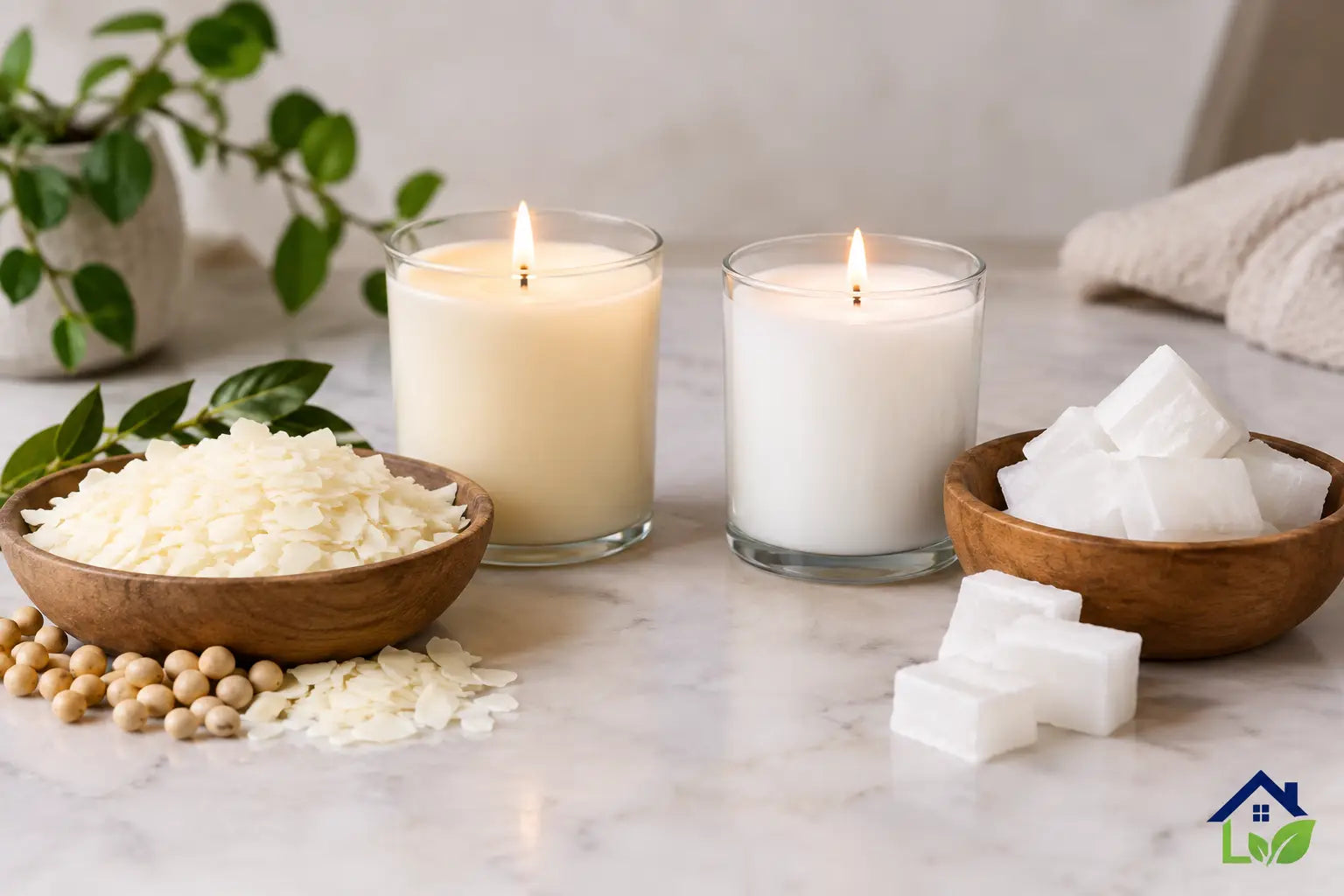
Soy wax is made from hydrogenated soybean oil. It is often chosen by shoppers who prefer a plant-based candle made with a renewable resource. Soy wax typically has a softer, creamier look than paraffin, and it is especially common in container candles designed for relaxed, everyday use.
Paraffin wax is derived from petroleum. It has been used in candle-making for generations because it is dependable, versatile, and excellent at holding and releasing fragrance. Paraffin can be formulated in different ways for jars, pillars, and decorative shapes, which helps explain why it remains popular across so many candle styles.
The source of the wax matters to many shoppers, but it should not be the only deciding factor. The finished candle also depends on the wick, fragrance load, dye, vessel, and how carefully it was poured. A well-made candle is a complete experience, not simply a wax category.
Burn Time and Everyday Candle Care
Soy wax generally burns more slowly than paraffin wax, particularly in a properly sized container candle. That can make soy appealing for people who light candles often and want to enjoy a favorite scent over many cozy evenings. Its lower melting point also creates a soft wax pool that feels especially suited to relaxed, at-home rituals.
That softness comes with a small trade-off. Soy wax can develop a textured or frosted appearance on the surface and sides of a candle, especially when temperatures shift. This is normal and does not mean the candle is damaged. For someone who loves a handmade, natural-looking finish, those subtle variations can be part of the charm. For someone seeking a perfectly smooth, glossy look, paraffin may be more visually consistent.
Paraffin candles often burn with a strong, steady flame and can create a smooth finish in both colored and uncolored designs. They may burn faster than soy in comparable conditions, though the real burn time varies widely based on candle size, wick type, and how long it is burned each session.
Whichever wax you choose, simple care makes a difference. Trim the wick to about one-quarter inch before lighting, let the wax melt close to the edge on the first burn when possible, and avoid burning a candle for more than four hours at a time. These habits help prevent tunneling, reduce excess soot, and keep the candle looking gift-worthy through its final burn.
Which Wax Has the Stronger Scent?
If scent is your first priority, paraffin often has the advantage. It tends to deliver a more immediate fragrance throw, meaning you may notice the aroma quickly after lighting it. In a spacious living room, open-concept kitchen, or busy gathering space, that stronger presence can be exactly what you want.
Soy wax may offer a gentler scent experience. Its fragrance is often described as softer and more gradual, creating a close-to-home feeling rather than filling every corner instantly. That can be lovely in bedrooms, bathrooms, reading nooks, and smaller spaces where you want fragrance to feel calming rather than overpowering.
Still, soy does not always mean faint, and paraffin does not always mean intense. Fragrance performance depends heavily on the formula and the candle's size. A large soy candle with a quality wick can scent a room beautifully, while a lightly fragranced paraffin candle may remain subtle. Consider where the candle will live and whether you want a quiet background note or a scent that welcomes guests at the door.
Appearance, Style, and the Details That Make a Gift Feel Personal
Candles are décor as much as they are fragrance. They sit on coffee tables, kitchen trays, bedside tables, and bathroom shelves, so the vessel and presentation often matter as much as the wax itself.
Soy wax has a naturally creamy, understated appearance that pairs beautifully with warm neutrals, ceramic vessels, amber jars, and personalized labels. It feels at home in gift boxes built around rest, new beginnings, and everyday comfort. A soy candle alongside a soft throw, a custom cutting board, or a small planter can make a housewarming gift feel considered without feeling overly formal.
Paraffin is a flexible choice for polished designs, vivid colors, sculptural candles, and fragrance-forward collections. It can suit celebratory gifts particularly well, whether you are creating a cheerful birthday bundle or choosing a statement candle for a newlywed couple's first home. If the candle is meant to stand out visually, paraffin's smooth finish can support a more refined, tailored look.
For either wax, a personal detail brings the moment closer to home. A family name, a meaningful date, a favorite fragrance, or a label created for a new address can turn a simple candle into a keepsake. That is why candles remain one of the easiest ways to make a gift feel both useful and heartfelt.
A Closer Look at Sustainability and Indoor Use
Soy is often positioned as the more eco-conscious choice because it comes from soybeans, a renewable crop. For shoppers who want a plant-based option, that can be meaningful. However, sustainability is rarely as simple as one ingredient. Farming practices, transportation, packaging, vessel reuse, and how long a candle lasts all shape its overall footprint.
Paraffin comes from a nonrenewable source, which is a consideration for those prioritizing plant-derived materials. At the same time, a candle's environmental story can improve when it comes in a reusable vessel, uses minimal packaging, and is enjoyed fully rather than discarded halfway through.
For indoor comfort, look beyond the words soy or paraffin. Choose candles from makers that clearly identify their materials, use appropriately sized wicks, and provide burning instructions. If anyone in your household is sensitive to fragrance, select lighter scents, burn candles in a well-ventilated room, and stop using any candle that causes discomfort. A clean, comfortable atmosphere is always the goal.
How to Choose Between Soy and Paraffin
Choose soy when you want a slower-burning, plant-based candle with a soft visual character and a more intimate fragrance experience. It is a lovely fit for quiet mornings, winding down after work, or giving someone a comforting piece of home.
Choose paraffin when you want bold fragrance, smooth visual finish, or a candle designed to make an immediate impression in a larger room. It can be a smart choice for entertaining, celebratory gifting, and spaces that need a little more scent presence.
You may also find candles made with wax blends. A soy-paraffin blend can combine some of soy's creamy appearance with paraffin's scent performance and smooth finish. That is not a compromise in a negative sense. It is simply a different formula designed to meet a particular candle-making goal.
The most satisfying candle is the one that fits the moment: a fresh, welcoming scent for a new home, a warm glow for a quiet dinner, or a beautifully packaged detail that tells someone you chose their comfort on purpose. Let the wax guide your decision, then choose the fragrance, vessel, and personal touch that make every corner truly yours.