Cart
0

Table of Contents
- Why Modern Living Rooms Need Intentional Warmth
- Best Lighting for Warm Living Rooms
- How to Layer Textures in Interior Design
- Warm Color Palettes for Living Rooms
- Natural Elements and Greenery
- Budget-Friendly DIY Hacks for Instant Warmth
- Scent and Sensory Design for Cozy Spaces
- Small Space Solutions for Adding Warmth
Last Updated: August 11, 2026
Why Modern Living Rooms Need Intentional Warmth
Modern living rooms can feel sterile without deliberate choices. Clean lines and neutral palettes create visual calm but risk draining personality and comfort. The challenge is adding warmth without sacrificing the aesthetic clarity that makes modern design appealing.
At AllWayzHome, we've observed that the most inviting modern living rooms layer warmth strategically. Warmth isn't about temperature or heavy fabrics, it's about creating an environment that feels both sophisticated and lived-in. The difference between a showroom and a home comes down to texture, light, and sensory detail. A room with hard surfaces, bright overhead lighting, and a single color palette feels unwelcoming; add a throw blanket, warm ambient lighting, and natural wood tones, and it transforms.
Pro Tip
The most effective approach to warmth in modern spaces isn't about adding more, it's about choosing the right elements. One well-placed area rug and quality ambient lighting often outperform a room cluttered with accessories.
Best Lighting for Warm Living Rooms
Lighting is the foundation of warmth. Layer three types: ambient, task, and accent. Ambient lighting provides overall illumination, warm white light (2700K-3000K) creates an inviting atmosphere, while cooler light (5000K+) feels clinical. For modern spaces, warm ambient lighting with dimmable options gives flexibility to adjust mood throughout the day.
The BenQ e-Reading Floor Lamp exemplifies this approach, with adjustable color temperature from 2700K (warm white) to 5700K (cool white), letting you shift the room's feeling without changing fixtures. Task lighting should be warm and focused; accent lighting like wall sconces adds depth and visual interest.
A practical mistake: relying solely on overhead ceiling lights, which create harsh shadows and rarely feel warm. Instead, position floor lamps in corners and beside seating to create pools of warm light that make the space feel layered and intentional.
Key Takeaway
Replace or supplement overhead lights with warm-toned floor and table lamps positioned around the room's perimeter.
How to Layer Textures in Interior Design
Texture separates a cold, modern room from a warm one. Smooth surfaces, glass, polished concrete, sleek wood, are hallmarks of modern design, but without textural contrast, they feel austere. Layering textures means combining different tactile experiences: soft against smooth, rough against refined.
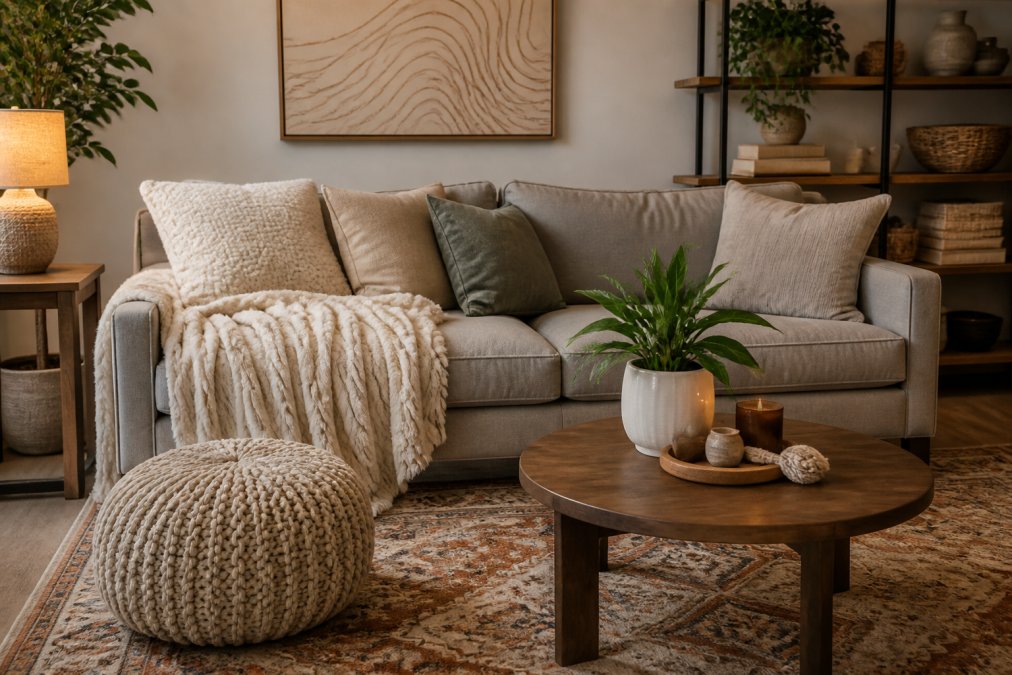
Start with smooth, hard surfaces, sofa frame, coffee table, flooring, then introduce contrast through soft furnishings. A velvet throw pillow against linen. A chunky knit pouf next to a sleek metal side table. These contrasts create visual and tactile interest that makes the space feel intentional.

Throw Blankets and Soft Furnishings
Throw blankets are the fastest way to add warmth and texture. They're functional, add visual softness to hard furniture lines, and introduce new colors without requiring a redesign. The AllModern Linea Knit Throw Blanket demonstrates effective layering with its chunky knit construction and fringed edges, while its modern color block design stays aligned with contemporary aesthetics.
When selecting throw blankets, consider weight and material. Heavier blankets (wool, chunky knits) feel more substantial and grounding. The key is choosing something you'll actually want to touch and use.
Throw pillows work similarly. Multiple pillows with different fabrics build visual richness. Pair smooth velvet with chunky boucle. Add linen for contrast. The CB2 Ivory White Boucle Throw Pillow's textured surface creates depth that flat pillows cannot achieve.
Area Rugs and Floor Textures
An area rug anchors a seating arrangement and introduces color and texture from below. In modern living rooms with hard flooring, a rug is essential for warmth and comfort. Choose a rug with visible texture: chunky weave, subtle pattern, or plush pile. Flat, thin rugs feel insubstantial; a rug with weight becomes a design element.
Size matters too. The rug should extend under at least the front legs of your sofa and chairs, creating a visual boundary that unifies the seating zone. This layering at floor level dramatically affects how warm and cohesive a room feels.
Warm Color Palettes for Living Rooms
Color temperature directly influences how warm a space feels. A living room dominated by cool grays and whites will feel modern but potentially cold. Introducing warm undertones, warm grays, beiges, warm whites, and earth tones, creates a palette that feels both contemporary and inviting.
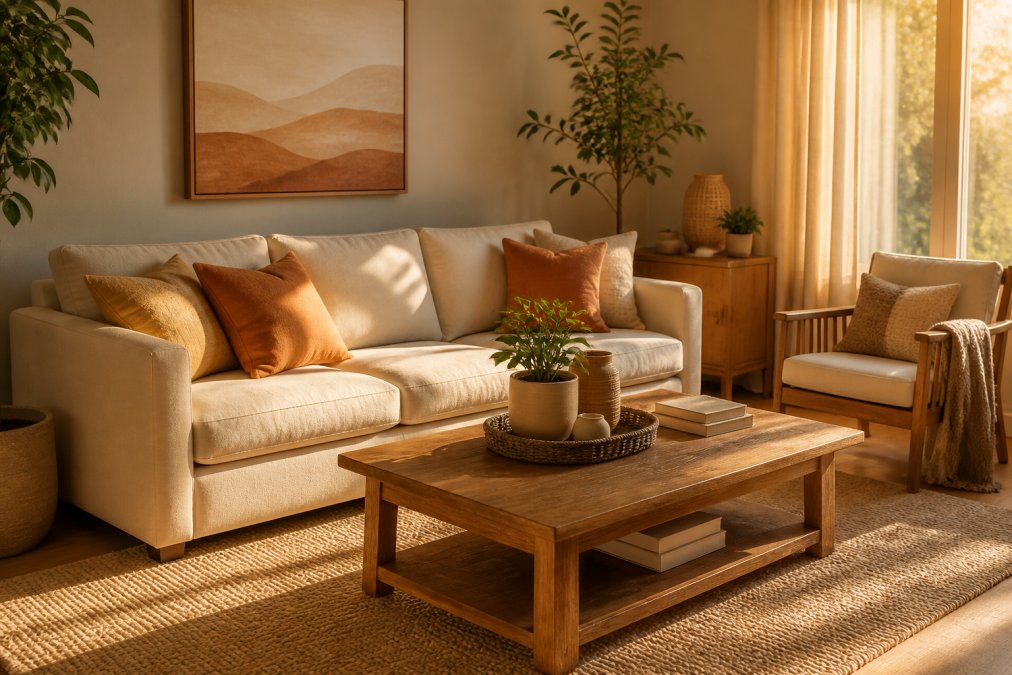
The most effective warm palettes use a foundation of neutrals with warm undertones. Benjamin Moore's Balboa Mist (OC-27) is a warm gray with subtle greige undertones that feels both modern and inviting. Build from this foundation by introducing warm accent colors: terracotta, warm gold, soft rust, or warm browns. These work best as accents in pillows, artwork, or small furnishings.
Natural wood tones are essential to a warm modern palette. Warm woods, oak, walnut, warm-toned reclaimed wood, feel more inviting than cool-toned or whitewashed woods. Even one piece of warm wood furniture shifts how the entire room feels.
Watch Out
A common mistake: using "warm" colors that feel dated or overly traditional. Modern warm palettes use muted, sophisticated versions of warm tones, warm grays, soft terracotta, subtle gold, that feel contemporary while still inviting.
Natural Elements and Greenery
Plants and natural materials are among the most effective ways to add warmth. They introduce organic, irregular shapes and textures that contrast beautifully with clean lines of modern furniture. Visually, green tones complement warm neutrals. Psychologically, living plants make a space feel more inviting and less sterile.
Select plants that fit your space and light conditions. Large floor plants make bold statements; smaller plants on shelves create layered interest. Trailing plants add softness to hard furniture edges.
Natural wood is equally important. Unfinished or naturally finished wood, not whitewashed or heavily stained, adds warmth that painted or modern materials cannot replicate. This might be a wooden shelf, reclaimed wood accent, or wooden picture frames. The texture and color variation in natural wood creates visual warmth that feels organic and intentional.
Budget-Friendly DIY Hacks for Instant Warmth
You don't need significant spending to add warmth. Many effective approaches cost little and require only a few hours.
Rearrange with intention. Moving your sofa to create a conversation area, angling chairs toward each other, and positioning seating to face a focal point creates intimacy that makes the space feel warmer. This costs nothing and often has immediate impact.
Layer with what you have. Before buying new pillows or blankets, take inventory of what you own. Fold a favorite sweater over a chair arm. Drape scarves over a shelf. These personal touches often feel warmer than store-bought items because they carry meaning.
DIY wall art with warm tones. Print and frame warm-toned abstract art or photography. The Abstract Earthy Waves Wall Art from AllWayzHome demonstrates how warm earth tones in wall decor shift a room's feeling without major investment.

Create a candle display. Group candles of varying heights on a shelf or coffee table. Beyond visual warmth, scented candles add an olfactory dimension that makes spaces more inviting. The Cinnamon Swirl Signature Candle and Black Orchid Private Reserve Candle from AllWayzHome show how fragrance layering adds sensory richness.
Repurpose textiles. Scarves, blankets, or fabric remnants become wall hangings, shelf liners, or throw covers. Draping fabric from a curtain rod costs almost nothing but adds significant visual warmth and texture.
Scent and Sensory Design for Cozy Spaces
Warmth is also olfactory. A room that smells inviting feels warmer and more welcoming than one that's visually perfect but scent-neutral. Warm scents, cinnamon, vanilla, amber, wood smoke, spices, trigger associations with coziness and home.
Candles are the most effective tool for scent-based warmth. Positioned strategically, they create both visual warmth (flickering light) and olfactory warmth (inviting fragrance). The Cinnamon Swirl Signature Candle brings the scent of comfort and home, while the Black Orchid Private Reserve Candle offers sophisticated, floral warmth. Layering different scents creates a complex, inviting olfactory landscape.

Beyond candles, consider fresh flowers, dried botanicals, or essential oil diffusers. A vase of fresh flowers adds visual warmth and natural scent. The key is restraint, subtle layering of complementary scents creates an inviting atmosphere that feels natural and warm.
Best For
Renters and apartment dwellers who want to add sensory warmth without permanent changes. Scent and lighting are the fastest, most affordable ways to transform a rental space into something that feels like home.
Small Space Solutions for Adding Warmth
Small living rooms require strategic layering and multifunctional elements that serve both aesthetic and practical purposes.
Vertical layering. Use vertical space with wall-mounted shelves displaying books, plants, and decorative objects. Tall floor lamps draw the eye upward and provide warm ambient light without consuming floor space.
Multifunctional furniture. A chunky knit pouf serves as seating, footrest, and textural accent. A wooden side table with shelves introduces warm wood tones while maintaining functionality.
Focused color and texture. Rather than spreading warm tones throughout, concentrate them in one or two focal areas: a textured accent wall, a layered seating arrangement, or a styled shelf. This creates visual warmth without chaos.
Light strategically. Use multiple small light sources positioned around the room's perimeter. A warm-toned floor lamp in one corner, a table lamp on a shelf, wall sconces if possible, these create pockets of warmth that make small spaces feel intimate rather than cramped.
Window treatments matter more. Soft drapery in warm tones or natural fabrics frames the window and adds texture. Even simple linen curtains in a warm neutral add significant coziness.
| Small Space Warmth Strategy | Implementation | Impact |
|---|---|---|
| Vertical layering | Wall shelves, tall lamps, wall art | Creates visual interest without floor clutter |
| Multifunctional pieces | Pouf seating, shelved side tables | Adds warmth while maintaining functionality |
| Focused texture | Accent wall or styled shelf | Creates intentional warmth without overwhelming |
| Layered lighting | Multiple small warm light sources | Makes small space feel intimate, not cramped |
| Window treatments | Soft drapery in warm tones | Frames space and adds significant visual warmth |
Adding warmth to a modern living room isn't about abandoning the aesthetic you love, it's about making that aesthetic feel like a place where you actually live. The most inviting spaces balance clean lines and minimalist principles with intentional texture, warm light, and natural elements. AllWayzHome's curated collections of candles, textiles, and decor are designed to bridge this gap, offering pieces that enhance modern design rather than fight it. Explore our selection of warm-toned candles, plush blankets, and natural elements to discover how small, intentional choices transform your living space into somewhere you genuinely want to be.
Frequently Asked Questions
How do you make a modern living room feel cozy?
Making a modern living room feel cozy starts with layering soft textures like throw blankets and plush pillows, adjusting your lighting to warmer tones, and incorporating natural wood elements. Add an area rug to anchor the seating area, introduce greenery for organic warmth, and use scented candles to engage the senses. The key is balancing the clean lines of modern design with tactile, inviting elements that encourage relaxation and conversation.
What colors add warmth to a living room?
Warm color palettes for living rooms include earthy tones like warm grays, beiges, terracotta, rust, and soft browns. Accent colors such as burnt orange, warm gold, and deep burgundy create visual warmth without overwhelming a space. Pair these with natural wood finishes and neutral walls to establish a cohesive, inviting foundation. Warm undertones in your wall color, like Benjamin Moore's Balboa Mist, reflect light and enhance the overall sense of coziness.
How can I add warmth to my living room without spending a lot of money?
Budget-friendly ways to add warmth include rearranging furniture to create conversation-friendly layouts, using existing textiles creatively (drape blankets over seating), adjusting your lighting with warmer-toned bulbs, and adding plants from local nurseries. Layer throw pillows you already own, hang fabric or scarves near windows for soft drapery, and use candles or string lights for ambient lighting. These simple changes cost little but dramatically shift how warm and inviting your space feels.
What's the best way to add warmth to a small modern living room?
In small spaces, focus on strategic layering rather than bulk. Use a smaller area rug to define the seating zone, choose a few quality throw pillows in warm textures, and position one statement piece, like a warm-toned wooden side table or a tall plant, to draw the eye upward. Optimize lighting with a floor lamp that adjusts color temperature, and use vertical space for greenery. Keep your color palette cohesive to avoid visual clutter while maintaining that essential sense of warmth and comfort.
This article was written using GrandRanker