Cart
0
A low-light corner can feel unfinished fast. You bring home a beautiful plant, tuck it beside a bookshelf or in that empty spot near the entry, and suddenly the planter matters just as much as the greenery. The best planters for low light spaces are not only attractive - they help your plant stay healthy, keep the room feeling bright, and make the whole setup look intentional rather than improvised.
That balance matters in real homes. Most people are not designing a sun-drenched conservatory. They are styling apartments with one good window, guest rooms that stay dim most of the day, hallways that need softening, or offices that could use a little life. In those spaces, the right planter can elevate everyday home moments while giving lower-light plants the best chance to thrive.
What makes the best planters for low light work?
Low light changes how a planter looks and how a plant behaves. In dimmer rooms, heavy dark containers can visually disappear, especially if the plant itself has deep green leaves. Lighter tones, soft texture, and clean shapes usually read better because they reflect more light and help the arrangement feel fresh instead of shadowy.
Plant health is part of the equation too. Many low-light plants grow more slowly than plants in bright, indirect light. Slower growth often means they use water more gradually, which makes drainage especially important. A gorgeous planter without a drainage hole can work as a cachepot, but using it as the main planting vessel takes more care. If you tend to overwater, a planter with built-in drainage and a saucer is usually the safer choice.
Scale also matters more than people expect. In low light, a plant rarely puts on dramatic growth quickly, so an oversized planter can make it look sparse and swallowed up. A planter that fits the current root ball with just a little room to grow often looks more polished.
Best planter materials for low light rooms
The material you choose affects both style and maintenance. Ceramic is one of the easiest and most versatile options. It has a substantial, elevated feel that works beautifully in living rooms, bedrooms, and entryways, and glazed ceramic finishes can bounce light around a darker corner in a subtle way. If you want a planter that feels giftable and refined, ceramic is hard to beat.
Terracotta has timeless charm, but it depends on the room. Its warm, earthy tone adds comfort and character, especially in homes that lean organic, collected, or rustic. The trade-off is that standard terracotta can visually blend into a dim corner if the surrounding palette is also warm and muted. It also dries out faster than glazed ceramic, which can be helpful for some plants but less forgiving if you forget to water.
Metal planters can brighten low-light spaces because they catch ambient light so well. Brushed gold, soft brass, or matte white metal can make a quiet statement without taking over the room. The drawback is that metal can sometimes feel a little cold unless it is balanced with natural textures like wood, woven baskets, or linen nearby.
Woven baskets used as outer covers are another strong option when your goal is warmth. They instantly make a room feel more relaxed and layered. They are especially lovely in housewarming gifts because they feel homey and approachable. The practical note is simple: use a plastic nursery pot inside rather than planting directly into the basket.
Colors and finishes that brighten a dim corner
When shoppers look for the best planters for low light, they often focus on the plant first and overlook color. Yet in lower-light rooms, planter color can shape the entire mood.
Cream, white, soft taupe, pale gray, and muted sage tend to work beautifully because they keep the arrangement airy. These shades also pair well with nearly every decorating style, from modern farmhouse to clean contemporary. If you are styling a gift, neutral planters are the easier choice because they suit more homes.
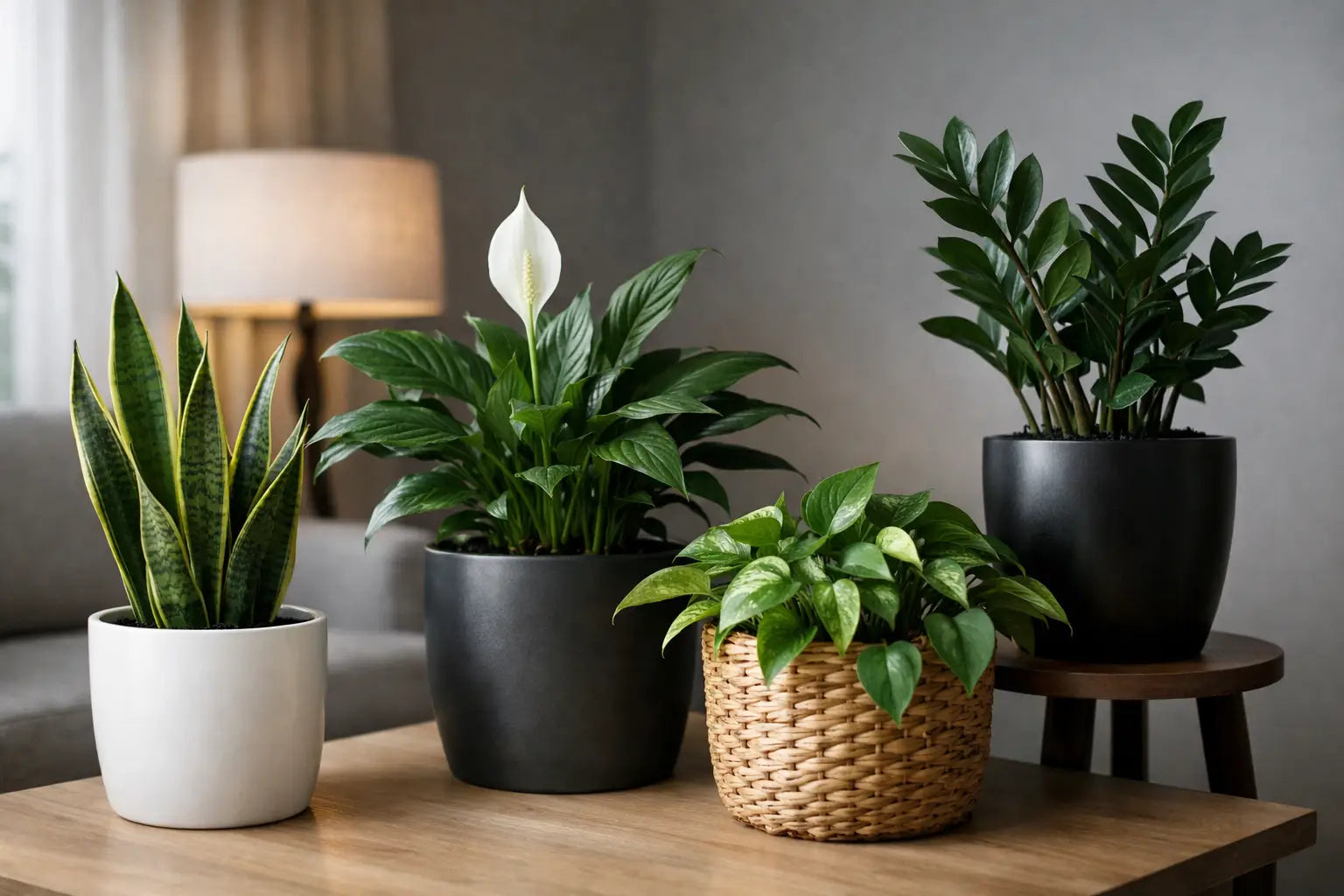
That does not mean dark planters are off the table. Black, charcoal, and deep espresso can look incredibly elegant if the room already has contrast and the plant has sculptural shape. A snake plant in a matte black planter can look crisp and dramatic. The key is intention. In a dim room that already feels heavy, a dark planter may deepen the shadows. In a room with lighter furniture and warm lamps, it can add definition.
Texture is another quiet hero. Ribbed ceramic, hand-finished glaze, fluted shapes, and gently hammered surfaces add visual interest even when natural light is limited. If a corner does not get much sun, texture helps the planter still feel noticed.
Shapes that flatter low-light plants
Many favorite low-light plants have upright or trailing habits, and planter shape should support that. Cylindrical planters are the most flexible. They suit pothos, ZZ plants, snake plants, peace lilies, and philodendrons without competing for attention.
Footed planters are especially useful in low-light rooms because they lift the plant slightly and create a lighter visual footprint. That bit of elevation can make a small plant feel more styled, especially on consoles, side tables, or shelving.
Rounded bowl shapes are softer and more decorative, but they are best for plants with shallow roots or grouped arrangements. For many common low-light houseplants, a deeper planter is more practical. Tall planters can look striking, though they sometimes require a nursery pot insert so the plant sits high enough to be seen.
If you love trailing plants, consider wall-mounted or hanging planters near the best available window. Even low-light tolerant plants still prefer some natural light. A hanging planter in the wrong dark corner is still the wrong dark corner.
Matching planter style to the room
A planter should feel like part of the room, not an afterthought. In the living room, this often means choosing something with a little more presence - a ceramic floor planter, a woven basket cover, or a sculptural pot on a pedestal stand. These pieces soften empty corners and make the space feel finished.
In bedrooms, softer silhouettes and calming colors tend to work best. A matte ivory or sandy beige planter on a dresser or nightstand can make the room feel serene without adding visual clutter. Bedrooms are also one place where matching planters can look especially polished.
For kitchens and dining areas, smaller planters with easy-clean finishes are usually the better fit. Glazed ceramic or coated metal is practical and still stylish. If the planter is part of a giftable bundle, this is where a personalized detail can feel especially thoughtful - something subtle that turns a simple home accent into a keepsake.
Entryways benefit from planters that make a gentle first impression. You want warmth, not bulk. A medium planter with a low-light favorite like a pothos or peace lily can make the home feel welcoming from the moment someone walks in.
Practical features worth paying for
Some planter details are more than nice extras. Drainage holes matter. Saucers matter. A good interior fit matters. If you are choosing between two equally beautiful options, these practical features often make one clearly better.
Self-watering planters can be helpful for busy households, but they are not automatically best for every plant. In lower light, soil stays moist longer, so a self-watering setup can become too wet if you are not careful. They work best for people who understand their plant's needs and prefer a more managed routine.
Lightweight planters are useful if you like to move plants around seasonally or rotate them closer to windows. Heavier ceramic pieces feel more elevated, but they are less convenient if you frequently refresh your layout.
If the planter is intended as a gift, ease matters just as much as beauty. A piece that is simple to style, easy to maintain, and neutral enough for different homes tends to feel more thoughtful than something overly trend-driven.
The planter and plant pairing matters
The best results come from treating the planter and plant as one design choice. A glossy white planter can make a dark green ZZ plant look crisp and modern. A warm neutral textured pot can make a pothos feel relaxed and inviting. A brass-toned planter can add elegance to a peace lily or cast iron plant.
If you are building a gift, this pairing becomes even more meaningful. A planter with a clean, timeless look feels elevated on its own, but when it arrives with easy-care greenery, it becomes a ready-made home moment. That is part of what makes planter gifts so appealing for housewarmings, weddings, and fresh starts. They are decorative, practical, and quietly personal all at once.
At AllWayzHome, that idea of home as both beautiful and meaningful is what makes a simple planter more than a container. It becomes part of the atmosphere people are creating.
How to choose well without overthinking it
Start with the room, not the plant shelf at the store. Look at the light, the surrounding colors, and how much visual weight the space can handle. Then choose a planter that brightens the area, supports drainage, and fits the scale of the plant you actually have.
If you want the safest all-around choice, a medium glazed ceramic planter in a soft neutral with drainage is hard to regret. If you want warmth, go with a woven outer basket and a nursery pot inside. If you want a more elevated, gift-ready look, choose a planter with subtle texture or a refined metallic accent.
A good planter does not have to shout to change the room. In a low-light space, the right one adds softness, polish, and a little life exactly where the home needs it most.