Cart
0
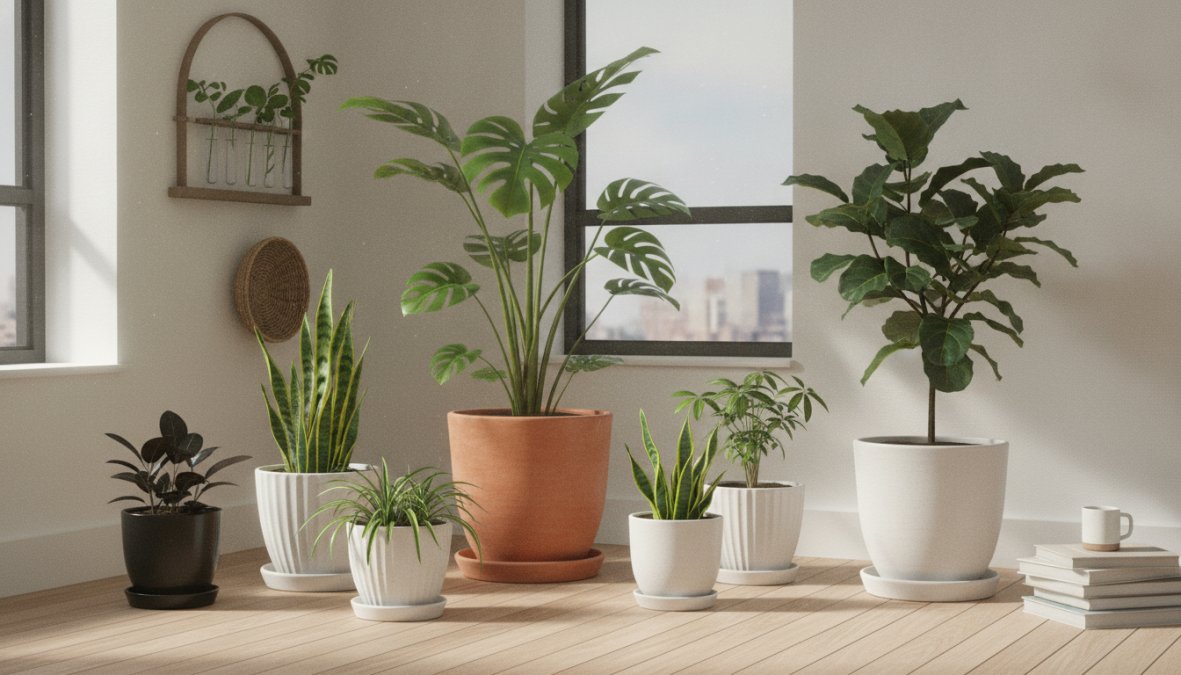
Table of Contents
- Best Indoor Plants for Apartment Living: Why They Matter
- Low Light Indoor Plants for Apartment Dwellers
- Pet Friendly Apartment Plants That Are Safe
- Best Hanging Plants for Apartments: Maximize Vertical Space
- Apartment Plant Care Tips: Watering, Light & Drainage
- Choosing the Right Planters for Your Apartment Space
- Common Mistakes to Avoid When Growing Indoor Plants
- Transform Your Apartment Into an Indoor Oasis
Last Updated: July 16, 2026
Best Indoor Plants for Apartment Living: Why They Matter
Transforming your apartment into a green sanctuary doesn't require expert horticultural knowledge. According to research from [The American Society of Interior Design(https://allwayzhome.myshopify.com/blogs/news/interior-design-tips-complete-guide)ers | asid.org], indoor plants improve air quality and reduce stress. The challenge is finding plants that tolerate low light, minimal space, and occasional neglect. Below, we'll cover low-light champions, pet-safe varieties, space-saving options, and rental-friendly mounting solutions.
Key Takeaway
The secret to apartment plant success isn't choosing rare varieties, it's matching plant biology to your actual living conditions. A hardy plant thriving in poor light beats an exotic plant dying in your north-facing corner.
Low Light Indoor Plants for Apartment Dwellers
Most apartments suffer from inadequate natural light. The best indoor plants for apartment living must tolerate 6-8 hours of indirect light or survive on far less.
Snake Plant (Sansevieria)
The Snake Plant stands as one of the most resilient houseplants available, requiring minimal water and tolerating near-darkness. Its upright, sword-like leaves add architectural interest while purifying indoor air by removing toxins like formaldehyde and benzene.
Snake Plants store water in their rhizomes, so they prefer drying out between waterings. Overwatering causes root rot. Place your Snake Plant in a corner with indirect light and water only when soil is completely dry, often just once monthly during winter.
The plant grows slowly but steadily upward, eventually reaching 2-4 feet tall. Propagation is simple: cut a leaf into sections, place in soil, and new plants emerge. This makes Snake Plants ideal for apartment dwellers who want to expand their collection without purchasing new plants.
:::pro Snake Plants actually prefer neglect over attention. If you forget to water for two months, it thrives. :::
Pothos (Epipremnum aureum)
Pothos vines cascade beautifully from shelves or climb up moss poles, solving the vertical space problem common in apartments. Heart-shaped leaves in solid green or marble patterns add visual warmth while adapting to everything from bright indirect light to dim corners.
The plant signals thirst through subtle drooping, eliminating guesswork about watering. Allow soil to dry between waterings, then water thoroughly. Pothos grows rapidly, filling empty wall space within weeks.
Propagation happens effortlessly: snip a 4-6 inch section below a node, place in water, and roots appear within days. Critical note: Pothos contains calcium oxalates and is toxic if ingested by cats or dogs, making it unsuitable for certain households.
ZZ Plant (Zamioculcas zamiifolia)
The ZZ Plant represents the ultimate low-maintenance option for apartment living. Its glossy, dark green leaflets create a polished appearance while thriving in extremely low light, irregular watering, and temperature fluctuations common in apartments.
ZZ Plants store water in underground rhizomes, making them extraordinarily drought-tolerant. Many apartment dwellers water their ZZ Plant once monthly or less frequently. The slow growth rate means the plant won't outgrow your space, and the compact form fits easily on shelves or side tables.
Peace Lily
The Peace Lily produces elegant white flowers that bloom indoors without special care. Dark green foliage thrives in low to medium indirect light and communicates clearly when thirsty by drooping dramatically, then perking up within hours of watering.
Peace Lilies prefer consistent moisture but not waterlogged soil. Water when the top inch of soil feels dry, typically every 7-10 days. The plant produces flowers year-round in proper conditions.
Watch Out
Peace Lilies droop dramatically when thirsty, which looks like the plant is dying. Don't panic, water thoroughly and it recovers within hours.
Pet Friendly Apartment Plants That Are Safe
Pet owners face additional constraints when selecting apartment plants. Many popular houseplants contain compounds toxic to cats and dogs.
Spider Plants top the pet-safe list, offering trailing green and white variegated foliage that cats find irresistible, without causing harm. The plant produces baby plantlets on long runners and tolerates low light and irregular watering.
Boston Ferns provide delicate, feathery foliage without toxicity concerns. These plants prefer consistent moisture and higher humidity, thriving in bathrooms or kitchens.
Parlor Palms create tropical ambiance while remaining non-toxic to cats and dogs. The plant tolerates low to medium light and grows slowly, fitting easily into apartment spaces.
African Violets offer flowering beauty without toxicity. These compact plants bloom prolifically indoors with proper light, producing clusters of purple, pink, or white flowers.
Calathea varieties provide stunning patterned foliage while remaining pet-safe. These plants prefer indirect light and consistent moisture, thriving in apartments with moderate humidity.
| Plant Name | Light Requirements | Watering Frequency | Pet Safe | Space Needed |
|---|---|---|---|---|
| Spider Plant | Low to bright | Every 7-10 days | Yes | Compact |
| Boston Fern | Medium indirect | Keep moist | Yes | Medium |
| Parlor Palm | Low to medium | Every 7-10 days | Yes | Vertical |
| African Violet | Bright indirect | Keep moist | Yes | Compact |
| Calathea | Medium indirect | Every 5-7 days | Yes | Medium |
Best Hanging Plants for Apartments: Maximize Vertical Space
Apartment living demands creative use of vertical space. Hanging plants solve the floor-space constraint while adding visual interest at eye level and above.
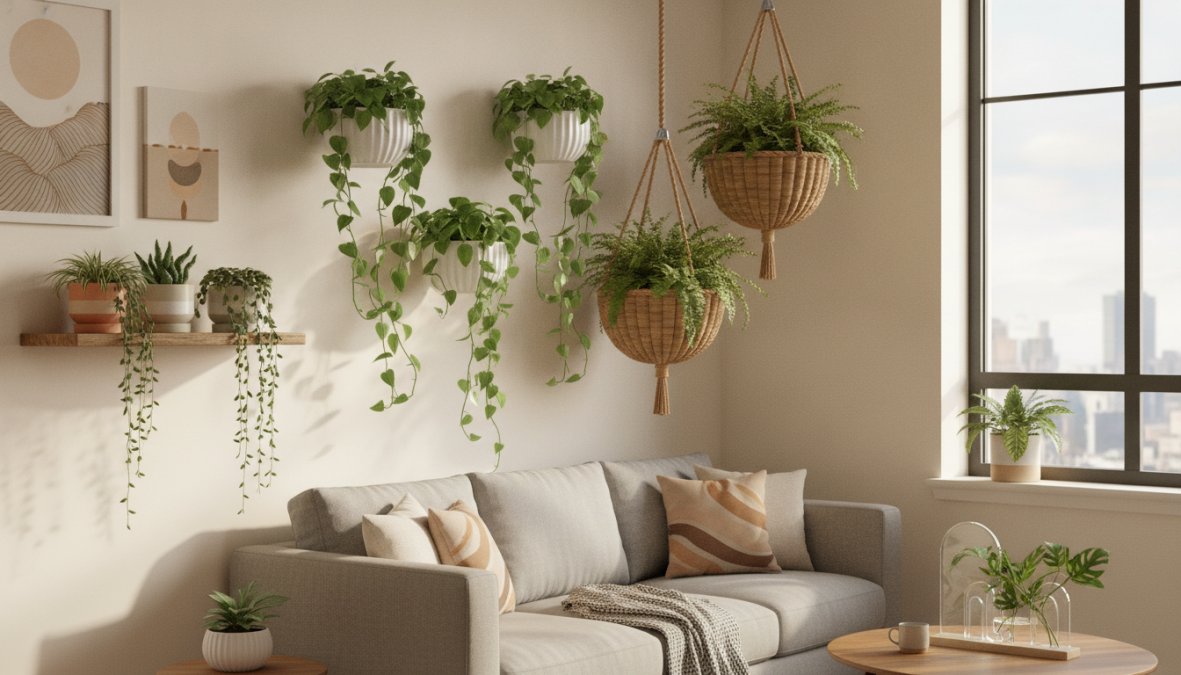
String of Pearls creates dramatic cascading strands of small, bead-like leaves that instantly transform bare walls into living art. This succulent prefers bright indirect light and infrequent watering, making it ideal for apartments with good window access.
Burro's Tail produces thick, trailing stems covered in plump leaves that create a waterfall effect from hanging baskets. This succulent requires bright light and infrequent watering, thriving in apartments with sunny windows.
Hoya varieties offer waxy, heart-shaped leaves and fragrant flower clusters in trailing form. These plants tolerate low to medium light and prefer drying out between waterings.
Trailing Philodendrons create the lush, tropical effect of Pothos with slightly different leaf shapes. These plants adapt to various light conditions and prefer drying out between waterings.
Hanging plants require adequate drainage and consideration of water runoff. AllWayzHome offers self-watering planters specifically designed for hanging installations, eliminating the mess of traditional hanging baskets while ensuring consistent moisture. The 4-inch self-watering planter at $28.80 solves the practical challenge of watering hanging plants without creating water damage.
:::pro Hang plants at varying heights to create visual depth. Stagger them across different heights and distances from walls to create a living wall effect rather than a simple row of pots. :::
Apartment Plant Care Tips: Watering, Light & Drainage
Successful apartment plant care depends on understanding three fundamental factors: appropriate watering frequency, light availability, and drainage quality.
Rental-Friendly Mounting Solutions
Apartment dwellers face unique challenges when installing plants. Drilling holes in walls violates lease agreements and costs security deposits.
Adhesive hooks rated for 5-10 pounds support hanging baskets without drilling. These hooks release cleanly when you move, leaving no holes or residue. Command brand hooks specifically designed for renters have become standard in the apartment plant community.
Wall-mounted shelves using tension rods fit between floor and ceiling without drilling. These systems create instant plant display surfaces while remaining completely removable.
Freestanding plant stands solve the mounting problem entirely. Tiered stands maximize vertical space while remaining portable. Three-tiered stands hold 6-9 plants in a footprint roughly equivalent to a small end table.
Corner plant shelves designed for renters use tension systems or lean against walls without fastening. These solutions prove particularly valuable in apartments where every square inch matters.
Managing Seasonal Light Shifts
Apartment light changes dramatically across seasons. Winter reduces available light by 40-60% compared to summer, forcing apartment dwellers to adapt plant placement.
Track sunlight patterns in your apartment across seasons. A south-facing window receives strong light year-round, while north-facing windows remain consistently dim. Move light-sensitive plants closer to windows during winter months.
Supplement natural light with grow lights during winter if your apartment receives minimal sunlight. Inexpensive LED grow lights positioned 6-12 inches above plants provide sufficient light for most houseplants. A simple timer ensures consistent daily light exposure.
Rotate plants weekly to ensure even growth on all sides. Apartment windows provide directional light, causing plants to lean toward windows.
Budget-Friendly Plant Sourcing
Starting an apartment plant collection doesn't require significant investment.
Propagation provides free plants indefinitely. A single Pothos or Spider Plant produces dozens of propagations within months.
Local plant swaps connect apartment gardeners within your community. These events allow trading duplicate plants and acquiring rare varieties at fraction of retail prices.
Online plant communities offer propagations and divisions at $3-8 compared to $25-40 for mature plants. Shipping costs remain reasonable, making online sourcing economical.
Start with hardy, fast-growing plants before investing in rare varieties. A Spider Plant or Pothos costing $10-15 provides years of enjoyment and unlimited propagations.
Choosing the Right Planters for Your Apartment Space
Planter selection impacts both aesthetics and plant health.
Drainage holes are non-negotiable for most plants. Containers without drainage cause waterlogging and root rot. If you love a decorative pot without drainage, use it as a cachepot, placing a draining container inside.
Size matters significantly. Containers should be only slightly larger than the plant's root ball, typically 1-2 inches larger in diameter. Oversized containers retain excess moisture, promoting root rot.
Material affects watering frequency. Terracotta breathes, allowing soil to dry faster than plastic. Ceramic and stoneware retain moisture longer.
AllWayzHome offers elegant planter options designed for apartment living. The 3-piece White Ceramic Planter Set with Fluted Design at $38.99 provides three coordinated containers in varying sizes. The 4-inch self-watering planter at $28.80 solves the consistency problem, eliminating overwatering through built-in wicks that draw moisture from a base reservoir.
| Planter Type | Best For | Drainage | Moisture Retention | Price Range |
|---|---|---|---|---|
| Terracotta | Succulents, frequent waterers | Excellent | Low | $5-20 |
| Ceramic | General houseplants, aesthetic focus | Good | Medium | $15-50 |
| Stoneware | Premium display, long-term plants | Good | Medium-high | $20-80 |
| Self-watering | Forgetful waterers, travelers | Built-in | Consistent | $25-40 |
| Plastic | Budget-conscious, lightweight | Good | Medium | $3-15 |
Common Mistakes to Avoid When Growing Indoor Plants
Understanding common pitfalls prevents frustration and plant death.
Overwatering kills more apartment plants than any other factor. Indoor plants grow slower than outdoor plants and require less water. Instead of watering on a fixed schedule, insert your finger two inches into soil. If it feels dry, water thoroughly. If moist, wait several days.
Placing plants in inadequate light creates slow decline. Before purchasing a plant, honestly assess your apartment's light levels. North-facing apartments need low-light champions like Snake Plants and ZZ Plants.
Using pots without drainage holes guarantees eventual failure. Water accumulates at pot bottoms, drowning roots.
Ignoring humidity needs causes leaf browning and pest problems. Grouping plants together increases local humidity through transpiration.
Neglecting to rotate plants creates lopsided growth. Weekly quarter-turns ensure balanced development.
Purchasing rare plants without mastering basic care wastes money. Start with hardy, forgiving varieties. Once you've successfully grown three different plant types for six months, expand into more demanding plants.
Watch Out
The plant that looks "perfect" in the store might require conditions your apartment cannot provide. Research before purchasing. A hardy plant thriving for years provides genuine satisfaction.
Transform Your Apartment Into an Indoor Oasis
Creating a thriving plant-filled apartment requires intentional selection and consistent care. Research from NASA's Clean Air Study confirms that indoor plants significantly improve air quality by removing volatile organic compounds.
The journey begins with selecting the best indoor plants for apartment living, hardy varieties that tolerate your specific light conditions and fit your lifestyle. Start with one or two plants from this guide. Success with initial plants builds confidence for expanding your collection.
Combine low-light tolerant plants like Snake Plants and ZZ Plants with trailing varieties like Pothos to create visual interest at multiple heights. Add pet-safe options if you share your apartment with animals. Use vertical space through hanging plants and wall-mounted shelves.
The best apartment plant collection reflects your unique space and lifestyle. Begin today with a single hardy plant. Within months, you'll have transformed your apartment into the warm, inviting sanctuary you've imagined.
Creating a plant-filled apartment transforms your living space into a personal sanctuary. AllWayzHome helps you complete this vision by providing carefully curated planters, containers, and complementary décor that work seamlessly with your indoor plant collection. Explore our selection of ceramic and stoneware planters, self-watering systems, and home accessories designed to support your journey toward intentional, plant-filled living. Indoor Air Quality Research
Frequently Asked Questions
What are the best low-maintenance indoor plants for apartments?
Snake Plant, ZZ Plant, and Pothos are exceptional low-maintenance choices for apartment living. Snake Plant thrives in low light and requires minimal watering, often just once monthly. ZZ Plant is nearly indestructible, storing water in its rhizomes and tolerating very dry conditions. Pothos adapts to various light levels and signals thirst through drooping. All three forgive neglect, making them ideal for busy apartment dwellers or beginners.
Which indoor plants are safe for pets in apartments?
Spider Plant and Parlor Palm are excellent pet-safe options for apartment living. However, popular choices like Pothos and Peace Lily are toxic if ingested by cats or dogs. Always verify toxicity before bringing plants home, especially if you have curious pets. Consider your pet's habits and plant placement, hanging plants or elevated surfaces reduce access to toxic varieties while still beautifying your apartment.
How do I choose the right indoor plants for my apartment's lighting?
Assess your apartment's natural light first. North-facing windows provide low, indirect sunlight, ideal for Snake Plant, ZZ Plant, and Peace Lily. South and west-facing windows offer bright indirect light, suitable for most foliage plants. East-facing windows provide gentle morning light. If your apartment lacks natural light, prioritize low-light tolerant plants and consider supplemental grow lights. Understanding your specific light conditions prevents the most common apartment plant failure: overwatering in low-light spaces.
Can I grow indoor plants in a small apartment without floor space?
Yes, vertical gardening transforms small apartments. Hanging plants like Pothos and trailing varieties maximize wall space without consuming floor area. Wall-mounted shelves, hanging baskets, and tension rods create a lush indoor garden vertically. Self-watering planters from AllWayzHome reduce maintenance while protecting apartment walls from water damage. This approach is especially valuable in rental apartments where permanent fixtures aren't allowed, letting you create an indoor oasis without damaging your deposit.
This article was written using GrandRanker